

Tokyo to Kyoto Shinkansen: travel time, fares, JR Pass and Mount Fuji seats
Tokyo to Kyoto by Shinkansen: about 2h15 on a Nozomi, ¥14,170 for a reserved seat. Nozomi, Hikari or Kodama, the Japan Rail Pass, booking and seat E for Mount Fuji: the complete guide.
By the TrainsNews Rail Expert · updated 9 October 2026
Tokyo to Kyoto by Shinkansen takes about 2 hours 15 minutes on a Nozomi, with departures every few minutes and a reserved seat costing around ¥14,000. The Tokaido Shinkansen, run by JR Central, is the world's busiest high-speed line. Here is how to choose your train, book it, decide whether the Japan Rail Pass is worth it, and where to sit to see Mount Fuji.
Tokyo to Kyoto by train: key facts
- Journey time: about 2h10 to 2h20 on Nozomi, 2h40 on Hikari, nearly 4 hours on Kodama.
- Stations: Tokyo, Shinagawa or Shin-Yokohama to Kyoto.
- Fares: ¥13,320 for a non-reserved seat, ¥14,170 for a reserved seat on a Nozomi (regular season, ordinary class).
- Frequency: several trains an hour all day, from about 6am into the evening.
- Operator: JR Central (Central Japan Railway Company).
Nozomi, Hikari or Kodama: which one?
Nozomi: the fastest
The Nozomi only stops at major stations and links Tokyo and Kyoto in just over 2 hours. It is also the most frequent train on the line: according to JR Central, up to 12 Nozomi trains run per hour at peak times. It is the right choice for most travellers, unless you hold a Japan Rail Pass (see below).
Hikari: the Japan Rail Pass compromise
The Hikari makes a few more stops and takes about 2h40. It is included in the Japan Rail Pass with no supplement, with one or two services an hour.
Kodama: the all-stations train
The Kodama calls at every station and takes nearly 4 hours. Best kept for tight budgets or intermediate stops.
How much is the Tokyo to Kyoto Shinkansen?
| Ticket (one way, adult) | Fare |
|---|---|
| Non-reserved seat (any train) | ¥13,320 |
| Reserved seat, Hikari or Kodama | ¥13,850 |
| Reserved seat, Nozomi | ¥14,170 |
These are regular-season fares. Reserved seats cost ¥200 less in off-peak season and ¥200 to ¥400 more in peak season. JR Central did not raise Tokaido Shinkansen fares in the March 2026 increase, which applied to JR East lines.
Is the Japan Rail Pass worth it for Tokyo–Kyoto?
Since 1 October 2026, the 7-day Japan Rail Pass costs ¥53,000 in ordinary class, according to the JR Group. It covers Hikari and Kodama trains. To ride a Nozomi, pass holders must buy a ¥4,960 supplementary ticket at the station for Tokyo–Kyoto.
Our calculation: a Tokyo–Kyoto return on Nozomi costs about ¥28,300. The pass only pays off if you add other long trips in the same week, such as Kyoto–Hiroshima or a trip north from Tokyo. For a simple return, buy single tickets.
How to book the Shinkansen
- Smart EX: JR Central's official app lets you book online with a foreign credit card and change trains free of charge before departure.
- Ticket machines and counters: at Tokyo and Shinagawa stations, machines work in English.
- Non-reserved seats: cars 1 to 3 on Nozomi trains are usually non-reserved; fine off-peak, risky during holidays.
- Large suitcases: for luggage whose total dimensions exceed 160 cm, you must reserve a seat with an oversized baggage area, or pay a fee on board.
Which side to sit on to see Mount Fuji
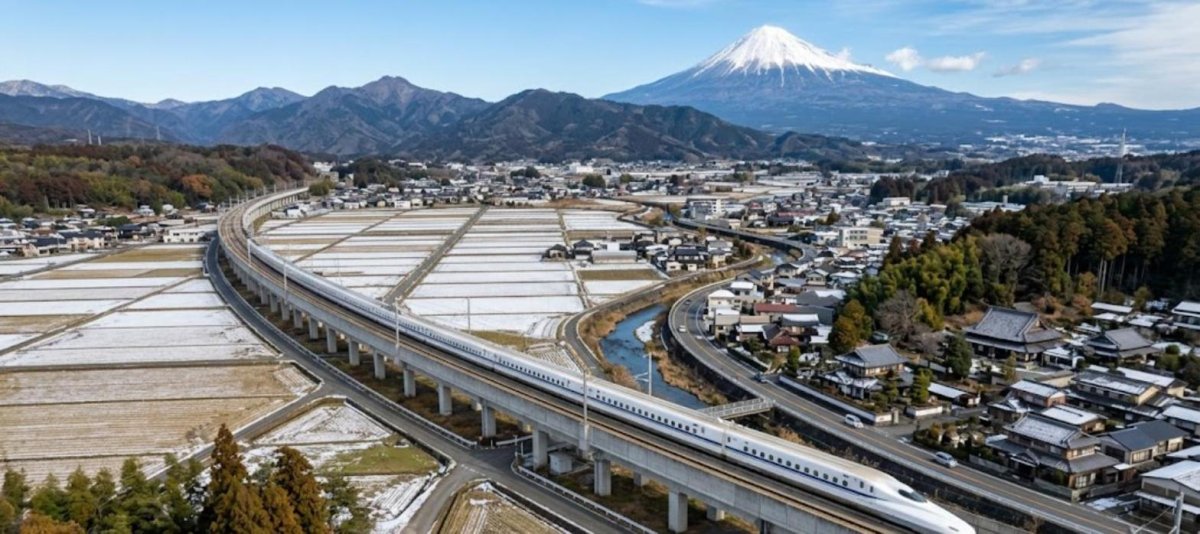
Travelling from Tokyo to Kyoto, Mount Fuji appears on the right-hand side of the train. Book seat E in an ordinary car, or seat D in the Green Car (first class). The clearest view comes around Shin-Fuji station, on a clear day.
Why the Tokaido Shinkansen sets the standard: the expert's view
Opened on 1 October 1964, just before the Tokyo Olympics, the Tokaido Shinkansen was the world's first high-speed line. More than sixty years later it is still the benchmark for capacity: hundreds of trains a day, with an average delay of under a minute according to JR Central.
The secret lies in the signalling. As on European high-speed lines, there are no lineside signals: the permitted speed is sent straight into the cab by an ATC (Automatic Train Control) system. The digital version, introduced on the line in the mid-2000s, brakes the train smoothly according to the actual distance to the train ahead. That is what makes a train every three minutes or so possible at peak times.
The N700S trains, in service since 2020, run at up to 285 km/h on the line. Top speed is lower than in France or China because the 1964 alignment has many curves: Japan chose frequency over top speed.
Frequently asked questions
How long is the Shinkansen from Tokyo to Kyoto?
About 2h15 on Nozomi, 2h40 on Hikari and nearly 4 hours on Kodama.
How much is the Shinkansen from Tokyo to Kyoto?
¥13,320 for a non-reserved seat and ¥14,170 for a reserved seat on a Nozomi, in regular season.
Does the Japan Rail Pass cover the Nozomi?
Not directly: you need a ¥4,960 supplementary ticket between Tokyo and Kyoto. Hikari and Kodama are included.
Do I need to book the Shinkansen in advance?
Not normally, but it is advisable during Golden Week (late April to early May), Obon (mid-August) and New Year, and essential with a large suitcase.
Where should I sit to see Mount Fuji?
On the right-hand side towards Kyoto: seat E in an ordinary car, seat D in the Green Car.
Key takeaways
- Nozomi: about 2h15 and ¥14,170 for a reserved seat.
- The Japan Rail Pass only pays off with several long journeys.
- Seat E on the right for Mount Fuji.
Read also
- All rail news from Asia
- UAE railway projects: the complete guide
- Saudi Arabia railway projects: the complete guide
For rail enthusiasts
Mugs, notebooks and bags for rail lovers: visit the TrainsNews Store.
Sources: JR Central, Smart EX; japan-guide.com, October 2025; JR Group via Kyodo, 10 April 2026; JRailPass, Nozomi supplement.
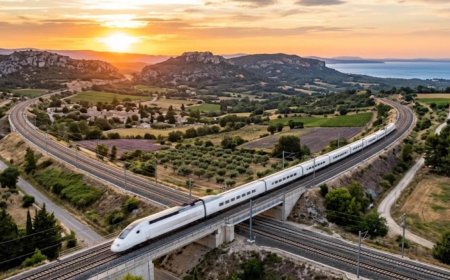
Illustration image generated by AI.
Whats your reaction
 Like
0
Like
0
 Dislike
0
Dislike
0
 Love
0
Love
0
 Funny
0
Funny
0
 Wow
0
Wow
0
 Sad
0
Sad
0
 Angry
0
Angry
0

TrainsNews est un média indépendant et bilingue d'actualité ferroviaire mondiale, publié depuis 2024. La rédaction couvre la grande vitesse, le matériel roulant, l'infrastructure, la signalisation et les télécoms ferroviaires (ERTMS/ETCS, CBTC, FRMCS, GSM-R), l'exploitation, le fret et le financement des projets. Chaque article cite ses sources et donne les chiffres avec leur total. TrainsNews is an independent, bilingual (French/English) news outlet covering the global rail industry since 2024: high-speed rail, rolling stock, infrastructure, signalling and telecoms, operations, freight and project financing. Every article cites its sources.


Comments (0)