

Guatemala's MetroRiel law takes effect, putting Fegua in charge
Guatemala has a legal framework for its first urban railway. A law on a passenger rail system for the metropolitan area, published on 11 November 2026 as Decree 24-2026, gives the state railway company Fegua charge of MetroRiel, a 20.5 km north–south line planned across Guatemala City.
Guatemala has a legal framework for its first urban railway. A law on a passenger rail system for the metropolitan area, published on 11 November 2026 as Decree 24-2026, gives the state railway company Fegua charge of MetroRiel, a 20.5 km north–south line planned across Guatemala City.
President Bernardo Arévalo signed the decree, which was published in the official gazette, Diario de Centro América, according to the government news agency AGN. Because Congress declared it a matter of national urgency, the law came into force eight days after publication. "I am signing the law that will give life to MetroRiel," Arévalo wrote on social media.
The law does not create a new agency. It names Ferrocarriles de Guatemala (Fegua) as the body responsible for every stage, from planning to commissioning, working with the finance ministry, the planning secretariat Segeplan and the municipalities of the metropolitan area. Fegua will hire an international firm or consortium to run a Project Technical Management Office, and it may do so directly. Contracts for works, equipment and services will follow a "special, exceptional and temporary" regime instead of the ordinary public procurement law, AGN reports.
That exemption comes with conditions. Fegua must publish contracts and project documents on its website, report to Congress every six months, and have budget cover in place before signing any contract; multi-year commitments must be written into the corresponding annual budgets.
A line on the north–south axis
According to AGN, MetroRiel will run for 20.5 km with 32 trains and a four-minute frequency at peak times, linking the Centra Sur transport hub, towards Villa Nueva, with Centra Norte, towards the Atlantic highway. Earlier studies reported by Bloomberg Línea in July described 20 stations, 29 grade separations, two new large bridges and an end-to-end journey of about 41 minutes, for around 252,000 passengers a day.
The UK is the main foreign partner. On 9 July 2026, Fegua and the British government signed a five-year cooperation agreement, according to the UK government. It covers technical expertise and knowledge sharing with Infrastructure Exports: UK, and a joint working group that meets twice a year. Financing through UK Export Finance (UKEF) is to be explored, but no amount has been set for the project; Bloomberg Línea reports that the agreement itself is not a financing contract.
The project has been in planning for years. The Inter-American Development Bank funded feasibility, environmental and financial studies from 2017, and the US Millennium Challenge Corporation suspended its support for structuring the project in 2019, according to Bloomberg Línea. Guatemala first planned a public-private partnership before turning to a government-to-government route, Railway Journal reported in July.
The special procurement regime is the main change. Ordinary tendering is often where large rail projects lose time, and the law is designed to shorten it. The trade-off is scrutiny: the six-monthly reports to Congress and the online publication of contracts become the main safeguards. The technical choices are still open, from rolling stock to train control and the power supply of what will be an electrified urban line. These are the contracts British firms are expected to bid for, according to Railway Journal.
For another Latin American rail revival, see our report on Colombia's reactivation programme and the Regiotram de Occidente.
The timetable remains vague. On 29 October, Arévalo said MetroRiel would not start operating during his term, which ends in January 2028, as reported by Emisoras Unidas. The next step is Fegua's appointment of the technical management firm.
Sources: AGN, 11 November 2026; AGN, Decree 24-2026; UK government, 14 July 2026; Bloomberg Línea, 19 July 2026; Railway Journal, July 2026; Emisoras Unidas, 29 October 2026.
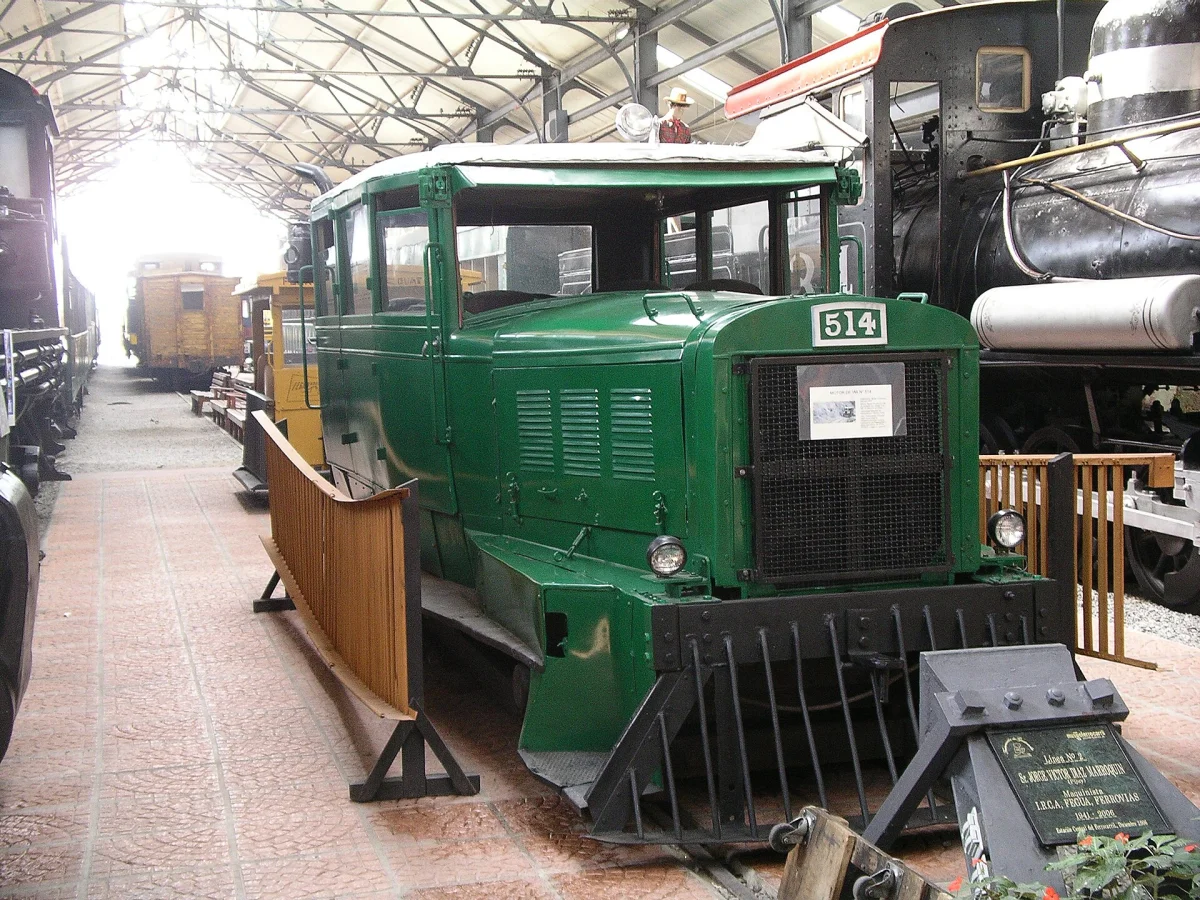
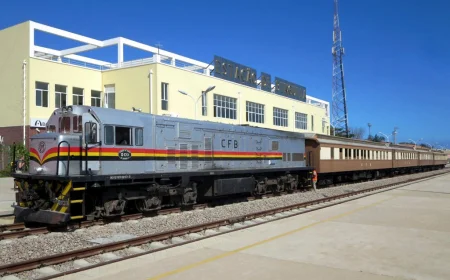
Photo: preserved Fegua rail vehicle at the Railway Museum in Guatemala City — Nils Öberg, Wikimedia Commons, CC BY 3.0.
Written with AI assistance from the official sources cited. Spotted an error? contact@trainsnews.com — Our AI policy
Whats your reaction
 Like
0
 Dislike
0
 Love
0
 Funny
0
 Wow
0
 Sad
0
 Angry
0

TrainsNews est un média indépendant et bilingue d'actualité ferroviaire mondiale, publié depuis 2024. La rédaction couvre la grande vitesse, le matériel roulant, l'infrastructure, la signalisation et les télécoms ferroviaires (ERTMS/ETCS, CBTC, FRMCS, GSM-R), l'exploitation, le fret et le financement des projets. Chaque article cite ses sources et donne les chiffres avec leur total. TrainsNews is an independent, bilingual (French/English) news outlet covering the global rail industry since 2024: high-speed rail, rolling stock, infrastructure, signalling and telecoms, operations, freight and project financing. Every article cites its sources.
The rail month in one PDF: news and guides summarised, with their photos.
The rail month in one PDF: news and guides summarised, with their photos.



Comments (0)