

Clapham Junction rail crash 1988: the wire that defeated a signal
A wrong-side signal failure caused by a redundant wire led to the collision of three trains near Clapham Junction on 12 December 1988, killing 35 people.
At about 08:10 on Monday 12 December 1988, a crowded commuter train ran into the back of a stationary train in a cutting just south of Clapham Junction, London, then struck an empty train. Thirty-five people died after a signalling wiring fault.
The public inquiry chaired by Anthony Hidden QC found that a redundant wire, left connected during resignalling work two weeks earlier, had fed false current into the circuit of signal WF138. The signal therefore failed to show red behind a train standing on the line ahead. According to the Hidden report, 33 people died on the day and two more later died of their injuries, while 69 were seriously injured and 415 suffered minor injuries.
The report, presented to Parliament in November 1989 as Command Paper Cm 820, made 93 recommendations. They changed how British signalling work is designed, installed and tested, and they placed limits on the hours worked by staff doing safety-critical tasks. Almost three decades later, the Rail Accident Investigation Branch (RAIB) warned that some of those lessons were fading.
Three trains in a cutting on the Up Main line
The collision happened between the last two signals before Clapham Junction station, WF138 and then WF47, which stand 776 yards (about 710 m) apart. All three trains belonged to the busy commuter network feeding London Waterloo. The Hidden report describes the site as a cutting with a steep bank on a left-hand curve, which limited the view ahead.
The first train involved was the 07:18 from Basingstoke to Waterloo, a twelve-car formation of three VEP units that the report says was usually full. Its driver saw WF138 showing green on the approach, then saw it change to red when he was about 30 yards (27 m) away. Unable to stop before the signal, he braked and halted at the next signal, WF47, as the Rule Book required after passing a signal at danger.
The driver then called the signalman from the signal post telephone. The signalman replied that his panel showed nothing wrong with the signal, according to the report. While the Basingstoke train stood at WF47, the 06:14 service from Poole to Waterloo came up behind it. That train consisted of twelve Mark I coaches in three four-car units.
The Poole train's driver had passed every signal in his favour, the inquiry found. He saw the stationary train only as he cleared the bank on the curve. The inquiry accepted that the train had slowed from about 50 mph (80 km/h) to about 35 mph (56 km/h) at the moment of impact. After striking the rear of the Basingstoke train, the Poole train veered to the right into the path of the 08:03 empty stock working from Waterloo to Haslemere, an eight-car train carrying no passengers.
That second impact was a glancing blow, the report says. Everyone who died had been travelling in the first two coaches of the Poole train. A fourth train approaching on the same line stopped behind the wreckage without a collision. Traction current was off by about 08:20, according to British Rail's account to the Fire Brigade quoted in the report.
How one redundant wire kept signal WF138 from showing red
Much of the signalling around Clapham Junction dated from 1936, and British Rail was replacing it under the Waterloo Area Resignalling Scheme, and stage 7B included two small wiring jobs, numbered 104 and 201, carried out on Sunday 27 November 1988. Their purpose was to replace a direct wire, shown as black on the diagrams, with new wiring along a different route.
A senior signalling technician connected the new wires but left the old wire connected at the fuse end. At the relay end he disconnected it, yet did not cut it back, secure it or insulate it with tape. He pushed it aside towards the back of the relay. Hidden's verdict on these omissions was blunt: "These were totally basic errors."
The danger stayed hidden for two weeks. On Sunday 11 December, work to replace an adjacent relay disturbed the wiring nearby, and the bare end of the old wire moved back against the terminal it had once served. That terminal was on relay TRR DM, while the other end of the wire was still fed from fuse 107 in row 12.
In a track circuit system, a train occupying a section de-energises a relay, and the signals behind it then drop to red. On the morning of the accident, the track relay concerned did detect the Basingstoke train. The stray current, however, kept a second relay, known as HR, energised, and HR controlled the aspect of WF138. Investigators measured 43.5 volts across its coil, slightly below the relay's rating.
Hidden calls this a wrong-side failure: a fault that leaves a signal showing proceed when it should show danger. At about 08:40, after the crash, WF138 was found showing a single yellow rather than red, according to the report. The wiring diagram showed one wire at the fuse, but staff found two. The fuse supplying the faulty circuit was withdrawn at 10:51, which isolated the fault to the relay room.
What the Hidden inquiry found about testing and overtime
The Secretary of State for Transport appointed the inquiry on 6 January 1989 under the Regulation of Railways Act 1871. It heard 122 witnesses over 56 days, and public hearings ended on 6 June 1989, and the final text is dated 27 September 1989.
The inquiry did not stop at the technician's work. It found that neither the supervisor nor the tester had carried out an independent wire count on 27 November, a check that compares every terminal with the wiring diagram. Had the supervisor done so, the report says, he could not have missed the extra wire on the fuse. Hidden described the tester as the last line of defence and concluded that this defence failed totally.
Working hours came under scrutiny too. It judged that the technician's constant seven-day working had more likely than not triggered the lapse, by blunting his attention. Across the workforce, it found that in the 13 weeks before the accident, 28% of staff worked seven days every week and a further 34% worked 13 days out of 14.
Hidden placed the errors inside a wider pattern. He criticised a deplorable level of monitoring and supervision within British Rail and described poor practice as a widespread way of working.
Clapham is a textbook case because no single failure caused it. An installer, a supervisor and a tester each missed the same wire, and the train detection system worked while the relay logic downstream was defeated. Train protection systems react to a red signal, so they offer little defence when the signal itself shows proceed. That is why the inquiry's remedies centred on the testing process and on working hours rather than on equipment in the cab.
93 recommendations, a fine and no manslaughter charge
Of the 93 recommendations, the first required British Rail to cut back, insulate and secure redundant wires rigorously. Recommendation 4 made an independent wire count standard practice during testing, and recommendation 9 called for a national testing instruction with all speed. Others required certified testers, refresher courses at least every five years and monitoring of overtime so that no individual worked excessive hours.
Other recommendations reached beyond the signalling depot. They asked British Rail to install radio links between drivers and signallers as a priority and to fit automatic train protection (ATP) within five years. It also made unprotected wrong-side failures reportable to the Railway Inspectorate as dangerous occurrences, and asked the Government to staff and fund the Inspectorate adequately.
Ministers reported progress to the House of Commons in the following years. In May 1991 the Transport Secretary said that all recommendations addressed to British Rail were complete or had actions in hand, and a written answer in November 1995 repeated that position, according to Hansard. ATP, however, was never rolled out across the network in five years. In January 1995 the Government was still considering advice on it.
No one was prosecuted for manslaughter. The British Railways Board was fined £250,000 for breaching the Health and Safety at Work etc. Act 1974, according to an RSSB blog published in 2018 and to Yahoo News UK. Neither source gives the date or the court, and TrainsNews has not found an official record of the case. A railway citation index gives a different figure of £1.25 million, without further detail.
From wire counts to fatigue rules: Clapham's legacy in 2026
The clearest legacy is in signalling practice. In the RAIB's words, the Hidden recommendations "reformed the way railway signalling was designed, installed and tested in the UK". Its 2018 report on a collision at Waterloo traces the signalling design handbook and the signalling works testing standard back to recommendations 3 and 9.
Working hours followed a longer path. The "Hidden limits" were written into the railway standard GH/RT 4004, which has since been superseded, according to the RMT union. Fatigue is now managed under regulation 25 of the Railways and Other Guided Transport Systems (Safety) Regulations 2006. The Office of Rail and Road guidance, updated on 24 March 2026, still cites Clapham as a case where excessive overtime contributed to an accident.
Driver-to-signaller radio arrived in stages, starting with five new frequencies allocated to British Rail in 1989. The RSSB notes that the older Cab Secure Radio and National Radio Network systems were starting to give way to GSM-R by 2010. Network Rail says its GSM-R network now covers more than 15,000 km of line with about 2,500 masts.
Rolling stock changed by law. The Railway Safety Regulations 1999 banned Mark I rolling stock from 1 January 2003, with modified vehicles allowed until 2005, and required a train protection system on trains and lines, with installation programmes accepted until 1 January 2004. The Poole train had been made up of Mark I coaches.
The warning about memory came from the RAIB. On 15 August 2017, at about 05:42, a passenger train leaving Waterloo struck a stationary train of works vehicles at 13 mph (21 km/h). Uncontrolled temporary wiring, added during signalling tests and left in place, had set points wrongly. Nobody was injured, but the RAIB said some lessons of Clapham were "fading from the railway industry's collective memory".
Twenty-nine years separated the two accidents, and the parallel is precise: wiring that did not match the drawings, and no wire count before handback. The 2017 collision at 13 mph caused no injuries. The lesson the RAIB drew is that Hidden's rules only work if each new generation of staff applies them in full. Read more cases in our rail accidents series.
Frequently asked questions
What caused the Clapham Junction rail crash?
A redundant wire was left connected at one end and bare at the other during resignalling work on 27 November 1988. On 11 December, nearby relay work pushed it back against its old terminal. The false current kept signal WF138 from showing red behind a stationary train, according to the Hidden report.
How many people died at Clapham Junction in 1988?
Thirty-five people died: 33 on the day and two later from their injuries, according to the Hidden report. It recorded 69 serious injuries and 415 minor ones, or 484 in total, although the report's procedural history refers to nearly 500 injured. All the people who died were in the first two coaches of the Poole train.
How many recommendations did the Hidden report make?
The report by Anthony Hidden QC, published in November 1989, made 93 recommendations. They covered the removal of redundant wires, independent wire counts, tester certification, monitoring of overtime, driver-signaller radio and automatic train protection. Ministers told Parliament in 1991 that every recommendation for British Rail was complete or in hand.
Sources: Anthony Hidden QC, Investigation into the Clapham Junction Railway Accident, Cm 820, HMSO, November 1989 (Railways Archive); full text of the report (JESIP copy); Hansard, House of Commons statement, 7 November 1989; Hansard, written answer, 8 May 1991; Hansard, written answer, 7 November 1995; Hansard, written answer on ATP, 11 January 1995; The Railway Safety Regulations 1999 (SI 1999/2244), made 30 July 1999; RAIB, Report 19/2018, Collision at London Waterloo, November 2018; ORR, Managing rail staff fatigue, updated 24 March 2026; RMT, Fatigue (accessed 9 November 2026); RSSB, Right Track issue 55, spring 2026; Network Rail, GSM-R (accessed 9 November 2026); RSSB blog via Rail Business Daily, 6 December 2018; Yahoo News UK, 12 December 2021; Railway Citation Index (undated entry).
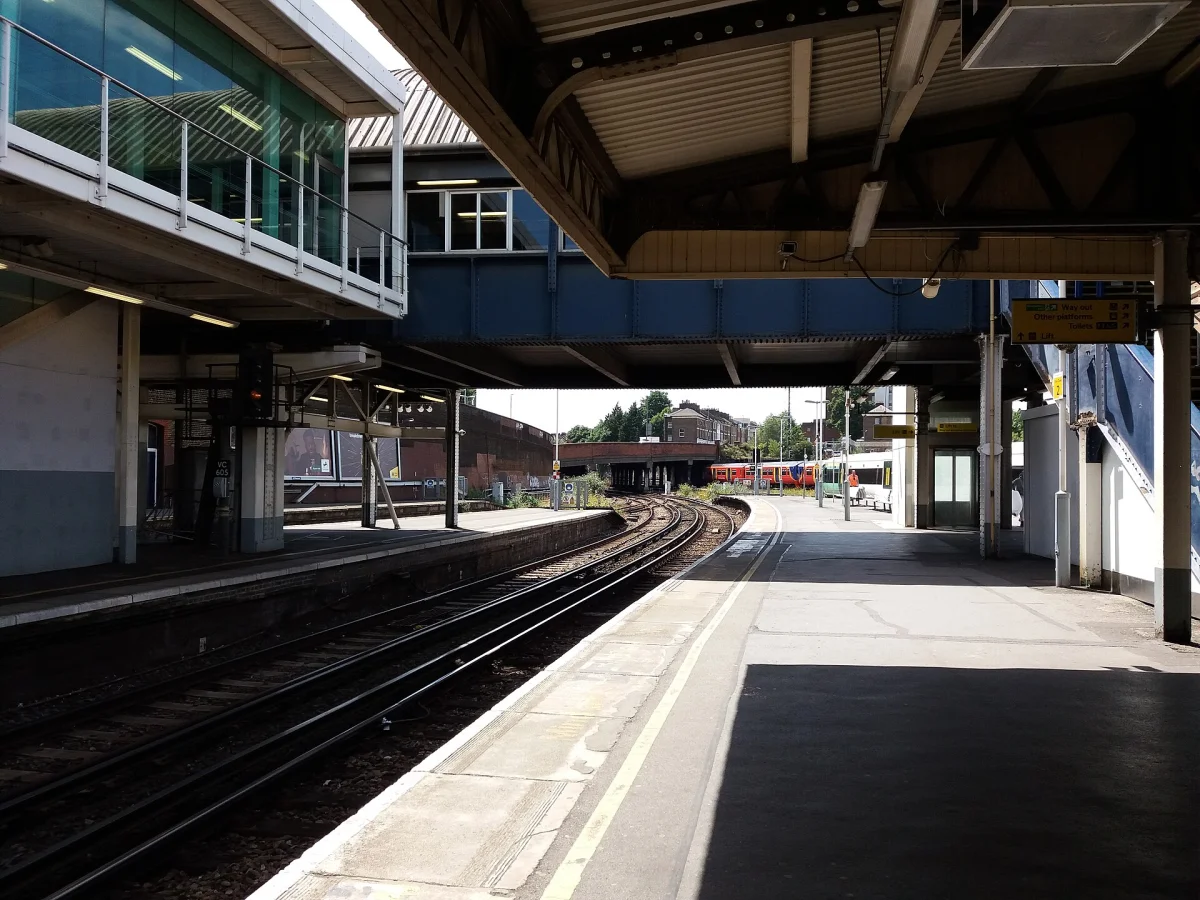
Photo: Platform 14 at Clapham Junction station, 29 July 2019 — Romainbehar, Wikimedia Commons, CC0.
Article written with the help of artificial intelligence from the sources cited, reviewed by the TrainsNews editorial team before publication.
Whats your reaction
 Like
0
 Dislike
0
 Love
0
 Funny
0
 Wow
0
 Sad
0
 Angry
0

TrainsNews est un média indépendant et bilingue d'actualité ferroviaire mondiale, publié depuis 2024. La rédaction couvre la grande vitesse, le matériel roulant, l'infrastructure, la signalisation et les télécoms ferroviaires (ERTMS/ETCS, CBTC, FRMCS, GSM-R), l'exploitation, le fret et le financement des projets. Chaque article cite ses sources et donne les chiffres avec leur total. TrainsNews is an independent, bilingual (French/English) news outlet covering the global rail industry since 2024: high-speed rail, rolling stock, infrastructure, signalling and telecoms, operations, freight and project financing. Every article cites its sources.
The rail month in one PDF: news and guides summarised, with their photos.
The rail month in one PDF: news and guides summarised, with their photos.







Comments (0)