

India's first hydrogen train enters service on the Jind–Sonipat line
India's first hydrogen train, a 10-car 1,200 kW fuel-cell unit, was flagged off on 17 July 2026 on Northern Railway's 89 km Jind–Sonipat line.
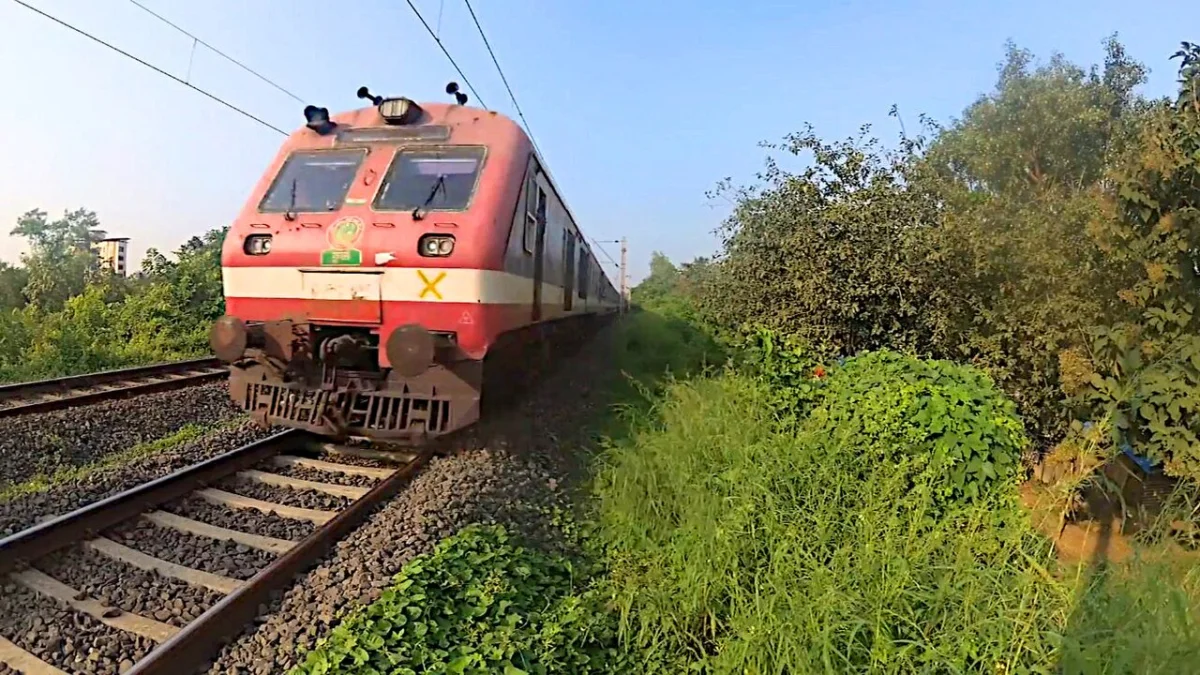
Prime Minister Narendra Modi flagged off India's first hydrogen-powered passenger train at Jind, Haryana, on 17 July 2026. The ten-car trainset, rated at 1,200 kW, runs on the 89 km Jind–Sonipat section of Northern Railway and is refuelled from a dedicated hydrogen storage and dispensing facility at Jind. Northern Railway announced that regular commercial service would begin on 19 July, with a single daily round trip and fares aligned with ordinary local trains.
A converted DEMU, not a clean-sheet design
The train is the result of a pilot launched several years ago to convert an existing diesel-electric multiple unit to fuel-cell traction. The design was handled by the Research Designs and Standards Organisation (RDSO) in Lucknow, the vehicles were built at the Integral Coach Factory (ICF) in Chennai, and Hyderabad-based Medha Servo Drives acted as system integrator, according to Indian press reports. In July 2025 Railway Minister Ashwini Vaishnaw announced the first successful test of a hydrogen driving power car at ICF.
The formation consists of two hydrogen driving power cars at the outer ends and eight trailer coaches, using proton exchange membrane (PEM) fuel cells. The Press Information Bureau (PIB) gives a capacity of around 2,600 passengers, a figure that includes a large share of standing passengers.
Key figures
- Route: Jind Junction – Gohana – Sonipat, 89 km, Northern Railway, Haryana
- Formation: 10 cars (2 hydrogen driving power cars + 8 trailers)
- Traction: 1,200 kW PEM fuel-cell propulsion system
- Speed: 75 km/h maximum in service; 110 km/h design speed
- Capacity: about 2,600 passengers
- Hydrogen storage at Jind: nearly 3,000 kg, licensed by PESO
- Pilot project cost: about ₹112 crore (train conversion plus hydrogen installation), as reported
Approvals and the Jind hydrogen installation
On 27 May 2026 the Ministry of Railways said the trainset was ready to start, after RDSO approved the operation and maintenance manuals for both the train and the hydrogen plant. The Petroleum and Explosives Safety Organisation (PESO) licensed the compressed-gas storage and dispensing facility at Jind, which can hold nearly 3,000 kg of hydrogen. The ministry's statement also mentions 24-hour monitoring of refuelling and technical staff on board during initial operation.
The 75 km/h service limit is well below the 110 km/h design speed and the speed of the diesel trains already running on the line. The PIB factsheet published for the launch gives no date for raising it.
Why hydrogen on a network that is almost fully electrified
The choice of route raises an obvious question. According to government figures, Indian Railways had electrified 69,427 route-km by November 2025, about 99.2% of its broad gauge network. That leaves almost no non-electrified main lines for hydrogen to serve. The long-term case set out by the ministry rests on the Hydrogen for Heritage programme instead, which plans 35 hydrogen trains for heritage and hill routes such as the Darjeeling Himalayan, Nilgiri Mountain and Kalka–Shimla lines. The reported budget is ₹2,800 crore, or about ₹80 crore per trainset plus about ₹70 crore of ground infrastructure per route.
Jind–Sonipat therefore works as a large-scale test bed. Running a ten-car, high-capacity unit in daily suburban service will produce data on fuel-cell durability, hydrogen consumption and refuelling logistics before any decision on narrow and metre gauge mountain lines, where the space and weight constraints are very different.
Lessons from abroad
India joins a small group of countries running hydrogen passenger trains. European experience shows why caution makes sense. In Germany, several operators of Alstom's Coradia iLint have had to bring back diesel units after fuel-cell reliability problems and late deliveries of replacement modules. In Lower Saxony, the transport authority LNVG chose battery-electric trains over hydrogen for its future procurement on cost grounds, as covered in our analysis of alternatives to full catenary on secondary lines. In the United States, San Bernardino County's two-car Stadler FLIRT H2 entered service in September 2025 on a much shorter corridor (see our report on the first US hydrogen train).
From an operations point of view, the Jind train's main operational limits are its single-depot refuelling, a low speed ceiling that weakens its timetable value on a mixed-traffic line, and the need to tow the unit with a diesel locomotive to the Shakurbasti maintenance depot. Northern Railway confirmed this towing arrangement after images of it spread on social media.
What to watch
The key indicators over the coming months will be availability and fuel-cell reliability in daily service, any increase in line speed towards 110 km/h, and whether the ministry orders a first Hydrogen for Heritage unit. For Indian Railways, the hydrogen pilot remains a small programme next to its main investments, such as high-speed rail, where European consultants are also involved (see our report on the SYSTRA and DB project management contract).
Sources: Ministry of Railways / PIB, 27 May 2026; PIB factsheet, 17 July 2026; PIB, January 2026; AIR News, 17 July 2026; Republic World (quoting Northern Railway), 18 July 2026; Madhyamam (quoting Northern Railway), 19 July 2026; Telangana Today, July 2026; YourStory, July 2026; Outlook Business, 2026; Deccan Herald, 25 July 2025.
Photo: Anonymousboii, CC BY-SA 4.0, via Wikimedia Commons
Whats your reaction
 Like
0
Like
0
 Dislike
0
Dislike
0
 Love
0
Love
0
 Funny
0
Funny
0
 Wow
0
Wow
0
 Sad
0
Sad
0
 Angry
0
Angry
0

TrainsNews est un média indépendant et bilingue d'actualité ferroviaire mondiale, publié depuis 2024. La rédaction couvre la grande vitesse, le matériel roulant, l'infrastructure, la signalisation et les télécoms ferroviaires (ERTMS/ETCS, CBTC, FRMCS, GSM-R), l'exploitation, le fret et le financement des projets. Chaque article cite ses sources et donne les chiffres avec leur total. TrainsNews is an independent, bilingual (French/English) news outlet covering the global rail industry since 2024: high-speed rail, rolling stock, infrastructure, signalling and telecoms, operations, freight and project financing. Every article cites its sources.


Comments (0)