

Quito Metro: how its maintenance model works
Quito Metro has split upkeep of Line 1's thirteen subsystems between Alstom, Siemens, CAF, EOMMT and a French-led consortium. Contracts, values and timelines.
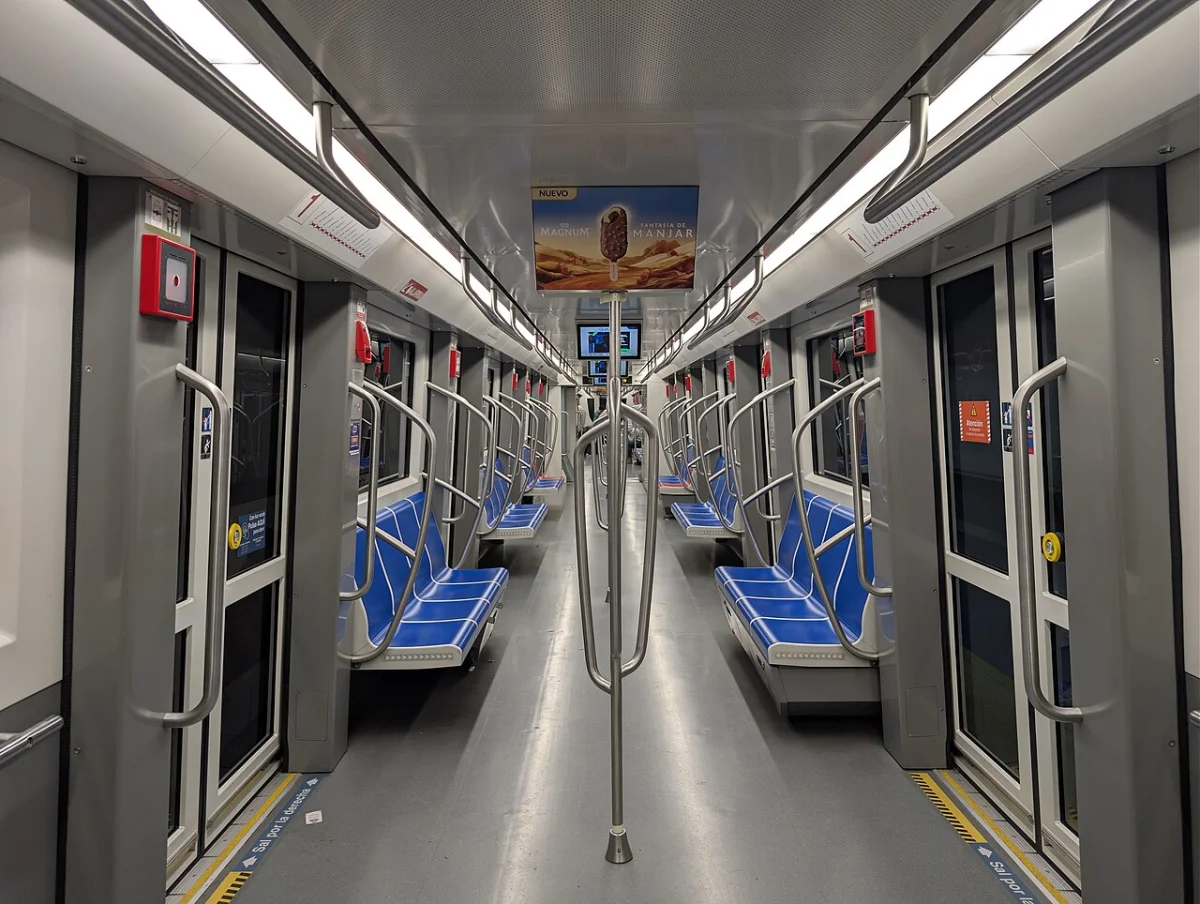
Quito Metro now has specialist contracts covering maintenance of all thirteen subsystems of Line 1. On 5 June 2026, the Empresa Pública Metropolitana Metro de Quito (EPMMQ) signed a five-year, US$62.1 million contract with the Consorcio Ferroviario Metro de Quito for infrastructure, superstructure, electromechanical equipment and telecommunications, the last package to be let. It follows a four-year, US$27.2 million agreement signed with Alstom on 24 February 2026 for the signalling system.
Five contractors, thirteen subsystems
EPMMQ groups the line's thirteen technical subsystems into five maintenance blocks:
- Signalling: Alstom (France), until February 2030
- Power supply: Siemens (Germany), until October 2029
- Rolling stock: CAF (Spain), until October 2029
- Stations and operations: EOMMT (France–Colombia), until November 2028
- Infrastructure, superstructure, electromechanical and telecommunications (ISET): Consorcio Ferroviario Metro de Quito, until June 2031
Three blocks remain with the original equipment suppliers: Siemens supplied the traction power system, CAF built the fleet and Alstom inherited the signalling when it took over Bombardier Transportation in 2021. This gives the client direct access to design knowledge, spare parts and obsolescence management for the most technology-intensive systems.
The ISET contract: a difficult procurement
The infrastructure package was the hardest to award. According to Expreso, a 2024 tender was not finalised because the winning consortium could not provide the required guarantees, and an August 2025 process was cancelled after failures on the national public procurement portal. In the meantime, EPMMQ's own technical staff carried out the work.
The third attempt drew four bidders, including China Railway First Group and two Mexican companies. On 15 April 2026 EPMMQ awarded the contract to the Consorcio Ferroviario Metro de Quito, formed by France's Sofratesa, its Panamanian subsidiaries, and the Ecuadorian firms Rieltec Ecuador and Ripconciv Construcciones Civiles. At US$62.1 million, it came in about US$11.8 million below the US$73.9 million reference budget. The scope covers more than 22 km of tunnel, track, workshops, pumping and ventilation, fire protection and communication networks.
Signalling: maintaining CITYFLO 350
The signalling was ordered from Bombardier by Consorcio Línea 1, then formed by Acciona and Odebrecht. It is a CITYFLO 350 solution for the double-track line, with EBI Screen central traffic control and EBI Cab onboard train protection for 18 trains. CITYFLO 350 is Bombardier's fixed-block automatic train control product, based on audio-frequency track circuits and balises, combining ATP with optional ATO for semi-automatic (GoA2) driving. It is not CBTC; that role in the range belongs to CITYFLO 650.
Alstom has maintained the system since commercial service began in December 2023. The new 48-month contract covers preventive and corrective maintenance, monitoring, obsolescence management and possible upgrades, with local technical teams involved.
A line built over a decade
Line 1 runs underground for about 22.6 km from Quitumbe in the south to El Labrador in the north, serving 15 stations in 34 minutes. At around 2,850 m, it is billed by its operator as the world's highest metro. The project cost about US$2 billion, financed by the Inter-American Development Bank, the World Bank, the European Investment Bank and CAF – Development Bank of Latin America.
The main civil works were awarded in 2015 to an Acciona–Odebrecht consortium. Odebrecht began withdrawing in October 2016, and its exit was confirmed in December 2017, leaving Acciona to complete the works. The line was inaugurated on 21 December 2022. An early operating phase in 2023 was halted after a few days, and full commercial service began on 1 December 2023 with 18 six-car CAF trains.
The operator is the Empresa Operadora Metro de Medellín Transdev (EOMMT), a partnership between Colombia's Metro de Medellín and France's Transdev, under a six-year contract signed on 29 November 2022.
Ridership and performance
EPMMQ reported 149.1 million trips by May 2026, when weekday ridership averaged 218,000 trips per day. User satisfaction was 9.4 out of 10 in the January 2026 survey and 9.8 in May. Reliability remains under scrutiny. Management attributed a six-hour shutdown on 20 April 2026 to communication failures rather than equipment, and a citizen oversight committee has raised concerns about bogie monitoring and ground stability in southern Quito.
Update (October 2026)
On 26 August 2026, EPMMQ marked 1,000 days of operation, reporting more than 166 million trips, 312,000 maintenance hours across the thirteen subsystems and about 174,000 tonnes of CO2 avoided. Definitive studies by Typsa for a 5.6 km northern extension from El Labrador to La Ofelia, with four new stations, are due in October 2026. Construction is estimated at about US$550 million. A recommended alignment for a further extension towards Calderón is expected by December 2026.
Sources: Empresa Pública Metropolitana Metro de Quito, press releases (23 February, 24 February, 5 June, 17 June and 26 August 2026); Alstom, press release (4 March 2026); Primicias (5 February 2026); Expreso (April, May and June 2026); El Comercio (December 2017 and September 2026); El Universo (October 2015); Transdev; International Railway Journal; Bombardier Transportation via Club Feroviar.
Photo: Martín Vasco, CC BY-SA 4.0, via Wikimedia Commons
Whats your reaction
 Like
0
Like
0
 Dislike
0
Dislike
0
 Love
0
Love
0
 Funny
0
Funny
0
 Wow
0
Wow
0
 Sad
0
Sad
0
 Angry
0
Angry
0

TrainsNews est un média indépendant et bilingue d'actualité ferroviaire mondiale, publié depuis 2024. La rédaction couvre la grande vitesse, le matériel roulant, l'infrastructure, la signalisation et les télécoms ferroviaires (ERTMS/ETCS, CBTC, FRMCS, GSM-R), l'exploitation, le fret et le financement des projets. Chaque article cite ses sources et donne les chiffres avec leur total. TrainsNews is an independent, bilingual (French/English) news outlet covering the global rail industry since 2024: high-speed rail, rolling stock, infrastructure, signalling and telecoms, operations, freight and project financing. Every article cites its sources.



Comments (0)