

Renfe, Talgo Reach Settlement on Avril S106 Trains
Renfe and Talgo have settled their Avril S106 dispute: variable-gauge conversion, deferred penalties, and potential implications for France's Le Train.
Updated on 15 July 2026, 14:00 CEST
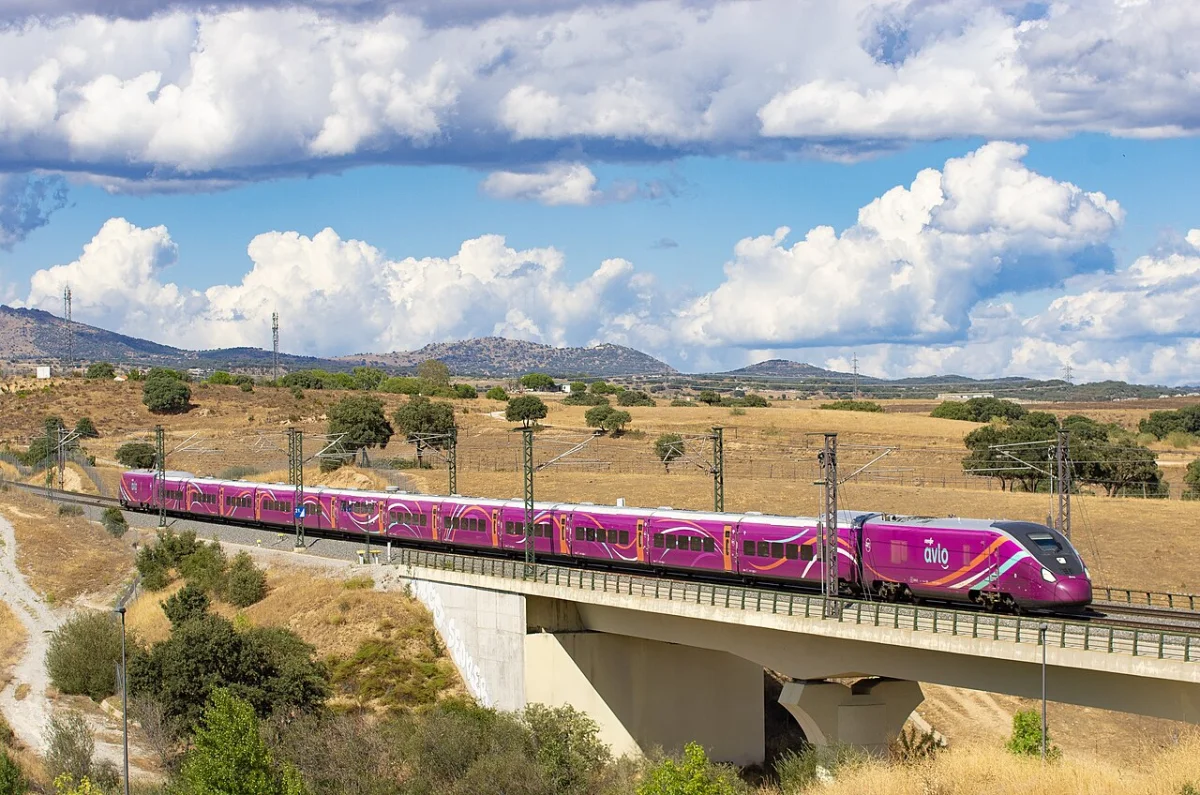
Renfe and Talgo signed an agreement on 2 July 2026 that settles years of dispute over the Avril S106 trains. The Spanish state operator and the Basque manufacturer finalised the settlement at Talgo's headquarters in Rivabellosa, in the Basque province of Álava, and notified Spain's securities regulator, the CNMV, the same day.
The dispute concerned penalties for delayed delivery of the 30 trains ordered in 2016, the terms of fleet acceptance, and the technical configuration of the trains, some of whose bogies the wheeled chassis supporting the axles had developed cracks identified in 2025.
The settlement clears the way for final acceptance of all 30 Avril S106 units, ten of which already run services between Madrid, Asturias and Galicia. It also strengthens Talgo's financial position, as the manufacturer pursues a turnaround plan launched in late 2025, by deferring penalty payments that had weighed on its cash flow.
A stake beyond the Spanish market
The Avril platform is not exclusive to the Iberian market: Talgo has already sold a variant to Le Train, a French open-access operator that ordered up to ten trainsets for planned high-speed services linking Rennes, Nantes, Tours and Bordeaux. Talgo's industrial and financial stabilisation under this Renfe agreement indirectly secures the manufacturer's ability to meet commitments to its other European customers, including this future French operator.
Renfe will pay Talgo €132 million to convert 15 of the 30 trains, currently built to fixed standard gauge (1,435 mm), to variable-gauge technology. This lets a single train switch automatically between the standard-gauge high-speed network and Spain's conventional Iberian-gauge network (1,668 mm), without changing rolling stock at gauge-break points. The conversion, carried out entirely by Talgo, will run over 37 months, with the first modified units delivered from month fifteen.
The agreement also releases around €200 million in outstanding payments and bank guarantees, to be paid within three months. The maintenance contract held by Tarvia, a joint venture owned 51% by Talgo and 49% by Renfe Mantenimiento, will see its fees rise by 29% to cover the extra work linked to the new bogies. Renfe will take over spare-parts procurement, which it will then supply to Tarvia.
Payment of the €116 million penalty for delivery delays will not begin until 2032, after the maturity of Talgo's recently restructured bank debt, and will be spread over the following six years. In return, Talgo will pay €10.8 million to Renfe Viajeros to cover homologation testing costs. Talgo's order backlog now stands at €6.307 billion, up from €4.466 billion at the end of 2025, driven in part by recent contracts in Saudi Arabia and Sweden.
Photo: André Marques 432, CC BY 2.0, via Wikimedia Commons
Whats your reaction
 Like
0
Like
0
 Dislike
0
Dislike
0
 Love
0
Love
0
 Funny
0
Funny
0
 Wow
0
Wow
0
 Sad
0
Sad
0
 Angry
0
Angry
0

TrainsNews est un média indépendant et bilingue d'actualité ferroviaire mondiale, publié depuis 2024. La rédaction couvre la grande vitesse, le matériel roulant, l'infrastructure, la signalisation et les télécoms ferroviaires (ERTMS/ETCS, CBTC, FRMCS, GSM-R), l'exploitation, le fret et le financement des projets. Chaque article cite ses sources et donne les chiffres avec leur total. TrainsNews is an independent, bilingual (French/English) news outlet covering the global rail industry since 2024: high-speed rail, rolling stock, infrastructure, signalling and telecoms, operations, freight and project financing. Every article cites its sources.




Comments (0)