


Amtrak Launches NextGen Acela Trains After 4-Year Delay and $2.3 Billion Cost
Amtrak starts NextGen Acela service August 28, 2025. 28 Alstom trains at 260km/h with +27% capacity on Washington-Boston corridor.
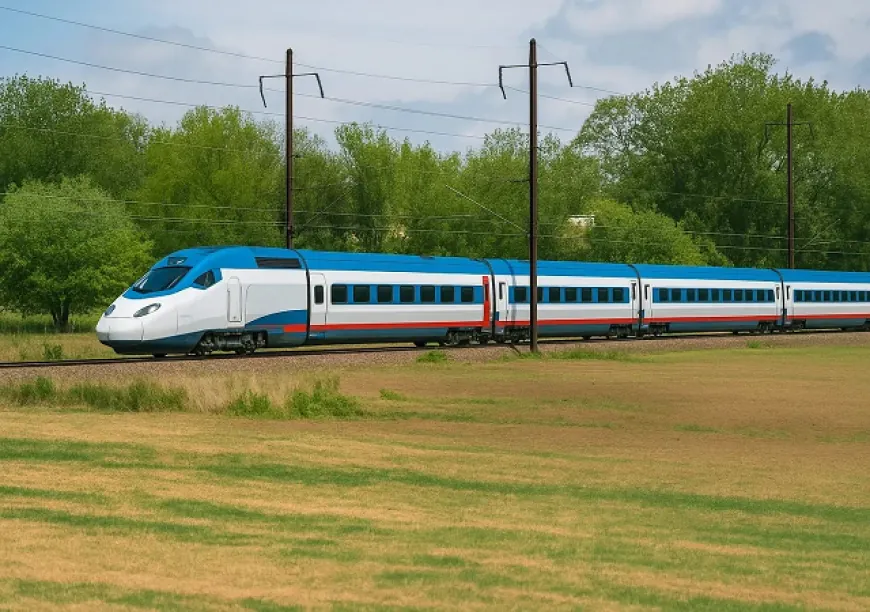
After four years of major technical delays, Amtrak finally inaugurates its NextGen Acela trains. This new generation of American high-speed trains will revolutionize transport on the most frequented Northeast corridor in the United States.
Commercial Launch August 28, 2025
First Service Launch of 5 NextGen Trains
Amtrak reaches a historic milestone with the commercial launch of its NextGen Acela high-speed trains on August 28, 2025. The first five trains from the total fleet of 28 units built by Alstom will begin passenger service on the crucial Northeast Corridor (NEC) Washington DC - New York - Boston.
This service launch marks the end of a $2.3 billion project initiated in 2016, despite considerable delays related to complex design flaws.
Progressive Deployment Until 2027
Complete deployment of the remaining 23 tilting high-speed trains will continue until 2027. These new trainsets will gradually replace and supplement the first-generation Acela fleet in service since 2000.
This gradual transition will optimize operational integration while maintaining service continuity on this vital East Coast corridor.
NextGen Acela Technical Characteristics
Enhanced Capacity and Performance
The new nine-car single-level trains offer capacity for 378 passengers, representing a significant 27% increase compared to the existing Acela fleet. This improvement addresses growing demand on the NEC corridor.
Technical specifications:
- Maximum speed: 260km/h
- Configuration: 9 articulated cars
- Capacity: 378 seats
- Technology: tilting trains (tilt technology)
"Elevated" Passenger Experience
Amtrak emphasizes an "elevated experience" for travelers with state-of-the-art equipment:
Premium onboard services:
- Free high-speed 5G Wi-Fi
- Individual power outlets
- Personal reading lights
- Modernized interior design
- Optimized acoustic comfort
These improvements position NextGen Acela as the reference for luxury rail transport in the United States.
Economic Impact: 15,000 Jobs Created
"Made in America" Production
The NextGen Acela project generates substantial economic impact across the United States. Trains are assembled at Alstom's Hornell, New York factory, using components supplied by more than 180 suppliers across 29 states.
This national production approach created approximately 15,000 jobs, demonstrating the multiplier effect of major rail infrastructure projects on the American economy.
National Supply Chain
Alstom's "Buy American" strategy for this project strengthens the American rail industrial ecosystem by:
- Developing local technological expertise
- Creating lasting partnerships with suppliers
- Stimulating innovation in the rail sector
- Reducing import dependence
Technical Challenges and Project Delays
"Damning Report" from Inspector General
Despite enthusiasm surrounding their launch, the NextGen Acela project has been described as "troubled". A "damning report" released by Amtrak's Office of Inspector General (OIG) in September 2023 highlighted "defects and design problems" that severely delayed Federal Railroad Administration (FRA) approval.
The OIG report emphasizes that these delays led to "significant cost increases, operational impacts, and delayed revenue" for Amtrak.
Pantograph-Catenary Problems
The main technical challenges encountered include:
High-speed contact loss:
- Problems between pantograph (current collector arm) and contact wire
- Difficulties with old variable-tension catenary system
- Particular issues between Washington and New Haven, Connecticut
Complex Wheel-Rail Interface
Wheel-rail interaction problems also identified on NEC. These specific problems did not appear during high-speed testing conducted at the Railroad Test Track (RTT) at Transportation Technology Center (TTC) in Pueblo, Colorado.
Alstom explained to The Washington Post in May 2023 that "wheel-to-rail interface modeling is particularly complex due to age, condition, and specific characteristics of Amtrak infrastructure on the Northeast Corridor".
Historical Parallels with First-Generation Acela
Similar Challenges of Original Trains
These NextGen train wheel-rail problems echo similar challenges encountered during testing and initial commercial service of first-generation Acela trains.
Technical comparison:
- Original Acela: non-articulated trains, 25-tonne axle load
- NextGen Acela: articulated fleet, 17.5-tonne axle load
Resolved Historical Problems
Original Acela trains also experienced:
- Premature wheelset wear
- Cracked yaw dampers
- Pantograph shrouding peeling off at speed
- Disintegrated inboard brake discs
This historical experience guides resolution of current NextGen Acela challenges.
Northeast Corridor Future Perspectives
As new NextGen Acela trains gradually enter service, all eyes turn to their performance and ability to enhance the high-speed rail experience on the Northeast Corridor.
This launch marks a crucial step in American rail transport modernization and development of a credible alternative to air transport on the East Coast.
These trains' operational success will determine the future of high-speed rail investments in the United States and potential expansion of the Acela network.
Whats your reaction
 Like
0
Like
0
 Dislike
0
Dislike
0
 Love
0
Love
0
 Funny
0
Funny
0
 Wow
0
Wow
0
 Sad
0
Sad
0
 Angry
0
Angry
0

TrainsNews

Comments (0)