


SNCF Forced to Sell 53 Locomotives Following EU Commission State Aid Ruling
SNCF must sell 53 locomotives including 10 BB 27000 units at November auction following EU ruling on Fret SNCF. Learn about European market impacts.
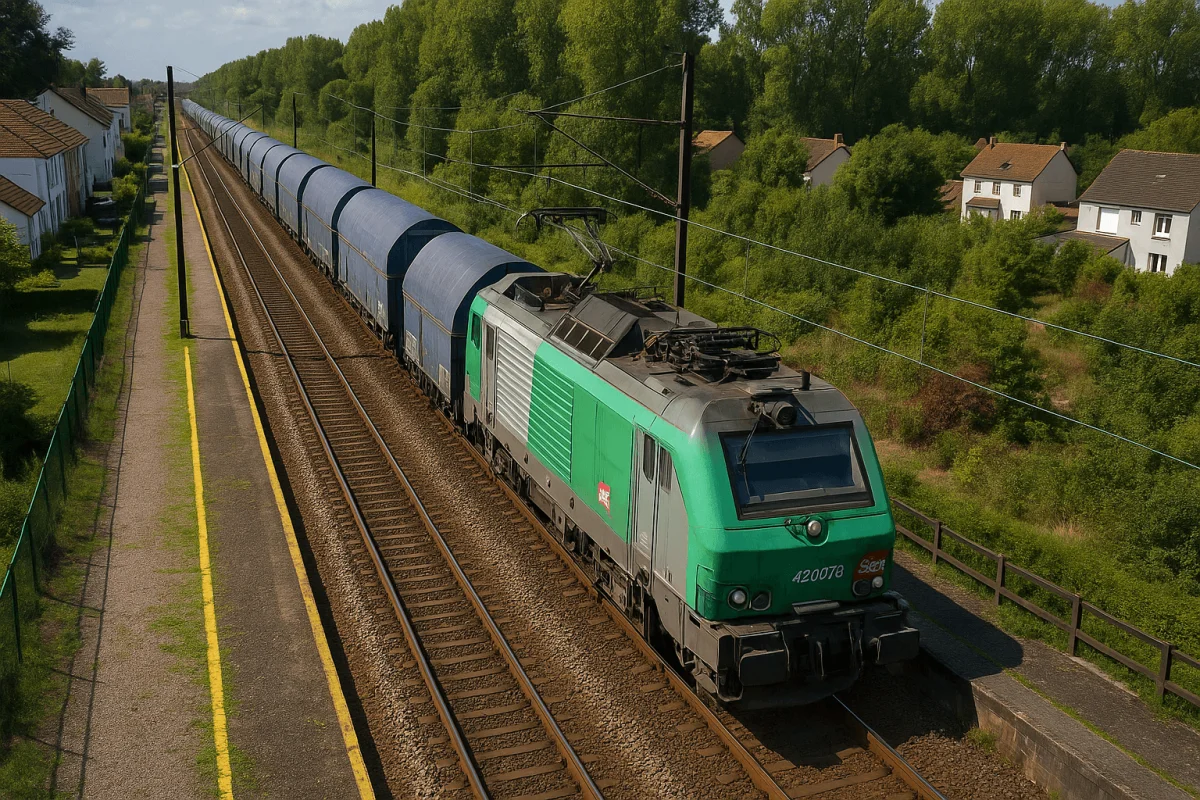
SNCF is disposing of a significant portion of its freight locomotive fleet following a European Commission mandate to avoid major penalties over illegal state aid allegations. The French railway giant must sell 53 locomotives and transfer 23 freight services to competitors as part of the broader Fret SNCF dissolution process.
10 BB 27000 Locomotives Up for November Auction
SNCF has advertised the sale of 10 Class BB 27000 four-axle electric freight locomotives through the online auction platform Agorastore this November. These dual-voltage Prima models (1.5kV dc/25kV ac) were manufactured by Alstom between March 2002 and March 2003, having undergone comprehensive mid-life refurbishment.
Previously operated by Fret SNCF for long-distance intermodal services, these locomotives represent proven technology in European freight operations. The BB 27000 series forms part of Alstom's Prima family, designed specifically for heavy freight applications across diverse European rail networks.
Technical Specifications and Market Value
Each locomotive delivers 5,714 HP (4,200 kW) of power and maintains compatibility with both French and international electrical systems. The dual-voltage capability makes them particularly attractive for cross-border freight operations, a growing segment in European rail logistics.
Market observers expect strong interest from private freight operators seeking to expand capacity. Similar BB 27000 units previously sold to GCA Traction demonstrate continued demand for this locomotive class among European freight companies.
European Commission State Aid Investigation Impact
The locomotive disposal stems from the European Commission's determination that Fret SNCF received illegal state aid, requiring the wind-up of the freight subsidiary. This ruling aims to restore competitive balance in European rail freight markets.
The asset sales form part of a larger plan to improve efficiency and competitiveness in the French freight sector by redistributing key rail assets to private operators. The Commission's intervention reflects broader EU efforts to liberalize rail freight markets across member states.
Restrictions and Market Competition
A crucial restriction prevents other SNCF subsidiaries from bidding on the locomotives, ensuring genuine market transfer. This measure addresses Commission concerns about maintaining artificial competitive advantages within the SNCF group structure.
The forced sales complement the transfer of 30% of traffic representing approximately €750 million annual turnover to competing operators through a structured tendering process.
Impact on Luxembourg Railways Operations
CFL Cargo, Luxembourg Railways' subsidiary, currently leases numerous BB 27000 locomotives from Fret SNCF for piggyback services between Bettembourg, Luxembourg, and Le Boulou, France. This route serves as a critical link for trailer-on-train services connecting northern and southern Europe.
CFL Cargo is expected to gradually replace their leased BB 27000 fleet with six-axle Stadler Euro 6000 locomotives, indicating strategic fleet modernization beyond the immediate SNCF disposal impact.
Future Locomotive Sales and Market Outlook
Further locomotive sales are anticipated next year as SNCF continues compliance with Commission requirements. The disposal of 53 locomotives represents one of the largest forced asset sales in recent European railway history.
Private freight operators across Europe are positioning themselves to acquire quality rolling stock at competitive prices. The sales provide opportunities for fleet expansion without new locomotive procurement costs, particularly beneficial for emerging freight operators.
Industry Transformation Implications
The SNCF locomotive disposal reflects broader European rail freight liberalization trends. National railway monopolies face increasing pressure to create level playing fields for private operators, fundamentally reshaping continental freight transportation.
This transformation opens new opportunities for innovative freight operators while challenging traditional state railway business models. The success of these asset transfers will likely influence future European Commission approaches to rail market competition.
Whats your reaction
 Like
0
Like
0
 Dislike
0
Dislike
0
 Love
0
Love
0
 Funny
0
Funny
0
 Wow
0
Wow
0
 Sad
0
Sad
0
 Angry
0
Angry
0

TrainsNews

Comments (0)