

Adamuz crash: three earlier trains bore marks of the broken rail
Spain's rail accident investigators found notches matching the Adamuz rail break on the wheels of three trains that passed in the two and a half hours before the crash of 18 January. More than nine months on, the broken rails have still not reached the laboratories that must test them.
Lire en français : La soudure rompue d'Adamuz avait été jugée apte aux contrôles d'Adif
Spain's rail accident investigators found notches matching the Adamuz rail break on the wheels of three trains that passed in the two and a half hours before the crash of 18 January. More than nine months on, the broken rails have still not reached the laboratories that must test them.
The Iryo 6189 from Málaga to Madrid derailed at 19:43 on 18 January 2026 at the entrance to Adamuz station, in Córdoba province, after running over a broken rail at kilometre point 318+681. Seconds later the Alvia 2384 from Madrid to Huelva, travelling on the adjacent track, struck it, and its first two cars fell down a four-metre embankment. Forty-six people died, including the Alvia's driver, Prime Minister Pedro Sánchez told Congress on 11 February.
In its note of 23 January, the Railway Accident Investigation Commission (CIAF) said the rail failed at a weld joining two lengths of rail, and that its main hypothesis was a break that already existed when the Iryo arrived. Investigators found notches compatible with the fracture on the wheels of three trains that had used the same track that evening: Iryo unit 109-011 at around 17:21, Iryo 109-003 at around 19:01 and a Renfe series 130 at around 19:09, according to the CIAF case file. The last of them crossed the spot about 34 minutes before the derailment and stayed on the rails.
That sequence is the strongest evidence of when the rail gave way, yet it remains a working hypothesis. The CIAF wrote that the only valid conclusions will be those in its final report. No published official document states that track monitoring flagged the defect before the crash.
The failed weld was not on old track. Adif finished renewing the section in May 2025, the Adamuz switches entered service on 20 June 2025 and 114 welds passed acceptance, Transport Minister Óscar Puente said on 23 January. The joint had been carrying traffic for less than eight months.
The CIAF's corrected note of 10 March shows how little margin the second train had. The Iryo's main circuit breaker opened at 19:43:29 at 205 km/h. Nine seconds later signal S613 went to danger and the LZB train protection system applied the Alvia's emergency brakes at 216 km/h. Its data recorder stopped six seconds after that, at 204 km/h.
Rails still waiting for the laboratory
Confirming how the weld failed requires metallurgical tests on the rail ends. The CIAF picked two laboratories, the CSIC's CENIM in Madrid and the private firm AIMEN in Galicia, and the Montoro court authorised moving the rail sections on 20 July, giving the labs six months from delivery. ABC reported on 13 October that the rails had still not been sent.
The file has also changed hands. Spain's new Independent Authority for the Investigation of Technical Accidents (AITAT), created by Royal Decree 141/2026, has run the case since 15 July. It cannot finish within the usual 12 months, EFE reported on 15 October, so final conclusions are not expected before mid-2027. The same authority is now investigating the Urda collision of 28 October in Toledo province, a separate accident.
The government has already acted on maintenance, announcing on 11 February an extra 1.8 billion euros, 3,600 hires and 50 more staff for the rail safety agency AESF. The next step in the Adamuz case is the transfer of the rails: the six-month laboratory clock only starts once they arrive. Follow our coverage of rail accidents.
Sources: CIAF, Adamuz case file and notes (23/01/2026, 10/03/2026 corrected 11/03/2026); La Moncloa, Ministry of Transport (23/01/2026); La Moncloa, Prime Minister before Congress (11/02/2026); BOE, Royal Decree 141/2026 (25/02/2026); Onda Vasca, laboratory contracts (07/06/2026); Última Hora / Europa Press (20/07/2026); ABC (13/10/2026); EFE via Infobae (15/10/2026); EFE via Infobae (29/10/2026).
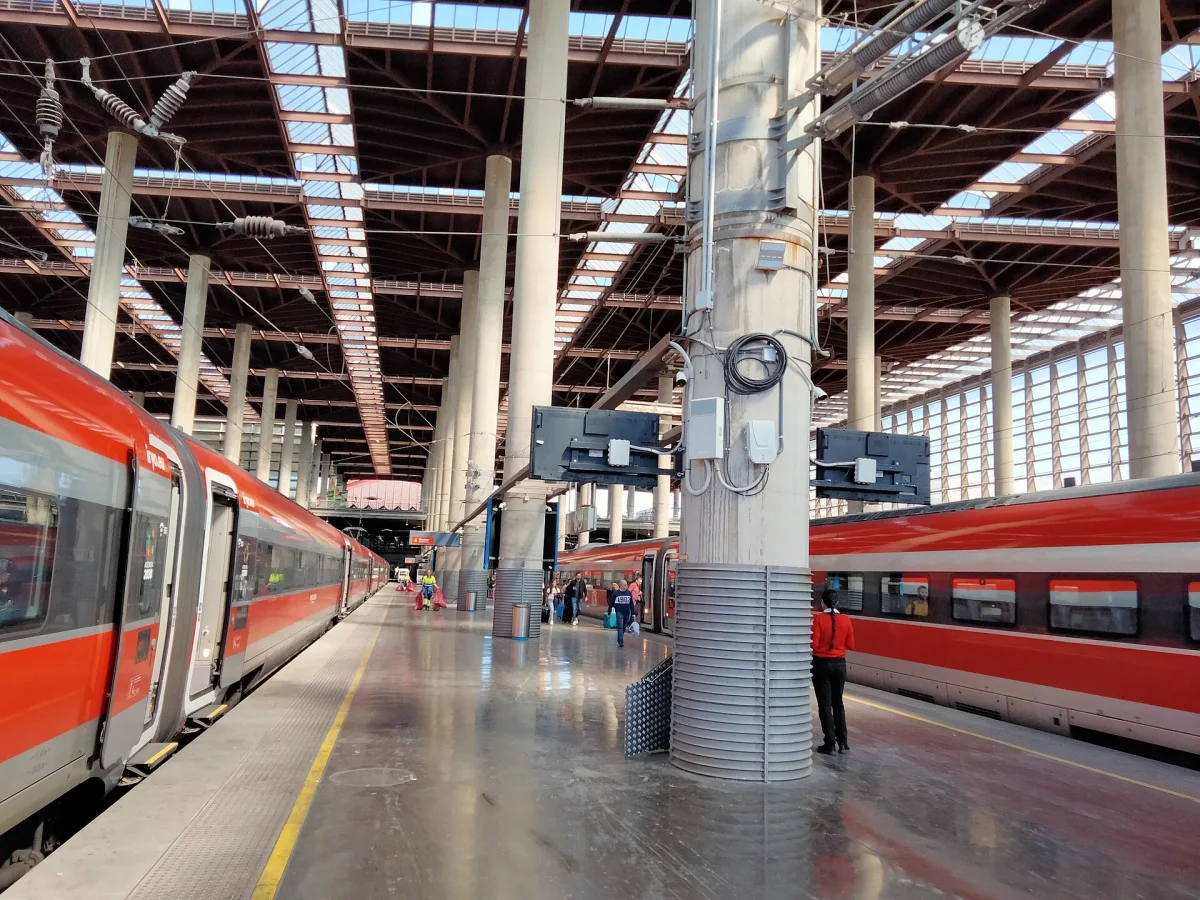
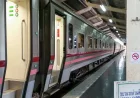
Photo: Iryo class 109 trains, the type involved in the derailment, at Madrid Puerta de Atocha – Almudena Grandes station, June 2024. Enric, CC BY 4.0, via Wikimedia Commons.
Article written with the help of AI from the sources cited above, reviewed by the TrainsNews editorial team. Real photo, credited below the image. Spotted an error? contact@trainsnews.com – Our AI charter
Whats your reaction
 Like
0
 Dislike
0
 Love
0
 Funny
0
 Wow
0
 Sad
0
 Angry
0

TrainsNews est un média indépendant et bilingue d'actualité ferroviaire mondiale, publié depuis 2024. La rédaction couvre la grande vitesse, le matériel roulant, l'infrastructure, la signalisation et les télécoms ferroviaires (ERTMS/ETCS, CBTC, FRMCS, GSM-R), l'exploitation, le fret et le financement des projets. Chaque article cite ses sources et donne les chiffres avec leur total. TrainsNews is an independent, bilingual (French/English) news outlet covering the global rail industry since 2024: high-speed rail, rolling stock, infrastructure, signalling and telecoms, operations, freight and project financing. Every article cites its sources.
The rail month in one PDF: news and guides summarised, with their photos.
The rail month in one PDF: news and guides summarised, with their photos.


Comments (0)