

Livraga Frecciarossa derailment (2020): the miswired points
Frecciarossa 9595 derailed at 298 km/h at Livraga, on the Milan–Bologna high-speed line, on 6 February 2020, killing both drivers. DiGIFeMa traced it to points left reversed after night maintenance and a miswired actuator.
By the TrainsNews editorial team · Updated 2 November 2026
On 6 February 2020, at about 05:30, Trenitalia's Frecciarossa 9595 from Milan to Salerno derailed at 298 km/h near Livraga, in the province of Lodi, on the Milan–Bologna high-speed line. Both drivers were killed and 30 people were injured. Italy's rail accident investigators traced the crash to a set of points left in the diverging position while the control room saw them set straight.
| Date | Thursday 6 February 2020, about 05:30 |
| Location | Livraga junction (PM Livraga, province of Lodi), points no. 05 at km 166+756, Milan–Bologna high-speed line |
| Train | Trenitalia service 9595 Milan–Salerno, ETR 1000 unit no. 021 (Frecciarossa 1000), eight cars |
| On board | 28 passengers and eight staff |
| Speed | 298 km/h; line speed 300 km/h |
| Toll | 2 dead (both drivers), 30 injured |
| Investigation | DiGIFeMa, final report dated 28 January 2022 |
The final report of DiGIFeMa, the investigation directorate of Italy's transport ministry, says the direct cause was simple: points no. 05 were in the diverging position, not the straight one. The derailment followed a night of maintenance on those points.
A wiring error the interlocking could not see
During the overnight possession, the three hydraulic actuators that move points 05 were replaced, along with one actuator each on points 06 and 10, according to the report. On the desk of the central traffic controller in Bologna, points 05 then showed in the straight position. That display allowed the system to set the straight route for train 9595.
Tests after the crash showed why. Actuator no. 2 on the leading set of points 05 had an internal wiring error in its control circuit. It returned a "normal position" signal while the switch blades were in fact reversed. The ETR 1000, fitted with ERTMS/ETCS Level 2, therefore had no reason to slow down. Its last diagnostic contact, at 05:30:20, recorded 298 km/h.
DiGIFeMa lists five indirect causes behind the direct one: the wiring error itself; no check, after the work, that the physical position matched the position shown remotely; points that were not clamped in the straight position although actuator no. 2 had shown clear signs of malfunction; weak quality control during the manufacture of the actuator; and maintenance and operating procedures that did not assign tasks clearly. Above all of these, the report names an upstream cause: the point detection circuit was not fail-safe against an actuator wiring error.
That last finding is the one that matters for signalling. Point detection is supposed to be the interlocking's proof that the blades are where the route needs them. At Livraga, a single wrong connection inside one actuator produced a false proof, and nothing downstream could catch it. ERTMS Level 2 on board could only supervise the train against the route the interlocking believed was set. The whole chain of protection was only as good as the detection contact at the switch.
Five recommendations, three court rulings
The report's recommendations go to ANSFISA, Italy's rail safety authority, for application by infrastructure managers. They ask for functional tests instead of visual wiring checks in the actuators' quality plan; a documented check that physical and remote positions match at the end of any maintenance touching control circuits; the most restrictive precaution before returning abnormal points to service; clearer rules for clamping points during maintenance; and, in the longer term, hydraulic points whose control circuit reports the position of each actuator, with matching changes to the interlocking logic.
The criminal cases have moved in two tracks, according to the Italian press. Under the fast-track procedure, a court in Lodi sentenced two Rete Ferroviaria Italiana (RFI) maintenance workers to three years in July 2023 and acquitted their instructor; on appeal in Milan, in March 2025, their sentences were cut to one year and eight months, suspended. In the ordinary trial, the Lodi court convicted a former RFI manager and two staff from the Alstom plant that built and tested the actuators in December 2025, with sentences of two years and eight months to three years and two months; two other Alstom employees were acquitted. We found no public information on appeals against the December 2025 ruling.
Livraga appears in our list of high-speed train accidents. The Frecciarossa 1000 fleet itself has kept growing since, as we reported on Trenitalia's European expansion plans.
Frequently asked questions
What caused the Livraga Frecciarossa derailment?
Points no. 05 were in the diverging position while the control room saw them straight. A wiring error inside one hydraulic actuator sent a false position signal, according to DiGIFeMa.
How fast was the train going?
298 km/h, on a section where the line speed was 300 km/h.
How many people died?
The two drivers. DiGIFeMa counts 30 injured among staff and passengers.
Sources: DiGIFeMa, investigation report on the derailment of train 9595 at PM Livraga (28 January 2022, English version); L'Unione Sarda (press), 3 July 2023; Il Giorno (press), 5 March 2025; Il Giorno (press), 16 December 2025. Checked on 2 November 2026.
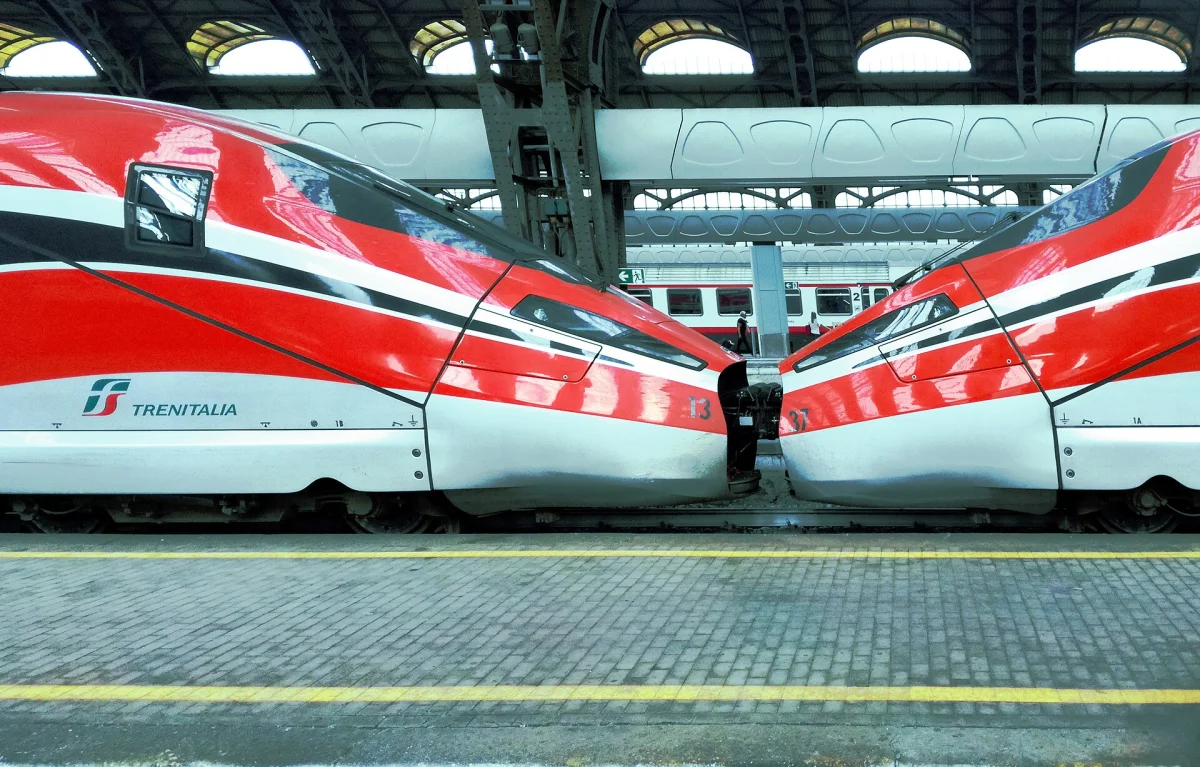
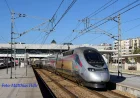
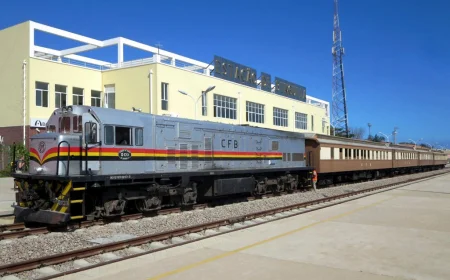
Photo: Frecciarossa trains at Milano Centrale, 27 May 2018. Sabas88, CC BY-SA 4.0, via Wikimedia Commons
Written with AI assistance from the sources cited, reviewed by the TrainsNews editorial team. Real photo, credited below the image. Spotted an error? contact@trainsnews.com — Our AI policy
Whats your reaction
 Like
0
 Dislike
0
 Love
0
 Funny
0
 Wow
0
 Sad
0
 Angry
0

TrainsNews est un média indépendant et bilingue d'actualité ferroviaire mondiale, publié depuis 2024. La rédaction couvre la grande vitesse, le matériel roulant, l'infrastructure, la signalisation et les télécoms ferroviaires (ERTMS/ETCS, CBTC, FRMCS, GSM-R), l'exploitation, le fret et le financement des projets. Chaque article cite ses sources et donne les chiffres avec leur total. TrainsNews is an independent, bilingual (French/English) news outlet covering the global rail industry since 2024: high-speed rail, rolling stock, infrastructure, signalling and telecoms, operations, freight and project financing. Every article cites its sources.
The rail month in one PDF: news and guides summarised, with their photos.
The rail month in one PDF: news and guides summarised, with their photos.






Comments (0)