

Eckwersheim TGV crash (2015): what happened and what changed
On 14 November 2015 a TGV test train derailed at Eckwersheim in Alsace, killing 11 people. Timeline, BEA-TT's official cause, the 2024 court case and what changed for test runs.
By the TrainsNews newsroom · Updated 30 October 2026
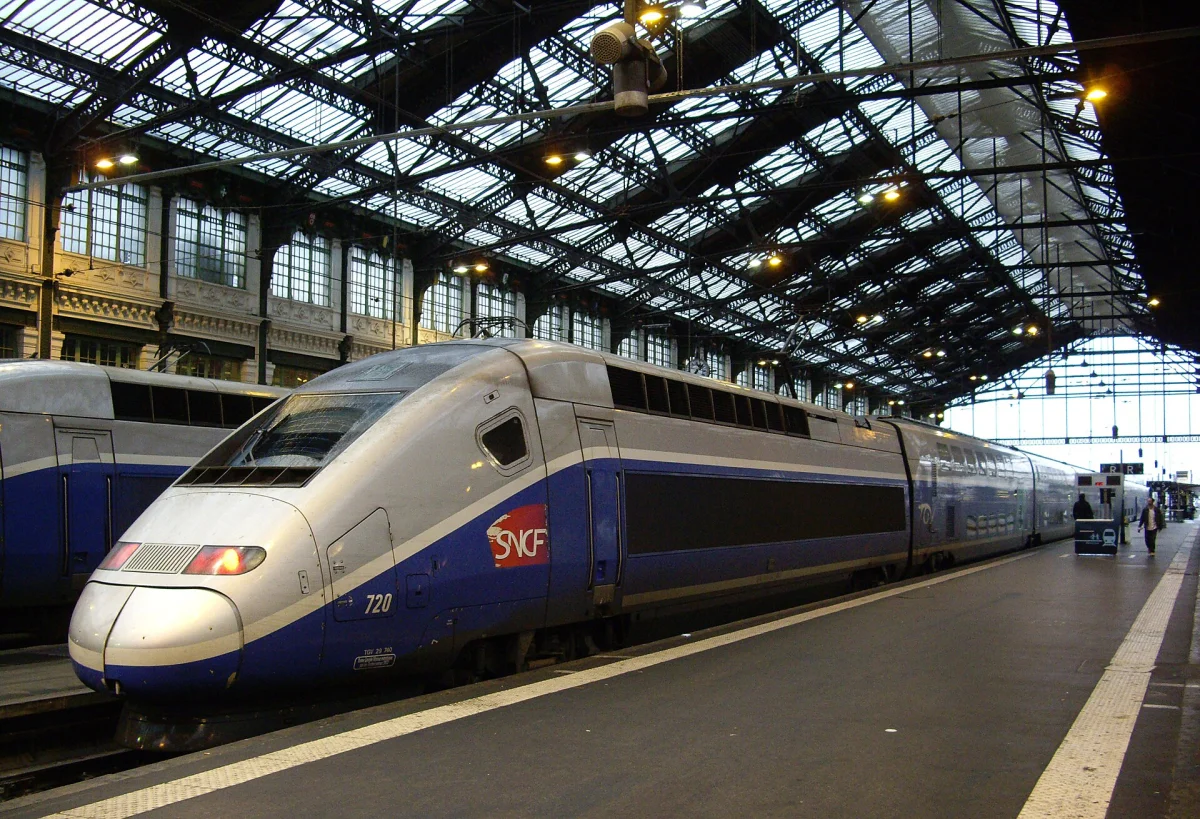
On 14 November 2015, a TGV test train derailed at Eckwersheim, north of Strasbourg, during a high-speed test run on the second phase of the LGV Est, which had not yet opened to passengers. Of the 53 people on board, 11 were killed and 21 seriously injured. It remains the worst accident in the history of France's TGV. This page is based first on the technical investigation report published by BEA-TT, France's land transport accident investigation bureau, in March 2017.
Key facts
- When and where: Saturday 14 November 2015 at 15:04, at Eckwersheim (Bas-Rhin), at the start of the curve linking the new line to the conventional Paris–Strasbourg line, just before the bridge over the Marne–Rhine canal.
- The train: TGV Dasye trainset 744, on a test run for the approval of the line's second phase.
- Casualties: 11 dead and 21 seriously injured, according to BEA-TT.
- Cause: 255 km/h on a 945 m radius curve, where the speed limit was 176 km/h, after inappropriate braking.
- Consequences: six BEA-TT recommendations on test runs, a ban on outsiders aboard test trains, and a 2024 criminal judgment against three companies and two members of the driving team.
Accident file
| Date | Saturday 14 November 2015, 15:04 |
| Location | Eckwersheim (Bas-Rhin, France), Vendenheim junction, just before the bridge over the Marne–Rhine canal |
| Line | LGV Est, phase 2 (Baudrecourt–Vendenheim, 106 km), under test |
| Train | TGV Dasye (Duplex, asynchronous motors, ERTMS) trainset 744, test train |
| Organisations | Tests run by Systra, train driven by SNCF crews |
| Speed | 255 km/h on the curve; maximum permitted 176 km/h |
| On board | 53 people |
| Casualties | 11 dead, 21 seriously injured (BEA-TT) |
| Investigation | BEA-TT, opened 16 November 2015, report published March 2017 |
| Report | BEA-TT technical investigation report (PDF, in French) |
Background: the last tests before opening
The LGV Est runs from Vaires-sur-Marne, east of Paris, to Vendenheim, north of Strasbourg. Its first 300 km opened on 10 June 2007. The second phase, 106 km from Baudrecourt (Moselle) to Vendenheim, was due to open on 3 April 2016, and in autumn 2015 it was in its final round of speed tests.
Before a new high-speed line is approved, test trains deliberately run faster than the planned commercial speed. To make that possible, some safety systems that are mandatory on passenger trains are switched out. BEA-TT points out that safety then depends much more on how the tests are prepared and on the people in the cab.
What happened
The programme for 14 November included seven runs, four of them overspeed runs on track 2. Heading towards Strasbourg, the train was to hold 330 km/h up to kilometre post 403.809, where a 176 km/h zone began just before the junction curve.
On the morning run, numbered 318-004, the air brake was applied much earlier than planned. BEA-TT found that braking points were being called out by sight of the lineside kilometre boards rather than from the cab odometer, which put braking 300 to 400 m ahead of the planned points, according to BEA-TT. Nobody spotted the error, and the run was signed off.
The afternoon run, 318-006, set off towards Strasbourg with seven people in the cab. The plan was to brake electrically, then apply the air brake at kilometre 402. The driver released the electric brake and the train stayed at 330 km/h. The traction supervisor, whose job was to call the braking points, did not notice: an intercom call came in at that very moment and distracted him. The air brake went on at kilometre 402.050, exactly where planned, but far too late for the speed the train was actually doing.
According to BEA-TT, the train entered the 176 km/h zone at 265 km/h and took the 945 m radius curve at 255 km/h. It began to overturn about 100 m before the bridge and broke apart: the leading power car and the eight trailers came to rest below the line beyond the canal, and the rear power car fell into the canal. The emergency services were called from 15:05.
The official cause
In BEA-TT's words, the direct cause was "the speed of 255 km/h on a tight curve with a radius of 945 m" (our translation). That excessive speed came from inappropriate braking, which the bureau traced to three chains of causes:
- an unsuitable braking strategy based on flawed reasoning, which placed the air brake application at kilometre 402;
- a misunderstanding between the traction supervisor and the rest of the crew about how to brake, which led the driver to release the electric brake and keep the train at 330 km/h;
- an intercom call during braking, which distracted the traction supervisor and stopped him seeing that the electric brake had been released.
BEA-TT found no defect in the track or the train that could have caused the derailment. On 19 November 2015, after the first findings of its internal inquiry, SNCF froze high-speed test runs and restricted access on board, according to BEA-TT.
Who was on board
BEA-TT counts 53 people: 18 staff with a job on the test (driving and measurements), 16 SNCF and Systra staff with no task on board that day, and 19 guests, mostly relatives and friends of staff. Guests on test trains were allowed at the time, up to 20 for this test campaign.
There were seven people in the cab instead of the planned crew of four, with the traction supervisor's agreement, as the rules allowed. Witness accounts agree that the three extra people neither moved nor spoke during the run, according to BEA-TT.
Investigation and court case
A technical investigation does not apportion blame; that is for the courts. The criminal trial was held at the Paris criminal court from 4 March to 16 May 2024, and judgment was given on 10 October 2024, as reported by the French public broadcaster France Bleu. Five of the six defendants were convicted of manslaughter and unintentional injury:
- SNCF: fined €400,000;
- Systra, which organised the tests: fined €225,000, the maximum allowed, according to France Bleu;
- SNCF Réseau: fined €150,000;
- the traction supervisor: 15-month suspended prison sentence;
- the driver: 7-month suspended prison sentence.
The third person prosecuted from the cab, a Systra employee, was acquitted. On 23 October 2024 SNCF said that neither it, SNCF Réseau nor its staff would appeal. We have found no public information on whether Systra or the prosecution appealed.
What changed afterwards
On 19 November 2015, SNCF froze high-speed test runs, banned anyone outside the test teams from test trains and tightened access to the cab.
Tests on the second phase resumed on 29 February 2016 under new rules described by BEA-TT: a graphic run sheet prepared in advance showing target speed, maximum speed and braking zones; a formal briefing before each run, extended to 40 minutes for overspeed runs; strictly limited cab access; and no calls to the cab during a run except in an emergency. For the rest of that campaign, speed supervision was switched back on, which ruled out overspeed runs. Commercial opening was put back to 3 July 2016.
BEA-TT issued six recommendations:
- R1 (SNCF Réseau and the French rail safety authority, EPSF): clarify the approval requirements for high-speed lines and take them to the UIC and the European Union Agency for Railways;
- R2 (Systra): improve preliminary risk analysis of each line's specific features;
- R3 (SNCF Mobilités): select, train and certify test drivers and traction supervisors according to the complexity of the tests;
- R4 (SNCF Mobilités): give test crews practical tools to work out braking strategies and check that everyone understands them;
- R5 (Systra): update how test campaigns are organised, including the experience required of the test manager;
- R6 (SNCF Mobilités): always record cab sound and intercom communications on tests that use an intercom.
BEA-TT also asked the industry to consider "catch-up loops": backup protection whenever safety systems have to be switched out for a test. We have not yet checked official sources on how far these recommendations have been implemented.
Our expert view
In normal service, a TGV approaching a speed restriction too fast is braked automatically by its speed supervision. On an overspeed test that supervision is switched out, because the whole point is to go beyond the limits. Everything then rests on preparation and on the crew. At Eckwersheim, a miscalculated braking plan, a misunderstanding in the cab and a badly timed call added up, and nothing was there to catch them. That is exactly what BEA-TT's "catch-up loops" are about: a single human error should never be left without a safety net.
FAQ
How many people died at Eckwersheim?
Eleven, according to BEA-TT, and 21 of the 53 people on board were seriously injured. Press reports put the total number of injured at 42.
Why was the train going so fast?
It was an overspeed test to approve the line. The train was meant to run at 330 km/h, then slow to no more than 176 km/h before the curve. Braking started too late and it reached the curve at 255 km/h.
Were there passengers on board?
No, it was not a passenger service. On board were SNCF and Systra staff and 19 guests, mostly relatives of staff.
Who was convicted?
On 10 October 2024, the Paris criminal court fined SNCF, Systra and SNCF Réseau and gave suspended prison sentences to the traction supervisor and the driver. A Systra employee was acquitted.
Was automatic speed supervision active?
No. It is active in commercial service, but it had been switched out to allow overspeed test runs, and was switched back on for the end of the campaign, according to BEA-TT.
Sources: BEA-TT, technical investigation report on the derailment of a TGV trainset at Eckwersheim (March 2017, in French); BEA-TT, English summary; France Bleu / ICI (press), judgment of 10 October 2024; France Bleu / ICI (press), 23 October 2024. Checked on 30 October 2026.
Read next: all high-speed rail accidents; ERTMS and ETCS explained.
Whats your reaction
 Like
0
 Dislike
0
 Love
0
 Funny
0
 Wow
0
 Sad
0
 Angry
0

TrainsNews est un média indépendant et bilingue d'actualité ferroviaire mondiale, publié depuis 2024. La rédaction couvre la grande vitesse, le matériel roulant, l'infrastructure, la signalisation et les télécoms ferroviaires (ERTMS/ETCS, CBTC, FRMCS, GSM-R), l'exploitation, le fret et le financement des projets. Chaque article cite ses sources et donne les chiffres avec leur total. TrainsNews is an independent, bilingual (French/English) news outlet covering the global rail industry since 2024: high-speed rail, rolling stock, infrastructure, signalling and telecoms, operations, freight and project financing. Every article cites its sources.
The rail month in one PDF: news and guides summarised, with their photos.
The rail month in one PDF: news and guides summarised, with their photos.







Comments (0)