

Africa Railway Revolution 2026 : Lobito Corridor & high speed rail
Lobito Corridor, Morocco's high-speed rail, Egypt's Velaro trains, Agenda 2063: how Africa's railway boom is reshaping trade and economic growth.
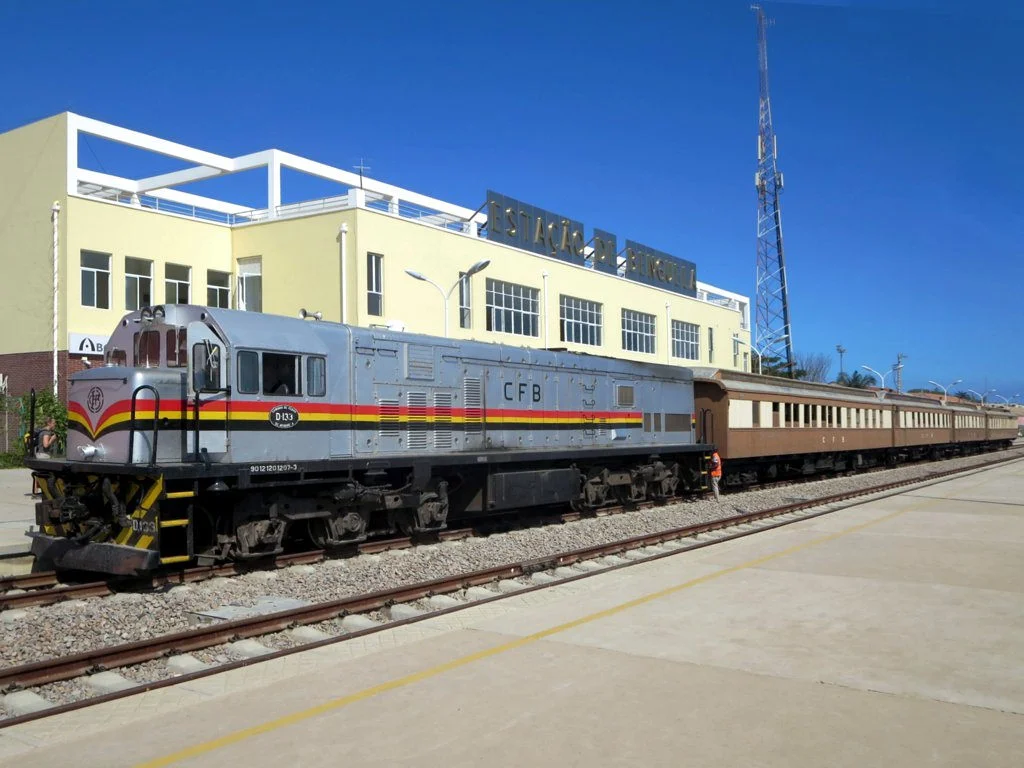
Africa's Railway Revolution: Agenda 2063, the Lobito Corridor, and the Race for High-Speed Rail
Africa is building the largest rail infrastructure push in its history. Between the Lobito Corridor's critical minerals, new high-speed lines in Morocco and Egypt, and continent-wide gauge modernization, here's how rail is reshaping Africa's economic map.
Africa Enters Its "Decade of Acceleration" (2024–2033)
Africa is living through what many experts call a decade of acceleration in transport infrastructure. Between 2024 and 2033, rail has become the central lever of continental economic integration, driven by a strong political vision: the African Union's Agenda 2063.
Two forces are shaping this transformation. On one side, strategic freight corridors like the Lobito Corridor, purpose-built to export critical minerals. On the other, the emergence of true high-speed passenger networks in Morocco, Egypt, and South Africa. Alongside both, a deep modernization of existing networks is underway through the shift to Standard Gauge Railway (SGR) in Kenya, Nigeria, Senegal, and Algeria.
Agenda 2063: Unifying the Continent by Rail
Agenda 2063 is not just a vision statement — it's a concrete action plan to turn Africa into a genuine global economic power. Its flagship rail initiative is the African Integrated High-Speed Railway Network (AIHSRN).
Ambitious Targets
The numbers show the scale of the ambition:
- 12,000 kilometers of integrated railway track have already been built.
- The goal is to add 50,000 additional kilometers by 2043, connecting capitals and major trade hubs across the continent.
A Critical Enabler for AfCFTA
This rail network isn't just about transport it's essential to the success of the African Continental Free Trade Area (AfCFTA), which could boost intra-African trade by more than 50%.
Strategic Lines to Watch
Priority corridors within this integrated network include:
- the TAZARA line (Tanzania–Zambia);
- the Addis Ababa–Djibouti railway;
- the Dakar–Niger project.
The Lobito Corridor: Africa's Critical Minerals Lifeline
If one project sums up today's geopolitical stakes in African rail, it's the Lobito Corridor. Often described as the continent's single most strategic infrastructure project, it has grown far beyond a transport scheme into a matter of global power competition.
A Vital Artery for Copper and Cobalt
The corridor links the mineral-rich basins of the Democratic Republic of Congo (Katanga) and Zambia (Copperbelt) to the Angolan port of Lobito on the Atlantic coast, spanning roughly 1,300 kilometers. It offers the shortest route for exporting copper and cobalt — two minerals critical to the global energy transition — to Europe and North America, and is projected to cut mineral transport costs for producers in Zambia and the DRC by as much as 30%.
International Financing at Scale
The project has drawn unprecedented backing from the United States and the European Union. In July 2026, Africa Finance Corporation (AFC) announced the financial close of a $753 million financing package for the Angolan section, combining $553 million from the U.S. International Development Finance Corporation and $200 million from the Development Bank of Southern Africa — part of a wider financing effort for the corridor that has been estimated at $3–5 billion overall.
The Technical Challenge: The DRC Section
The Angolan section of the corridor is now operational, running under a 30-year freight concession, with new copper and cobalt shipments already moving along the route. The main remaining challenge is the 427-kilometer stretch between Kolwezi and Dilolo in the DRC, which is essential to unlocking the corridor's full potential.
The Race for High-Speed Rail: Morocco, Egypt, and South Africa
Beyond mineral freight, passenger rail is undergoing its own transformation, driven by the rise of high-speed networks.
Morocco, Africa's Undisputed Rail Leader
Building on the success of its Al Boraq high-speed line between Tangier and Casablanca — the first high-speed rail service on the continent — Morocco continues to extend its lead.
- Extension south: feasibility studies for the future Marrakech–Agadir high-speed line have been completed. This roughly 50-billion-dirham project must cross the High Atlas mountains, with about 70% of the route made up of bridges and tunnels.
- Kenitra–Marrakech line: this 430-kilometer high-speed line, running at up to 320 km/h, is already under construction.
Morocco's long-term 2040 Rail Strategy plans 1,100 km of high-speed track in total, positioning the country as home to Africa's largest high-speed network.
Egypt's "Suez Canal on Rails"
In partnership with Siemens Mobility, Egypt is building what will become the sixth-largest high-speed rail network in the world.
- A massive network: more than 2,000 kilometers of track will connect the Mediterranean to the Red Sea.
- Desert-ready technology: the Velaro train, capable of reaching 250 km/h, has been specially engineered to withstand sand and extreme heat.
South Africa Revives Its High-Speed Ambitions
South Africa has relaunched a $34 billion project to connect Pretoria, Polokwane, and Musina. This 500-kilometer corridor could become sub-Saharan Africa's first true high-speed system, running above 250 km/h.
Modernization and Standard Gauge Railway (SGR): Everyday Rail Transforms Too
Alongside these flagship high-speed projects, the shift to Standard Gauge Railway (SGR) is progressing rapidly across the continent.
- Kenya: construction of Phase 2B (Naivasha–Kisumu–Malaba) began in July 2026, aimed at speeding up freight to Uganda.
- Nigeria: the Lagos–Ibadan line has already carried more than 1.33 million passengers since 2021 and supports 20,000 jobs.
- Senegal: under the "Senegal 2050" program, 2,000 kilometers of new track are planned, with the Dakar–Tambacounda line as top priority.
- Algeria: the country is betting on regional integration through the Algiers–Tamanrasset line and the Gara Djebilet mining line, completed in record time.
Rail as the Backbone of Africa's Rise
Maintenance and financing challenges remain across all these projects. But the socio-economic impact is already measurable: along the Mombasa–Addis Ababa corridor, household incomes have risen by 41%.
By connecting people to resources, and mining basins to global markets, rail is steadily becoming the true backbone of Africa's economic emergence — a story that goes far beyond transport alone.
Photo: David Stanley from Nanaimo, Canada, CC BY 2.0, via Wikimedia Commons
Whats your reaction
 Like
0
Like
0
 Dislike
0
Dislike
0
 Love
0
Love
0
 Funny
0
Funny
0
 Wow
0
Wow
0
 Sad
0
Sad
0
 Angry
0
Angry
0

TrainsNews est un média indépendant et bilingue d'actualité ferroviaire mondiale, publié depuis 2024. La rédaction couvre la grande vitesse, le matériel roulant, l'infrastructure, la signalisation et les télécoms ferroviaires (ERTMS/ETCS, CBTC, FRMCS, GSM-R), l'exploitation, le fret et le financement des projets. Chaque article cite ses sources et donne les chiffres avec leur total. TrainsNews is an independent, bilingual (French/English) news outlet covering the global rail industry since 2024: high-speed rail, rolling stock, infrastructure, signalling and telecoms, operations, freight and project financing. Every article cites its sources.
Comments (0)