

NSW closes five regional stations to prepare for new CAF trains
Armidale, Tamworth and three other NSW stations close to trains from 21 October to 2 December 2026 for platform and accessibility works ahead of the new 29-train Regional Rail Fleet.

Five stations in the New England and North West region of New South Wales (NSW), Australia, will close to trains from 21 October to 2 December 2026 for works to prepare them for the state's new Regional Rail Fleet. Transport for NSW announced the closures on 12 October 2026. Trains will not stop at Armidale, Uralla, Walcha Road, Kootingal or Tamworth during the work. Coaches will replace trains between Werris Creek and Armidale.
What the works include
According to Transport for NSW, crews will:
- upgrade and resurface platforms and improve accessibility;
- install assisted boarding equipment, new fencing and new lighting;
- upgrade drainage and underground services;
- remove or relocate old equipment, manage vegetation and carry out site investigations.
Trains will stop at the five stations again from Thursday 3 December 2026. Minor works will continue around the stations until 24 December. Replacement coaches will follow the existing train timetable, but may not run at exactly the same times. Booked passengers will be told by SMS or email that their trip will be by coach.
"These upgrades are a critical milestone in preparing the network for the introduction of the new Regional Rail Fleet," said Raquel Rubalcaba, Deputy Secretary for Infrastructure Projects and Engineering at Transport for NSW. NSW TrainLink chief executive Roger Weeks thanked passengers for their patience and asked them to plan ahead.
A 29-train bi-mode fleet built by CAF
The new fleet is being built by Spanish manufacturer CAF and will be maintained by UGL Rail Services. It has 117 carriages forming 29 trains:
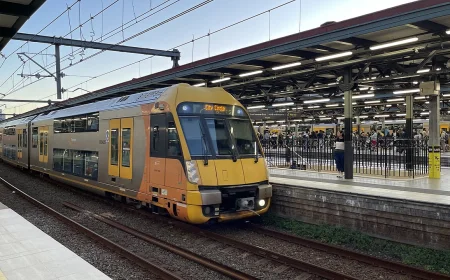
- 10 three-carriage regional intercity trains, run by Sydney Trains, to replace most of the Endeavour fleet;
- 9 three-carriage short regional trains to replace the XPLORER trains;
- 10 six-carriage long regional trains to replace the XPT fleet.
The trains are bi-mode: they run on overhead electric power on electrified lines and on diesel elsewhere. Transport for NSW says this is an Australian first for passenger rail. Top speed is 160 km/h, depending on the infrastructure. The infrastructure budget is A$2.29 billion, covering the fleet, the Mindyarra Maintenance Centre in Dubbo and rail upgrades. A further A$1.35 billion covers maintenance for the first 15 years.
According to Transport for NSW, 13 trains are now in Australia, all long regional trains have been built and three trains are in intensive testing. No date has been given for the first passenger service, which depends on testing, modifications and accreditation by the Office of the National Rail Safety Regulator.
TrainsNews analysis
Station works like these are a normal but often underestimated part of a new fleet. A new train must fit the platforms: its floor height, door positions and length all change the gap between train and platform. Assisted boarding equipment and new lighting are needed to meet accessibility rules. Doing this work in one six-week block, with coaches, is less disruptive than many weekend closures, but regional passengers will feel it.
The bigger risk is the timetable of the fleet itself. The project has already been delayed, and the contract structure was changed when the original public-private partnership was dissolved. Bi-mode trains add complexity: the switch between electric and diesel power must work reliably, and the trains must be shown to be compatible with signalling and track circuits across a network with very different equipment. Until accreditation is granted, the old XPT and XPLORER trains, some now more than 40 years old, will stay in service.
Read also: our train travel guides and our directory of Asia-Pacific rail infrastructure managers.
Sources: Transport for NSW media release (12 October 2026); Transport for NSW, Regional Rail project page (consulted 14 October 2026).
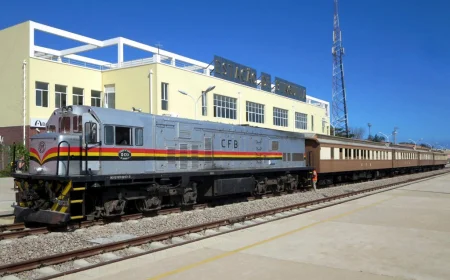
Photo: Bidgee, CC BY-SA 3.0, via Wikimedia Commons
Written with AI assistance from the official sources cited. Spotted an error? contact@trainsnews.com — Our AI policy
Whats your reaction
 Like
0
Like
0
 Dislike
0
Dislike
0
 Love
0
Love
0
 Funny
0
Funny
0
 Wow
0
Wow
0
 Sad
0
Sad
0
 Angry
0
Angry
0

TrainsNews est un média indépendant et bilingue d'actualité ferroviaire mondiale, publié depuis 2024. La rédaction couvre la grande vitesse, le matériel roulant, l'infrastructure, la signalisation et les télécoms ferroviaires (ERTMS/ETCS, CBTC, FRMCS, GSM-R), l'exploitation, le fret et le financement des projets. Chaque article cite ses sources et donne les chiffres avec leur total. TrainsNews is an independent, bilingual (French/English) news outlet covering the global rail industry since 2024: high-speed rail, rolling stock, infrastructure, signalling and telecoms, operations, freight and project financing. Every article cites its sources.




Comments (0)