

Georgia's 2026–2028 railway plan aims to double capacity
Georgia plans 50 locomotives, 1,500 wagons and 10 passenger trains by 2028 to double rail capacity, backed by World Bank TC-GATE financing.
Lire en français : Géorgie : un plan ferroviaire 2026-2028 pour doubler les capacités
Georgia aims to double the capacity of its railway network by 2028. Prime Minister Irakli Kobakhidze presented Georgian Railway's (GR) 2026–2028 action plan on 8 April 2026. It covers the purchase of 50 locomotives, 1,500 wagons and 10 passenger trains, together with "modern railway systems" to streamline operations. The government has earmarked up to GEL 1bn (about $374m) for the period, as part of a ten-year railway strategy valued at $1.7bn.
An ageing traction fleet
Rolling stock renewal comes first because the existing fleet is close to the end of its life. According to Rolling Stock World, GR runs 91 locomotives, 71 of them more than 35 years old, and 86% of its roughly 8,100 freight wagons were built over 30 years ago. The operator had to cancel a contract for 10 class 3ES6 electric locomotives over secondary-sanctions concerns. Director General Lasha Abashidze has said GR will stop overhauling life-expired units and buy new instead.
- 50 locomotives, 1,500 wagons and 10 passenger trains to be acquired in 2026–2028
- Up to GEL 1bn of public investment to 2028
- Passenger target: from 2 million to 5 million journeys a year
- Freight in H1 2026: 6.9 million tonnes, up 10% year on year
Financing the Middle Corridor
The freight side relies on the TC-GATE project (Trans-Caspian Transport Corridor – Georgia Accessibility and Transport Enhancement). The World Bank approved $372m for it on 2 June 2026. Total cost exceeds $750m, with co-financing from the Asian Infrastructure Investment Bank ($181m) and the Asian Development Bank. The rail component funds 45 electric freight locomotives worth around $350m, targeting 95% fleet availability and a 20% rise in railway revenue.
Deputy Economy Minister Tamar Ioseliani says the spending is meant to secure Georgia's role on the Middle Corridor, the Trans-Caspian route linking China and Central Asia with Europe while bypassing Russia. Georgia also sits on the Baku–Tbilisi–Kars line to the Turkish network, which is itself expanding southwards, as shown by the reopening of the line along the Syrian border.
Faster and restored passenger services
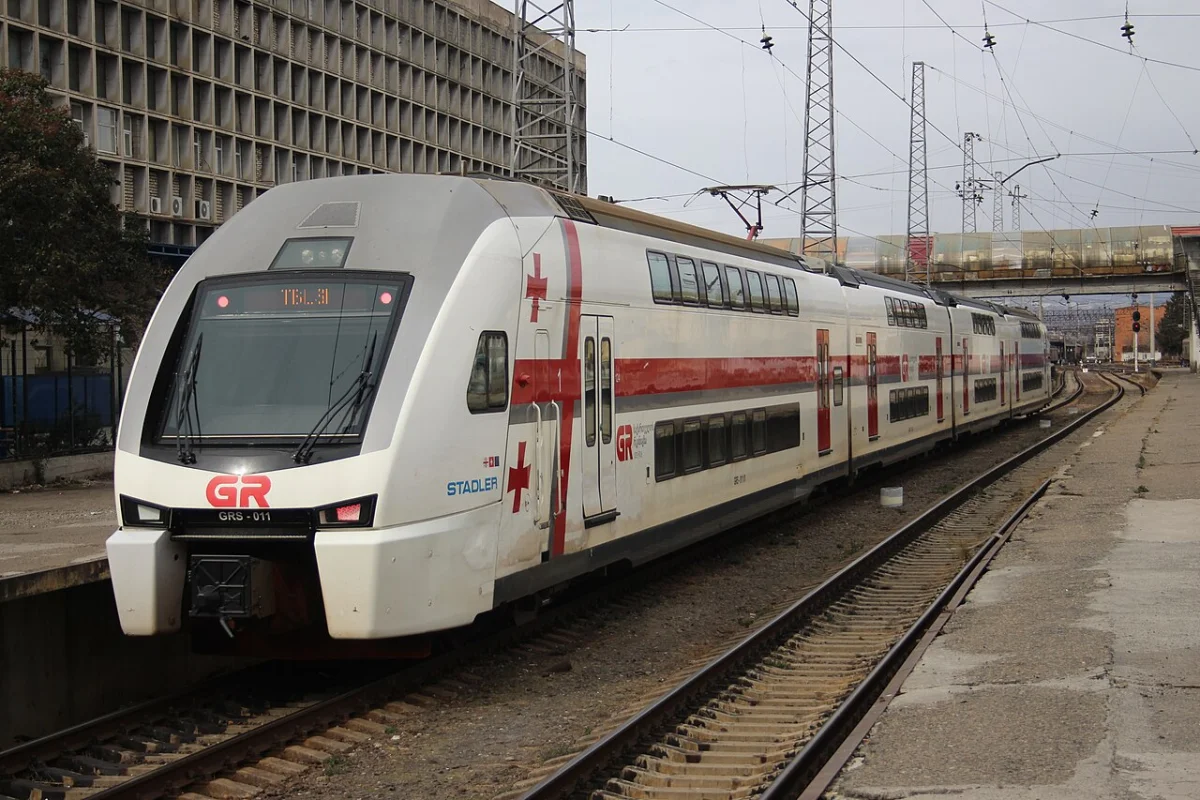
Passenger services feature prominently in the plan. Tbilisi–Batumi journey times were due to fall from 5h30 to 4h by August 2026. The Tbilisi–Akhaltsikhe service, suspended since 2009, is to be restored with a journey time cut from six hours to three, according to public broadcaster GPB. A new Tbilisi–Kutaisi service is also planned.
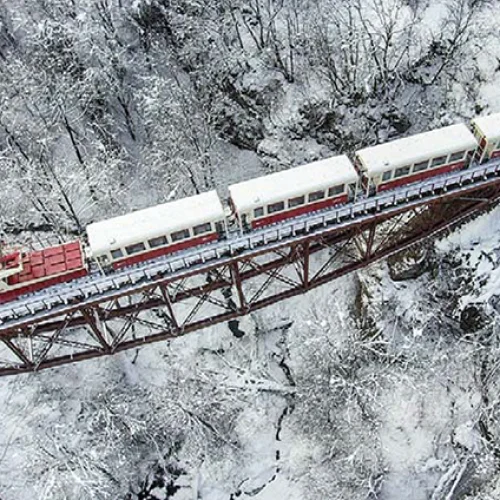
The narrow-gauge Borjomi–Bakuriani tourist line, known as the "Kukushka" and closed since 2020, will be fully rehabilitated, including trains, infrastructure and five stations, ahead of the 2027 winter season. GR also plans a new locomotive maintenance depot at Khashuri, 120 km west of Tbilisi.
An expert's view: capacity starts with traction
The government says modernisation of the main trunk line was completed in December 2025. With that done, the bottleneck shifts to traction. A locomotive fleet that is largely more than 30 years old means low availability and unplanned failures, which cut the number of paths that can actually be operated. For that reason, TC-GATE's 95% availability target matters as much as the increase in fleet size.
The promised "modern systems" remain undefined. No details have been published on signalling or traffic management, even though these determine path capacity, particularly on steeply graded mountain sections. Comparable Central Asian projects show that the Trans-Caspian routes will increasingly compete on operational reliability. Examples include Kyrgyzstan's Issyk-Kul railway and Kazakhstan's push to list its national operator, covered in our report on the Temir Zholy IPO timeline.
Update (October 2026)
On 6 August 2026, Lasha Abashidze confirmed that the Tbilisi–Batumi journey had been cut to four hours. He credited heavy track works that raised line speeds on some sections and removed speed restrictions. On 8 September 2026, GR launched the tender for the 45 TC-GATE electric freight locomotives, alongside a market consultation for 10 electric multiple units. No delivery schedule has been published yet.
Sources: GPB / gbc.ge, 8 April and 6 August 2026; 1TV Georgia, 8 April and 5 May 2026; Rolling Stock World, April 2026; World Bank, 2 June 2026; RailwayPro, 2026; Railway News, 8 September 2026.
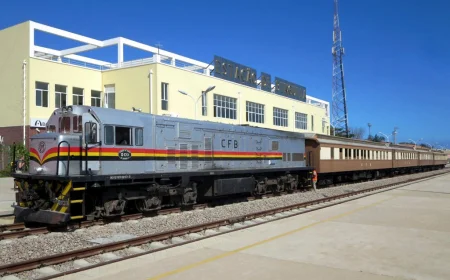
Photo: Superalbs, CC BY-SA 4.0, via Wikimedia Commons
Whats your reaction
 Like
0
 Dislike
0
 Love
0
 Funny
0
 Wow
0
 Sad
0
 Angry
0

TrainsNews est un média indépendant et bilingue d'actualité ferroviaire mondiale, publié depuis 2024. La rédaction couvre la grande vitesse, le matériel roulant, l'infrastructure, la signalisation et les télécoms ferroviaires (ERTMS/ETCS, CBTC, FRMCS, GSM-R), l'exploitation, le fret et le financement des projets. Chaque article cite ses sources et donne les chiffres avec leur total. TrainsNews is an independent, bilingual (French/English) news outlet covering the global rail industry since 2024: high-speed rail, rolling stock, infrastructure, signalling and telecoms, operations, freight and project financing. Every article cites its sources.
The rail month in one PDF: news and guides summarised, with their photos.
The rail month in one PDF: news and guides summarised, with their photos.




Comments (0)