

Lac-Mégantic rail disaster (2013): the runaway oil train
Shortly before 1 am on 6 July 2013, a crude oil train left unattended for the night at Nantes, Quebec, started to roll on its own. It ran about 7.2 miles (11.6 km) downhill, reached 65 mph (105 km/h) and derailed in the centre of Lac-Mégantic. Forty-seven people died. The Transportation Safety Board of Canada (TSB) found that the train had been secured with too few hand brakes, on a locomotive that was not in proper operating condition.
By the TrainsNews editorial team · Updated 3 November 2026
Shortly before 1 am on 6 July 2013, a crude oil train left unattended for the night at Nantes, Quebec, started to roll on its own. It ran about 7.2 miles (11.6 km) downhill, reached 65 mph (105 km/h) and derailed in the centre of Lac-Mégantic. Forty-seven people died. The Transportation Safety Board of Canada (TSB) found that the train had been secured with too few hand brakes, on a locomotive that was not in proper operating condition.
| Date | Saturday 6 July 2013, around 1:15 am (derailment) |
| Place | Centre of Lac-Mégantic, Quebec, near the Megantic West turnout |
| Train | Montreal, Maine & Atlantic Railway (MMA) freight train MMA-002: 5 locomotives, 1 VB car, 1 box car and 72 tank cars of petroleum crude oil |
| Speed | 65 mph (105 km/h) after rolling about 7.2 miles (11.6 km) with nobody aboard |
| Toll | 47 dead; 40 buildings and 53 vehicles destroyed, according to the TSB |
| Investigation | TSB report R13D0054, released on 19 August 2014 |
On the afternoon of 5 July 2013, train MMA-002 left Farnham, Quebec, heading for Nantes, where a new crew was to take it on to Maine, according to the TSB investigation report. Its final destination was Saint John, New Brunswick. It carried about 7.7 million litres of crude oil in 72 tank cars. The driver was operating alone, in the lead locomotive, and reported mechanical problems with it during the trip.
A train parked on a slope
At around 10:50 pm, the train arrived at Nantes and was parked for the night on the main track, on a descending grade. The driver applied the locomotives' independent brakes, then hand brakes on the locomotives and the buffer car: seven cars in total. He shut down four of the five locomotives and left the lead locomotive running to keep air pressure in the brakes. The hand brake test he carried out was done without releasing the locomotive brakes, so it could not show whether the hand brakes alone would hold the train, the TSB explains.
During the night, the lead locomotive caught fire. A non-standard repair on its engine had failed, letting oil build up in the turbocharger and exhaust manifold, according to the report. The locomotive was shut down to deal with the fire, and no other locomotive was started. From then on, nothing kept air pressure in the independent brakes. Air leaked from the train at about 1 pound per square inch per minute, too slowly to trigger an automatic brake application.
As the air leaked away, the braking force fell. Shortly before 1 am, the train started to roll towards Lac-Mégantic. At around 1:15 am, it took the curve near the Megantic West turnout at high speed and derailed: 63 tank cars and 2 box cars. About 6 million litres of crude oil spilled. Around a third of the derailed tank cars had large breaches, and the oil ignited into fireballs and a pool fire, the TSB writes. The fires and explosions destroyed 40 buildings and 53 vehicles, and contaminated the town centre, the river and the lake.
What the investigation found
The TSB's first finding is plain: the train was left unattended on the main line, on a downhill grade, and its securement relied on a locomotive that was not in proper operating condition. The seven hand brakes were not enough to hold it without the locomotive's independent brakes. No proper hand brake effectiveness test confirmed that the train could not move, and no additional physical defence was in place to stop a runaway.
The board then looked beyond the night itself. It found that MMA did not provide effective training or oversight to make sure crews understood and followed the rules on train securement, and that the company did not thoroughly identify and manage the risks when it made significant changes to its operations. Its safety management system was missing key processes, and others were not being used effectively, according to the findings.
What changed after Lac-Mégantic
The TSB made five recommendations. Three were issued in January 2014, before the final report: tougher protection standards for tank cars carrying flammable liquids (R14-01), route planning and risk assessments for trains carrying dangerous goods (R14-02), and emergency response assistance plans for large shipments of liquid hydrocarbons (R14-03). The final report added two: that Transport Canada require railways to put in place additional physical defences against runaway equipment (R14-04), and that it audit railways' safety management systems in enough depth and often enough to confirm they work (R14-05).
The report also records action already taken. Transport Canada, for example, said it would prohibit the use of the highest-risk group of older Class 111 tank cars, those built before the CPC-1232 standard.
Lac-Mégantic is a freight accident, not a high-speed one, but it belongs with the major rail disasters we document on our rail accidents page, alongside the Eckwersheim TGV crash.
Frequently asked questions
How many people died in the Lac-Mégantic rail disaster?
Forty-seven people, according to the TSB report.
What caused the Lac-Mégantic derailment?
The train was left unattended on a downhill main line with only seven hand brakes applied and a lead locomotive that was not in proper operating condition. When that locomotive was shut down after a fire, the brakes gradually lost their air and the train ran away, reaching 65 mph before derailing in the town centre.
What was the train carrying?
About 7.7 million litres of petroleum crude oil in 72 tank cars. About 6 million litres spilled after the derailment.
Who investigated the accident?
The Transportation Safety Board of Canada, whose report R13D0054 was released on 19 August 2014. A TSB investigation does not assign blame or determine civil or criminal liability.
Sources: Transportation Safety Board of Canada, Railway Investigation Report R13D0054 (released 19 August 2014): summary, section 1.1, findings as to causes and contributing factors, safety action and recommendations R14-01 to R14-05. Checked on 3 November 2026.
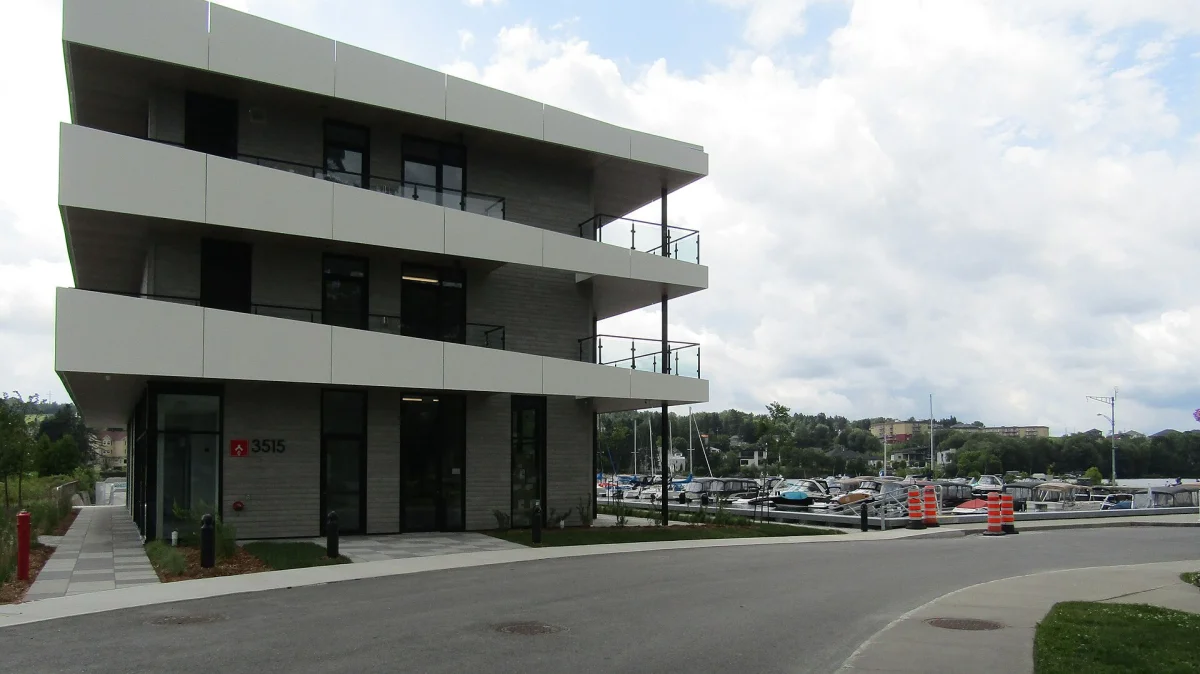
Photo: the harbour office and marina of Lac-Mégantic, July 2025. Richard Coté, CC0, via Wikimedia Commons
Written with AI assistance from the sources cited, reviewed by the TrainsNews editorial team. Real photo, credited below the image. Spotted an error? contact@trainsnews.com — Our AI policy
Whats your reaction
 Like
0
 Dislike
0
 Love
0
 Funny
0
 Wow
0
 Sad
0
 Angry
0

TrainsNews est un média indépendant et bilingue d'actualité ferroviaire mondiale, publié depuis 2024. La rédaction couvre la grande vitesse, le matériel roulant, l'infrastructure, la signalisation et les télécoms ferroviaires (ERTMS/ETCS, CBTC, FRMCS, GSM-R), l'exploitation, le fret et le financement des projets. Chaque article cite ses sources et donne les chiffres avec leur total. TrainsNews is an independent, bilingual (French/English) news outlet covering the global rail industry since 2024: high-speed rail, rolling stock, infrastructure, signalling and telecoms, operations, freight and project financing. Every article cites its sources.
The rail month in one PDF: news and guides summarised, with their photos.
The rail month in one PDF: news and guides summarised, with their photos.








Comments (0)