



Railway DAS: Drones Revolutionize Infrastructure Monitoring
Railway security DAS and drones transform rail infrastructure protection. Precise ±10m detection, autonomous response. Discover this revolution now!
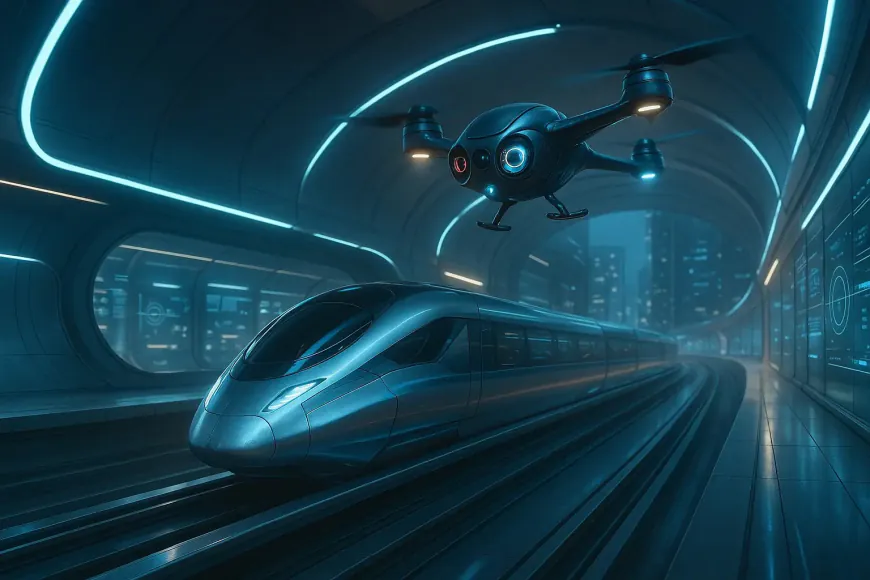
Railway security DAS combined with drones revolutionizes rail infrastructure protection worldwide with unmatched precision and response capabilities.
Railway Infrastructure Security Challenges
Persistent Threats to Rail Networks
The safety and integrity of rail infrastructure are consistently challenged by both malicious acts and tragic accidents. Drone railway surveillance becomes crucial given the monumental task of comprehensive monitoring due to the vast and linear nature of railway networks.
Traditional security measures, while valuable, often struggle with the sheer scale and remoteness of many railway sections. This reality demands a revolutionary approach combining cutting-edge technologies.
Costly Criminal Activities and Deliberate Acts
Railways face a complex array of security challenges, each carrying distinct risks and consequences:
- Cable Theft: Persistent and costly crime causing significant financial losses and crippling vital signalling systems
- Rolling Stock Theft: Freight trains become targets for both opportunistic and organized gangs
- Sabotage: Deliberate acts damaging tracks, signalling equipment, or rolling stock with catastrophic consequences
- Trespass: Individuals crossing tracks cause emergency stops and delays while exposing themselves to fatal risks
DAS Technology: Railway's Attentive Ear
Distributed Acoustic Sensing Functionality
Rail infrastructure protection reaches new heights with Distributed Acoustic Sensing (DAS). This technology transforms standard fiber optic cables, often already laid alongside tracks for telecoms and signalling, into continuous, highly sensitive acoustic sensors.
The system effectively turns tens of kilometers of cable into thousands of virtual microphones, constantly listening for anomalies. This train security technology showcases remarkable ability to detect critical threats like trespass and cable theft.
Advanced Detection and Precise Location Capabilities
When disturbance occurs, railway security DAS detects specific acoustic signatures - subtle vibrations of footsteps, tell-tale sounds of digging, or distinct signature of cables being moved or cut.
Its "true genius" lies in pinpointing exact event locations with remarkable accuracy, with ±10m precision being possible. This precise geolocation, combined with automated alerts, represents a game-changer in responding to security threats.
Drone Advantage: From Detection to Deterrence
Seamless DAS Integration for Targeted Response
Once railway security DAS detects threats and provides accurate locations, drones can be dispatched directly to specific locations. Drone railway surveillance can be fully autonomous, centrally managed, or supported by local teams, depending on airspace regulations.
This isn't merely general drone surveillance; it's rapid, intelligent response to current threats through intelligent railway monitoring.
Operational Benefits of Drone Deployment
Smart railway security delivers several key advantages:
- Evidence Gathering: Drones quickly arrive capturing high-resolution video and images, invaluable for security teams, law enforcement, and post-incident analysis
- Real-Time Situational Awareness: Security personnel gain immediate visual intelligence, enabling threat nature assessment and effective ground team direction
- Deterrence: Visible and audible drone presence often deters ongoing illicit activity, preventing further damage or harm
- Response Direction: With precise visual information, teams plan safest and most efficient responses
Integrated Approach: Building Smarter Railways
Railway Security Revolution
This integrated approach, combining "ears to the ground" (DAS) with "eyes in the sky" and drone speed, represents a significant leap forward in railway security capability.
The system shifts from often imprecise and delayed reactive responses to real-time geolocated alerts for targeted intervention. The overarching goal minimizes threat impact while enhancing overall safety and resilience of rail networks.
This powerful combination actively builds a smarter, more secure future for railways worldwide, redefining infrastructure protection through advanced technology integration.
Suggested links:
Official sources:
- Sensonic Technologies (DAS technology)
- Daniel Pyke, railway security expert
- "Future Rail Security: How DAS and Drones Redefine Infrastructure Protection" (2025-07-22)
Whats your reaction
 Like
0
Like
0
 Dislike
0
Dislike
0
 Love
0
Love
0
 Funny
0
Funny
0
 Wow
0
Wow
0
 Sad
0
Sad
0
 Angry
0
Angry
0

TrainsNews


Comments (0)