

Riyadh Metro Line 7: the four consortiums in the running
Alstom, Siemens, Hitachi Rail and CRRC-led groups have submitted final offers for the 65 km, 19-station Riyadh Metro Line 7, the Gulf's next big metro contract.
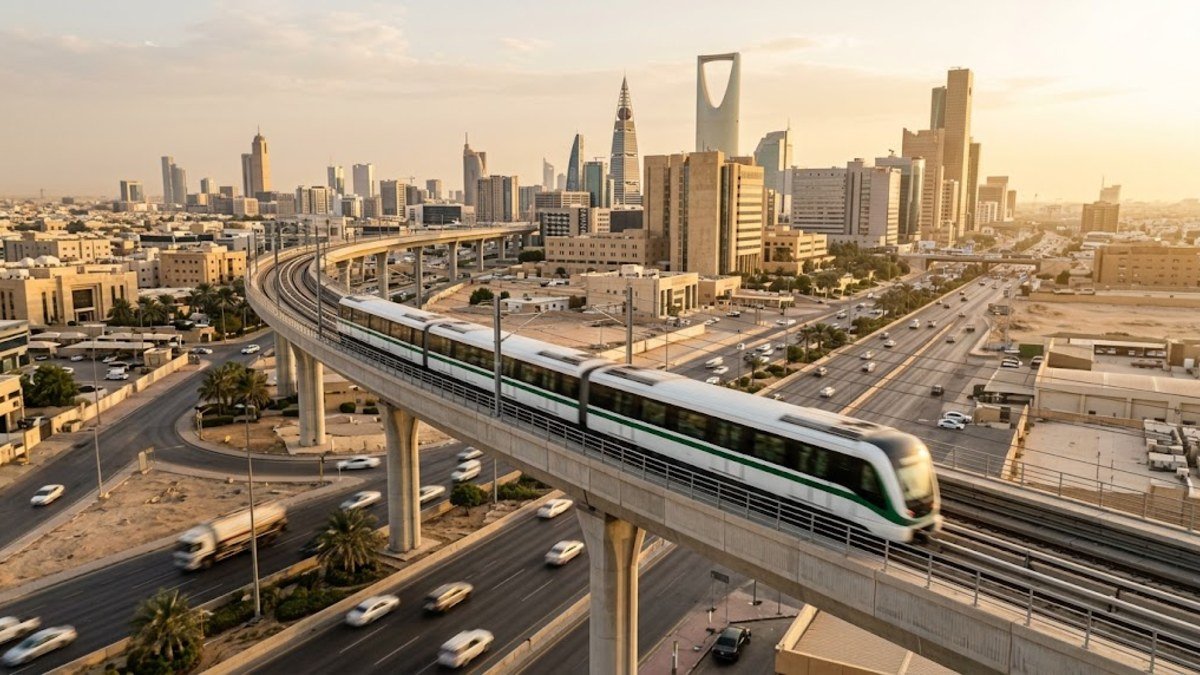
Riyadh Metro Line 7, a 65 km orbital line with 19 stations, is entering the final stretch of its procurement. Four international consortiums led by Alstom, Siemens Mobility, Hitachi Rail and CRRC submitted their best and final offers on 21 June 2026 to the Royal Commission for Riyadh City (RCRC), and the award of the design-and-build contract is now expected, according to MEED. It will be the largest metro contract in the Gulf since the first Riyadh network opened in 2024–2025.
A 65 km orbital line through the new Riyadh
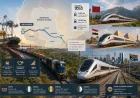
Line 7 will run for about 65 km, of which 47 km underground and 19 km on viaduct, serving 19 stations (14 underground and 5 elevated). As described by Railway Gazette, it forms an orbital route around the north-west of the city, from King Khalid International Airport to Qiddiya Entertainment City, via MiSK City, the New Murabba district, Diriyah Gate, King Abdullah International Gardens and King Salman Park.
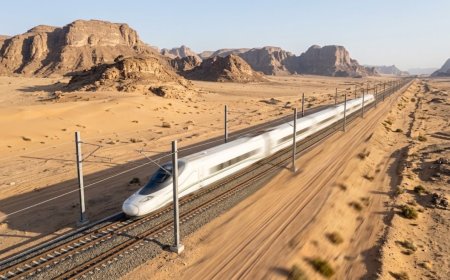
The line will interchange with existing Lines 3 and 4 and with the planned Line 2 extension. It also gives Qiddiya, the giga-project south-west of the capital, a direct metro link alongside the planned 250 km/h Qiddiya high-speed line.
Four consortiums, four technology camps
According to MEED, the four groups that submitted final offers are:
- Alstom with Webuild, Nesma and China Harbour Engineering Company
- Siemens Mobility with FCC, Orascom Construction and Shibh Al-Jazira
- Hitachi Rail with Larsen & Toubro, Albawani, Kalyon and Cengiz
- CRRC with Mapa and Limak
The line-ups have changed since the January 2026 bid deadline reported by Railway Gazette, when Siemens was teamed with FCC, Freyssinet and Almabani. A separate project management consultancy contract, worth an estimated USD 800–900m, was awarded in July 2025 to the Arriyadh New Mobility consortium.
What is at stake: signalling and automation
The first six lines of the Riyadh Metro run 183 driverless trains supplied by only two manufacturers: Siemens Mobility on Lines 1 and 2, Alstom on Lines 3 to 6. All use communications-based train control (CBTC) with unattended operation and platform screen doors. Line 7 is therefore a strategic contract. A win for Alstom or Siemens would extend an existing platform and its operations know-how; a win for Hitachi Rail or CRRC would bring a third CBTC family into the same city.
From a signalling point of view, a new supplier is not a problem in itself, as each line has its own CBTC. The real constraints are the interfaces: the operations control centre, interchange stations, maintenance depots and the shared fare and passenger information systems. On an unattended (GoA4) line, obstacle detection, platform-train interface supervision and degraded-mode management all move from the driver to the system. Our report on the GoA4 conversion of Paris Metro Line 13 explains what this involves.
Part of a wider Saudi rail push
Line 7 is one of several large Saudi rail contracts in the pipeline in 2026. Saudi Arabia Railways is also close to awarding the first Riyadh section of the Saudi Landbridge, and has ordered 20 new Talgo trains for the Haramain line. Our Saudi Arabia railway projects guide brings all these projects together.
What to watch
- The winning consortium and its CBTC and rolling stock choices
- The number of trains ordered and the depot location
- The construction schedule and target opening date, which RCRC has not yet published
Sources: MEED, 24 June 2026; Railway Gazette, January 2026; Urban Transport Magazine (Riyadh Metro opening).
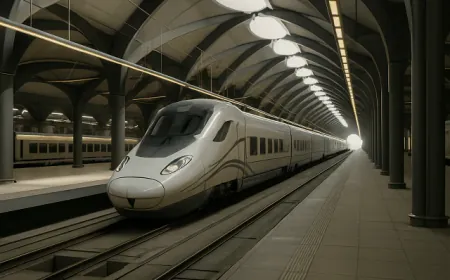
AI-generated illustration.
Whats your reaction
 Like
0
Like
0
 Dislike
0
Dislike
0
 Love
0
Love
0
 Funny
0
Funny
0
 Wow
0
Wow
0
 Sad
0
Sad
0
 Angry
0
Angry
0

TrainsNews est un média indépendant et bilingue d'actualité ferroviaire mondiale, publié depuis 2024. La rédaction couvre la grande vitesse, le matériel roulant, l'infrastructure, la signalisation et les télécoms ferroviaires (ERTMS/ETCS, CBTC, FRMCS, GSM-R), l'exploitation, le fret et le financement des projets. Chaque article cite ses sources et donne les chiffres avec leur total. TrainsNews is an independent, bilingual (French/English) news outlet covering the global rail industry since 2024: high-speed rail, rolling stock, infrastructure, signalling and telecoms, operations, freight and project financing. Every article cites its sources.





Comments (0)