

Saudi Arabia Railways doubles its Stadler inter-city fleet with 10 more trains
SAR has exercised its option for 10 more Stadler inter-city trains worth over CHF 300m, doubling the order to 20 for the Riyadh–Dammam line. Service is due in the second half of 2029.
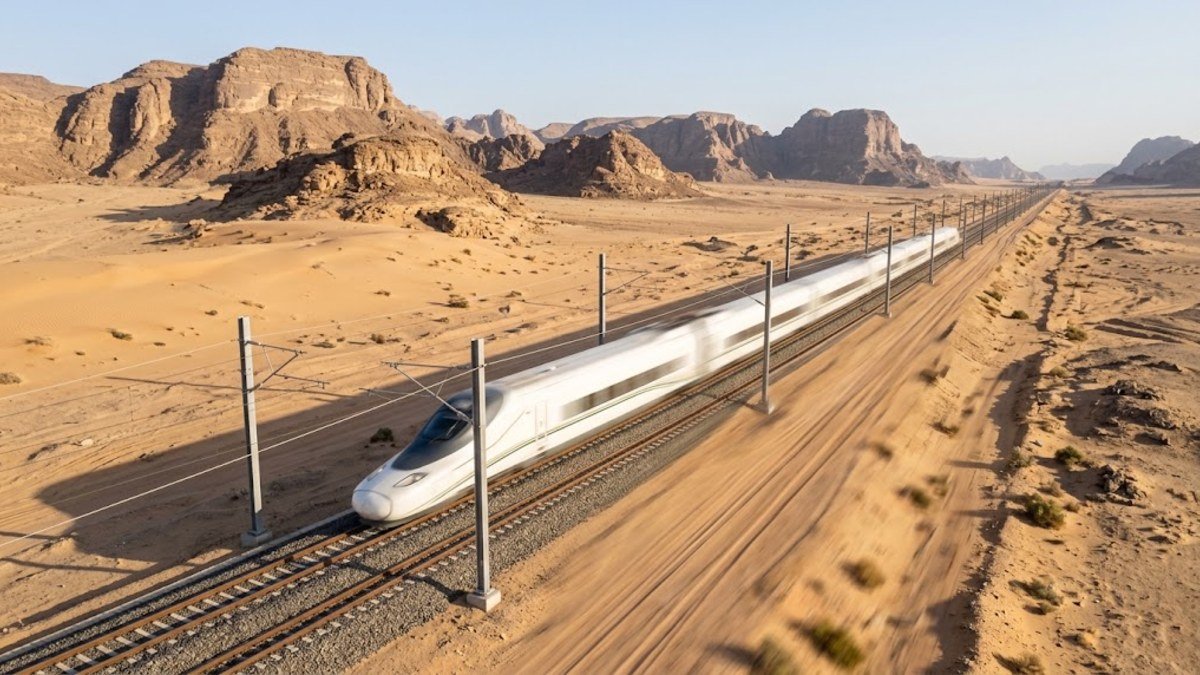
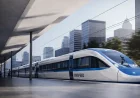
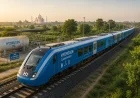
Saudi Arabia Railways (SAR) has exercised the option in its 2024 contract with Stadler for 10 additional inter-city trains, doubling the order to 20 trainsets. The order is worth more than CHF 300m (about US$360m), including an extension of the existing maintenance agreement to the new trains. The trains will run on SAR's East Railway between Riyadh, Hofuf, Abqaiq and Dammam, with commercial service expected in the second half of 2029.
The contract at a glance
| Order | 10 trains (option), bringing the total to 20 |
| Value | Over CHF 300m, maintenance extension included (the 2024 base contracts were worth about CHF 600m) |
| Train | About 175 m long, around 320 passengers, two independent diesel-electric power cars, several comfort classes |
| Built in | Mainly Switzerland; power car bodyshells in Valencia, Spain |
| Route | East Railway: Riyadh – Hofuf – Abqaiq – Dammam, with a planned Riyadh–Dammam express |
| Timeline | Production follows the first batch (started April 2026); public presentation at InnoTrans 2028; service from H2 2029 |
The financing agreement for the option was signed at InnoTrans in Berlin in September. Stadler's Lucius Gerig, head of the Switzerland division, said the fact that SAR "is already doubling the fleet at this stage" underlines the strength of the partnership.
Why SAR is doubling now
When the base contract was signed in February 2024, Stadler and SAR said the first 10 trains alone would double the annual capacity of the East line to more than 3.8 million passengers. Ordering the second batch before the first train has even been presented shows SAR expects demand to keep growing on the Riyadh–Eastern Province corridor, the country's main business axis. It also secures production slots: building the second batch straight after the first avoids a gap on the line and keeps unit costs down.
An engineer's view
These are not high-speed trains: they are diesel-electric inter-city sets designed for heat and sand, which is the real engineering challenge in Saudi Arabia. Filtration of air intakes, cooling of traction equipment and protection of bogies and doors against sand are what decide availability, not top speed. The choice of two independent power cars and redundant systems serves the same goal: a train that keeps running with one power car out of service. The 2024 contract specified European Stage V emission standards. With electrification still limited on SAR's conventional network, diesel remains the practical choice for now.
Read also: Saudi Arabia railway projects: the complete guide and Riyadh Metro Line 7: the four consortia in the race.
Sources: Stadler, media release, 5 February 2024; Stadler statement on the option, 9 October 2026, reported by IRJ and TradeArabia.
Whats your reaction
 Like
0
Like
0
 Dislike
0
Dislike
0
 Love
0
Love
0
 Funny
0
Funny
0
 Wow
0
Wow
0
 Sad
0
Sad
0
 Angry
0
Angry
0

TrainsNews est un média indépendant et bilingue d'actualité ferroviaire mondiale, publié depuis 2024. La rédaction couvre la grande vitesse, le matériel roulant, l'infrastructure, la signalisation et les télécoms ferroviaires (ERTMS/ETCS, CBTC, FRMCS, GSM-R), l'exploitation, le fret et le financement des projets. Chaque article cite ses sources et donne les chiffres avec leur total. TrainsNews is an independent, bilingual (French/English) news outlet covering the global rail industry since 2024: high-speed rail, rolling stock, infrastructure, signalling and telecoms, operations, freight and project financing. Every article cites its sources.

Comments (0)