

UAE railway projects: the complete guide (2026)
Etihad Rail passenger trains, Abu Dhabi–Dubai high-speed rail, Hafeet Rail to Oman and the Dubai Metro Blue Line: every major UAE rail project, its builders and the milestones to watch.
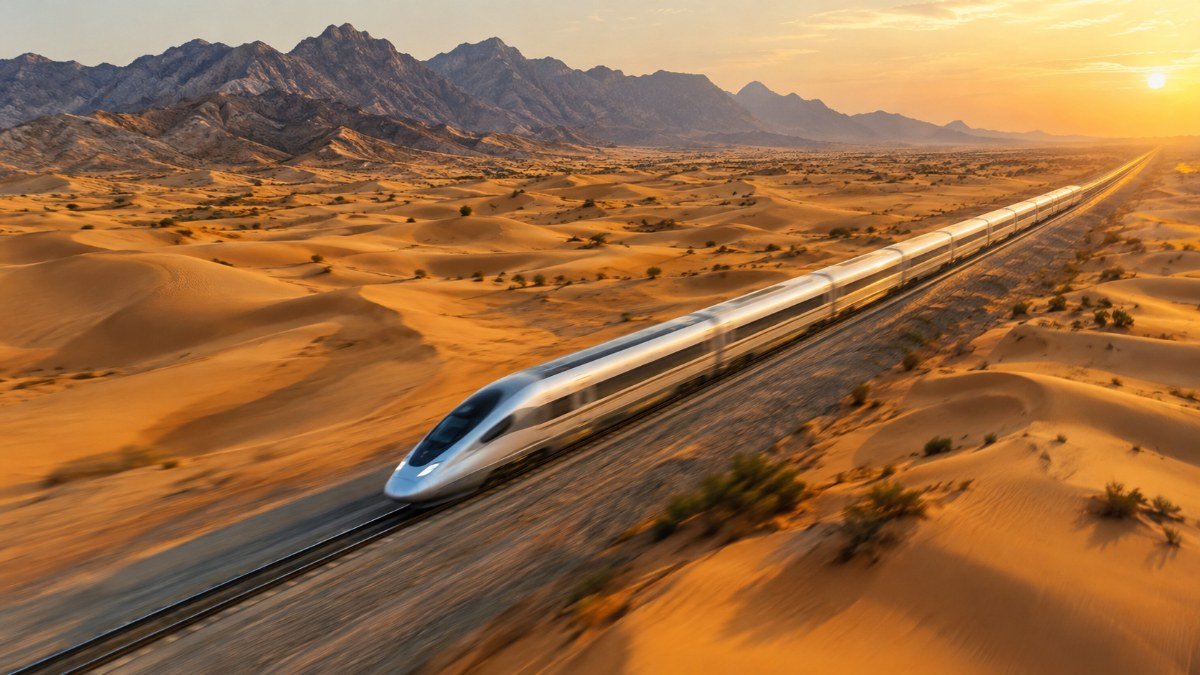
The United Arab Emirates now has a national passenger railway. Since 30 September 2026, Etihad Rail trains have linked Abu Dhabi, Dubai and Fujairah. In parallel, the country is building a 350 km/h high-speed line between Abu Dhabi and Dubai, a 238 km cross-border railway to Oman and a 30 km Dubai Metro Blue Line. This guide brings together the main UAE rail projects: what is running, what is under construction, who is building it and which milestones to watch. It is updated every month.
Key figures at a glance
- Etihad Rail passenger service: Abu Dhabi–Dubai in about 1 hour, Abu Dhabi–Fujairah in about 1 h 30, up to 200 km/h, from 30 September 2026
- UAE high-speed rail: about 150 km, 350 km/h design speed, Abu Dhabi–Dubai in about 30 minutes, phase 1 by 2030
- Hafeet Rail (UAE–Oman): 238 km, about USD 2.5bn, 40% complete in April 2026
- Dubai Metro Blue Line: 30 km, 14 stations, AED 20.5bn, opening 9 September 2029
Etihad Rail: the national network opens to passengers
Etihad Rail built its national network for freight first, from the Saudi border at Ghuwaifat to the port of Fujairah on the Gulf of Oman. Passenger services started on 30 September 2026, two days after the inauguration of the Dubai station at Jumeirah Golf Estates, which is linked by a footbridge to the metro station of the same name, according to Gulf News.
The first route serves three stations: Mohamed bin Zayed City in Abu Dhabi, Jumeirah Golf Estates in Dubai and Sakamkam in Fujairah. Abu Dhabi–Dubai takes about one hour and Abu Dhabi–Fujairah about 1 h 30. The fleet comprises nine seven-car trains from CAF and four five-car trains from CRRC, each carrying up to 400 passengers at up to 200 km/h, reports International Railway Journal. Services are run by Etihad Rail Mobility, a 50:50 joint venture between Etihad Rail and Keolis.
Fares start at AED 39 in Comfort class and AED 109 in Premium class. Tickets are sold through the Etihad Rail app, website and station machines, and a single QR code works with Dubai's Nol system for the metro, tram and bus. Further stations are planned at Al Sila, Al Dhannah, Al Mirfa, Madinat Zayed, Mezairaa and Al Faya in Abu Dhabi, and at University City and Al Dhaid in Sharjah, for a forecast of 10 million passengers a year.
Abu Dhabi–Dubai high-speed rail: 30 minutes at 320 km/h
The UAE high-speed rail project moved to construction in early 2026. According to MEED, phase 1 runs about 150 km from Al-Zahiyah in Abu Dhabi to Al-Jaddaf in Dubai, with a design speed of 350 km/h and an operating speed of 320 km/h. It will serve five stations: Al-Zahiyah and Abu Dhabi International Airport underground, Saadiyat Island elevated, Yas Island at grade and Al-Jaddaf underground.
Two design-and-build contracts have been awarded. On the Abu Dhabi side, NPC, Trojan Tunnelling, Kalyon and China State Construction Engineering Corporation, with Jacobs as designer. On the Dubai side, Larsen & Toubro, China Harbour Engineering Company and Wade Adams, with Egis and Surbana Jurong as designers. The whole scheme is worth USD 8bn or more and phase 1 should open by 2030. Three more phases are planned: an Abu Dhabi inner-city network, Abu Dhabi–Al Ain and Dubai–Sharjah.
Hafeet Rail: the railway to Oman
Hafeet Rail will connect the port of Sohar in Oman to the UAE network via Al Buraimi and Al Ain. The 238 km line, developed by Etihad Rail, Oman Rail and Mubadala, includes 60 bridges up to 34 m high and tunnels up to 2.5 km long, and was 40% complete in April 2026, according to Khaleej Times.
Passenger trains will run at up to 200 km/h, putting Sohar about 100 minutes from Abu Dhabi and 47 minutes from Al Ain. Freight trains will run at up to 120 km/h with more than 15,000 tonnes each. Oman ratified the bilateral agreement by royal decree on 3 September 2026, and USD 1.5bn of project finance has been secured, reports Gulf News.
Dubai Metro Blue Line
The Blue Line adds 30 km and 14 stations to the Dubai Metro, half of it underground, serving Mirdif, Dubai Silicon Oasis, Dubai Creek Harbour and International City. The AED 20.5bn project, built by a consortium of MAPA, Limak and CRRC, completed its first tunnelling phase in July 2026 and is due to open on 9 September 2029, according to The National. The network will then reach 131 km, 78 stations and 168 trains. For comparison, Riyadh opened a 176 km driverless metro in one go: see our Saudi Arabia railway projects guide.
An engineer's view: what to watch
The UAE is building three different railways at once: a mixed freight and passenger main line at 200 km/h, a dedicated high-speed line at 320 km/h and an automated urban metro. The challenge is integration: shared stations such as Jumeirah Golf Estates, common ticketing through Nol, and timetables that work across operators. Hafeet Rail adds a cross-border dimension, with two national networks that must share operating rules. The next signalling and rolling stock awards for the high-speed line will show which suppliers set the standard for the region.
Milestones to watch
- Etihad Rail: opening of the additional Abu Dhabi and Sharjah stations
- High-speed rail: systems, signalling and rolling stock contracts
- Hafeet Rail: start of trial operations, announced for late 2027
- Dubai Metro Blue Line: opening on 9 September 2029
- High-speed rail phase 1: opening by 2030
Frequently asked questions
How long is the Etihad Rail train from Abu Dhabi to Dubai?
About one hour between Mohamed bin Zayed City and Jumeirah Golf Estates, with fares from AED 39.
When will the UAE high-speed train open?
Phase 1 between Abu Dhabi and Dubai is expected to open by 2030, with a journey time of about 30 minutes.
What is Hafeet Rail?
A 238 km railway linking Sohar in Oman to the UAE network via Al Ain, for passengers and freight.
More from the region: Middle East rail news · Riyadh Metro Line 7.
Last updated: 8 October 2026. Sources: Gulf News, 4 and 28 September 2026; International Railway Journal, 26 January 2026; MEED, 5 February 2026; Khaleej Times, 22 April 2026; The National, 9 July 2026.
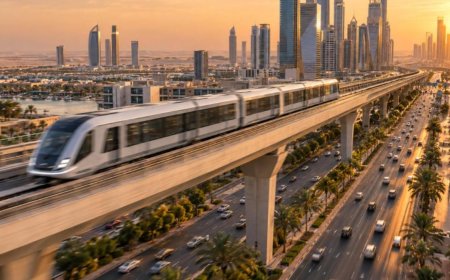
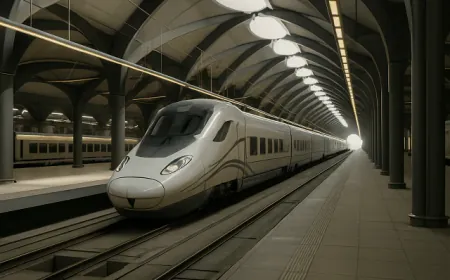
AI-generated illustration.
Whats your reaction
 Like
0
Like
0
 Dislike
0
Dislike
0
 Love
0
Love
0
 Funny
0
Funny
0
 Wow
0
Wow
0
 Sad
0
Sad
0
 Angry
0
Angry
0

TrainsNews est un média indépendant et bilingue d'actualité ferroviaire mondiale, publié depuis 2024. La rédaction couvre la grande vitesse, le matériel roulant, l'infrastructure, la signalisation et les télécoms ferroviaires (ERTMS/ETCS, CBTC, FRMCS, GSM-R), l'exploitation, le fret et le financement des projets. Chaque article cite ses sources et donne les chiffres avec leur total. TrainsNews is an independent, bilingual (French/English) news outlet covering the global rail industry since 2024: high-speed rail, rolling stock, infrastructure, signalling and telecoms, operations, freight and project financing. Every article cites its sources.







Comments (0)