

Germany's 2027 budget trims rail freight aid before the Bundestag vote
Germany's draft 2027 federal budget, adopted by the Bundestag budget committee on 13 November 2026, trims several rail freight subsidies while raising long-term commitments for new rail projects. The full Bundestag is due to vote on the budget on Friday 27 November.
Germany's draft 2027 federal budget, adopted by the Bundestag budget committee on 13 November 2026, trims several rail freight subsidies while raising long-term commitments for new rail projects. The full Bundestag is due to vote on the budget on Friday 27 November.
According to the Bundestag, the committee set the transport ministry's budget at €25.35 billion, €1.08 billion less than the government draft. The biggest single cut hits road: investment funds for the Autobahn company were cut by €1.98 billion to €2.38 billion. Rail moved the other way. The committee raised commitment authorisations for construction grants under the rail network plan by €4.34 billion, which allows the federal government to sign multi-year contracts for new and upgraded lines.
Freight operators are less pleased. The government draft, as summarised by the Bundestag's news service hib in August, set the track access subsidy for rail freight at €200.26 million for 2027, down from €265 million in 2026. The subsidy for long-distance passenger services drops from €200 million to €5.34 million. In committee, funding for private sidings was cut from €20 million to €15.65 million, and grants for non-federal railways from €46 million to €41.65 million, according to Verkehrsrundschau. Support for combined transport terminals was restored to €90.3 million.
Industry reaction was sharp. Oliver Wolff, chief executive of the transport operators' association VDV, called 13 November "a black day for rail", as reported by eisenbahn.de. "Whoever cuts sidings cuts the last mile between industry and rail," he said. Martin Burkert, chairman of the rail union EVG, described the decision as "an industrial policy catastrophe". Dirk Flege of Allianz pro Schiene spoke of "painful cuts", above all in freight.
Why it matters for traffic
The siding cut looks small in a €25 billion budget, but sidings are where freight starts and ends. A factory without a working connection to the network sends its goods by lorry, whatever happens on the main line. The lower track access subsidy also lands at the same time as higher charges: eisenbahn.de reports that DB InfraGO's track access charges rise by 13% with the December timetable change. Both effects matter most for single-wagon traffic, whose funding stays flat in 2027, according to eisenbahn.de.
The picture is not one-way. The infrastructure special fund still provides about €17.7 billion for transport in 2027, including around €11.5 billion for rail maintenance grants and €2.2 billion for ERTMS, according to hib. That money mostly goes to the network, not to operators.
For comparison, the Netherlands is putting €1.9 billion into ERTMS: see our report on ProRail's infrastructure budget.
The next step is the final vote in the Bundestag on 27 November, after a 90-minute closing debate, followed by the Bundesrat.
Sources: Deutscher Bundestag, budget committee, 13 November 2026; hib 651/2026, 19 August 2026; Verkehrsrundschau, 16 November 2026; eisenbahn.de, 14 November 2026.
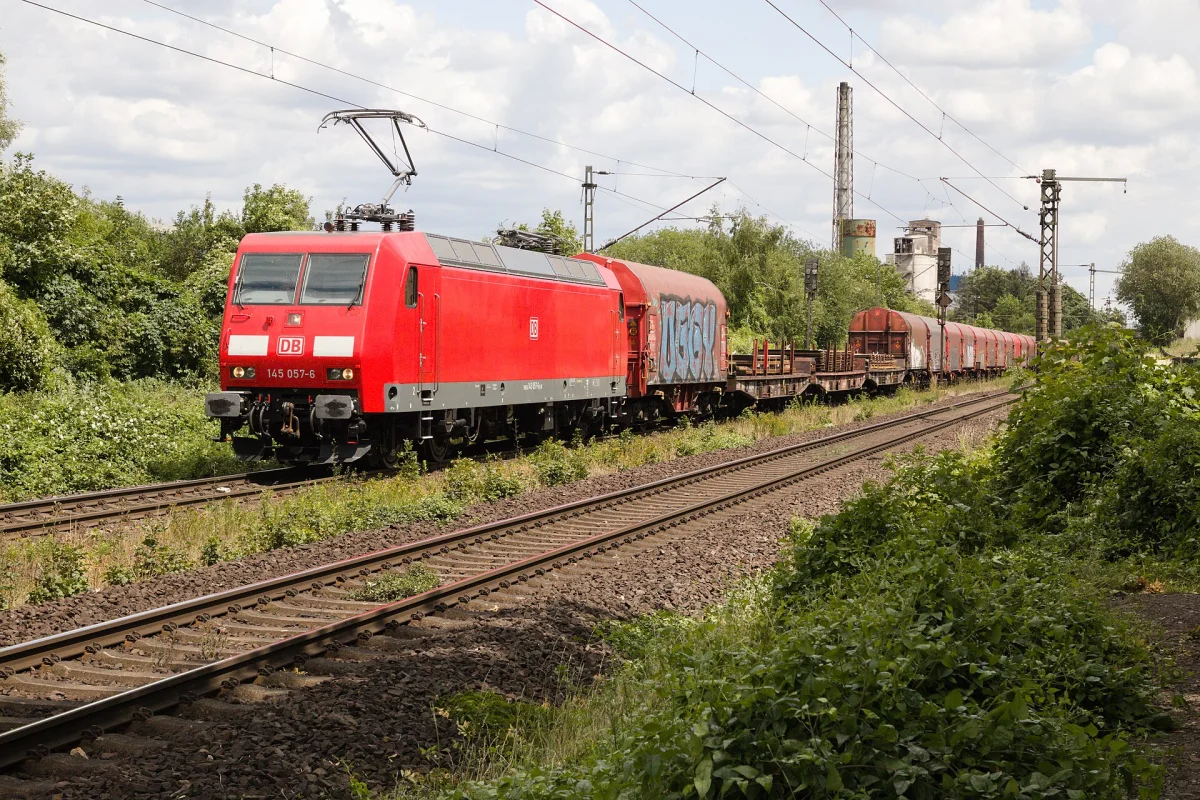
Photo: DB Cargo locomotive 145 057 with a mixed freight train, 6 July 2023 — Alex Noble, Wikimedia Commons, CC0.
Article written with the help of artificial intelligence from the sources cited, reviewed by the TrainsNews editorial team before publication.
Whats your reaction
 Like
0
 Dislike
0
 Love
0
 Funny
0
 Wow
0
 Sad
0
 Angry
0

TrainsNews est un média indépendant et bilingue d'actualité ferroviaire mondiale, publié depuis 2024. La rédaction couvre la grande vitesse, le matériel roulant, l'infrastructure, la signalisation et les télécoms ferroviaires (ERTMS/ETCS, CBTC, FRMCS, GSM-R), l'exploitation, le fret et le financement des projets. Chaque article cite ses sources et donne les chiffres avec leur total. TrainsNews is an independent, bilingual (French/English) news outlet covering the global rail industry since 2024: high-speed rail, rolling stock, infrastructure, signalling and telecoms, operations, freight and project financing. Every article cites its sources.
The rail month in one PDF: news and guides summarised, with their photos.
The rail month in one PDF: news and guides summarised, with their photos.



Comments (0)