

Portugal starts building the Porto–Lisbon high-speed line, first step towards Madrid
Portugal began building the Porto–Lisbon high-speed line on 12 October 2026. The EU commits €985m to link Lisbon and Madrid in three hours by 2034.
Portugal began building the Porto–Oiã high-speed section on 12 October 2026, the first stretch of a 290 km line that will link Porto and Lisbon in 1 hour 15 minutes. The 71 km section, costed at close to €2 billion, is the first concrete step in a €7.8 billion programme that aims to connect Lisbon and Madrid in three hours by 2034.
The 30-year concession was signed on 29 July 2025 with the Avan Norte consortium (LusoLav). Funding combines an €875 million loan from the European Investment Bank, €480 million from the Connecting Europe Facility and contributions from other lenders. The section includes a combined road and rail bridge over the Douro and the redevelopment of Porto-Campanhã station. The line is designed for 300 km/h.
Further south, track and overhead line work on the 90 km Évora–Caia section, the first Portuguese line built for 250 km/h, was completed in January 2026 at a cost of about €460 million. Opening depends on signalling and safety certification and is expected in late 2026 or early 2027. The section will also cut 140 km from freight journeys between the port of Sines and Spain.
€985 million from the EU to connect the two capitals
On the Spanish side, Plasencia–Badajoz has been in service since July 2022 at 200 km/h, over 193 km of route including 146 km of new alignment. Construction of the missing link, Plasencia–Talayuela (69 km), is under way: four of the eight trackbed subsections are finished, and ETCS Level 2 signalling contracts worth €126.5 million were awarded in November 2025. Opening is planned for late 2028.
The European Commission has committed around €985 million from the CEF and the European Regional Development Fund to the corridor, under an implementing decision of 30 October 2025. The intermediate goal is a five-hour journey between the two capitals by 2030, on upgraded existing infrastructure and without the future Lisbon–Évora high-speed line, whose studies are due to be completed by the end of 2027.
The scale of the remaining work tempers the three-hour ambition for 2034. In Portugal, two other sections of the Porto–Lisbon line, Oiã–Soure (61 km) and Soure–Carregado (130 km), have no signed contracts yet, and the new Lisbon–Évora line, which requires a crossing of the Tagus, exists only on paper. The cross-border link between Caia and Badajoz is still being studied. The five-hour step in 2030 looks achievable if the sections now under construction on both sides of the border are completed. The jump to three hours requires studies, tenders and the construction of more than 200 km of new line to follow one another without major delay in less than eight years.
Sources: Government of Portugal (19/01/2026); Euronews (12/10/2026); International Railway Journal, "Lisbon-Madrid high-speed line plan agreed"; International Railway Journal, "Ambitions start to become reality for Portuguese high-speed projects"; Euro Weekly News (03/11/2025); Railway Gazette, Extremadura line opening (2022); Railway Gazette, signalling contracts (2025).
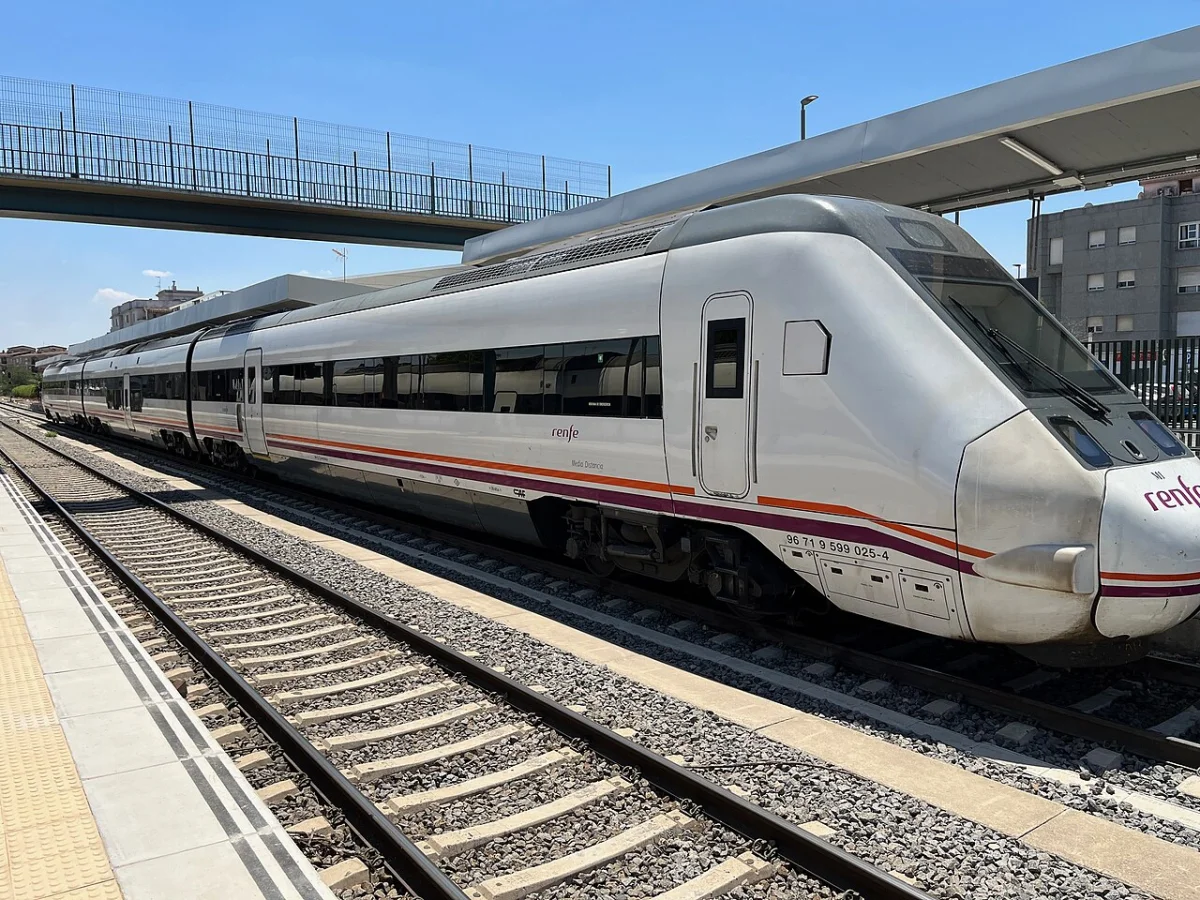
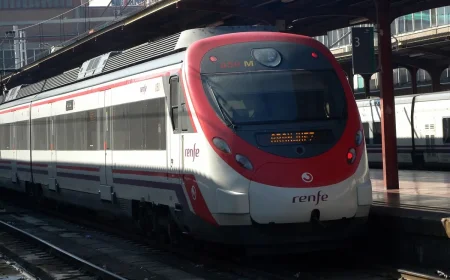
Photo: a Renfe diesel train at Badajoz. Jon Worth, CC BY 2.0, via Wikimedia Commons.
Article written with the help of AI based on the cited sources, reviewed by the TrainsNews editorial team. Real photo, credited below the image. Spotted an error? contact@trainsnews.com — Our AI charter
Whats your reaction
 Like
0
 Dislike
0
 Love
0
 Funny
0
 Wow
0
 Sad
0
 Angry
0

TrainsNews est un média indépendant et bilingue d'actualité ferroviaire mondiale, publié depuis 2024. La rédaction couvre la grande vitesse, le matériel roulant, l'infrastructure, la signalisation et les télécoms ferroviaires (ERTMS/ETCS, CBTC, FRMCS, GSM-R), l'exploitation, le fret et le financement des projets. Chaque article cite ses sources et donne les chiffres avec leur total. TrainsNews is an independent, bilingual (French/English) news outlet covering the global rail industry since 2024: high-speed rail, rolling stock, infrastructure, signalling and telecoms, operations, freight and project financing. Every article cites its sources.
The rail month in one PDF: news and guides summarised, with their photos.
The rail month in one PDF: news and guides summarised, with their photos.







Comments (0)