

Aerodynamic sleepers: Adif AV tenders €117m to hit 350 km/h
Adif AV has tendered €117.2m for 680,400 aerodynamic sleepers on the Madrid–Barcelona HSL. Spain targets 350 km/h. Full deployment breakdown and passenger impact.
Lire en français : Traverses aérodynamiques : Adif AV investit 117 M€ pour le 350 km/h
Spanish high-speed infrastructure manager Adif Alta Velocidad has launched a €117.2 million tender for 680,400 aerodynamic sleepers on the Madrid–Barcelona high-speed line.
Updated on February 17, 2026
Adif Alta Velocidad (Adif AV), Spain's publicly owned high-speed rail infrastructure manager, published a tender notice in the Boletín Oficial del Estado (Spain's Official State Gazette) on 6 February 2026 for the supply and delivery of high-performance sleepers — the proprietary "aerotraviesas" — across the Mejorada del Campo–Calatayud section. The goal, as announced by Spain's Ministry of Transport and Sustainable Mobility, is to raise the line's operating speed from 300 km/h to 350 km/h, its original design speed.
A Spanish innovation to tackle flying ballast
An aerodynamic sleeper (aerotraviesa) is a profiled concrete sleeper whose upper face is narrowed at its centre to minimise the flat surface exposed to airflow. At speeds above 300 km/h, passing trains generate a pressure drop that lifts and propels ballast — the crushed stone beneath the rails — into rolling stock and trackside equipment, a phenomenon known as flying ballast or ballast projection.
Developed under the Aurígidas research project and jointly patented in 2014 by Adif, engineering consultancy Sener, the Technical University of Madrid (UPM) and the CIDAUT Foundation, the aerotraviesa cuts the aerodynamic lift force above the ballast bed by 21%. This improvement alone enables a 12% increase in operating speed, while keeping maintenance costs on a par with conventional sleepers.
680,400 sleepers across four phases: the deployment in detail
The contract covers the manufacture, factory stockpiling, loading and delivery of 680,400 units split into four lots aligned with specific sub-sections. A separate contract worth €7.7 million covers the supply of sleeper base plates to be installed across sections maintained from the Brihuega and Calatayud depots.
| Phase | Section | Sleepers (units) |
|---|---|---|
| 1 | Mejorada del Campo – Brihuega | 232,400 |
| 2 | Brihuega – Alcolea | 143,150 |
| 3 | Alcolea – Ariza | 166,250 |
| 4 | Ariza – Calatayud | 138,600 |
| Total | Mejorada del Campo – Calatayud | 680,400 |
Context & stakes
The Madrid–Barcelona high-speed line (Línea de Alta Velocidad, or LAV), opened in 2008, is the backbone of Spain's high-speed network — the longest in Europe. Since the liberalisation of the passenger market, it is served by three competing operators: Renfe, Iryo and Ouigo España.
By 2025, the line was experiencing speed restrictions linked to ballast and track deterioration along the Madrid–Ariza stretch. Temporary limits of 160 km/h were recorded in January 2026, adding more than 30 minutes to journey times. In response, Spain's Ministry of Transport accelerated the full renewal programme, originally scheduled to begin in 2027.
The aerodynamic sleeper replacement, combined with planned aerodynamic improvements to the trains themselves, is expected to unlock 350 km/h — the line's design speed from the outset.
A broader infrastructure overhaul
The sleeper programme sits within a wider package of investments on the Madrid–Barcelona HSL:
- Benamira and Río Blanco viaducts (Soria province): a €6.3 million contract to extend the service life of both structures.
- Drainage works, Zaragoza province: €6 million to reinforce five drainage points over a 13 km section, awarded in 2025.
- Drainage works, Huesca, Tarragona and Girona: €4.6 million to improve drainage at four locations across two sections totalling 151 km.
Together, these investments aim to improve reliability, safety and the long-term durability of the corridor while keeping commercial services running throughout the works.
Read also: Adif's FRMCS 5G pilot project.
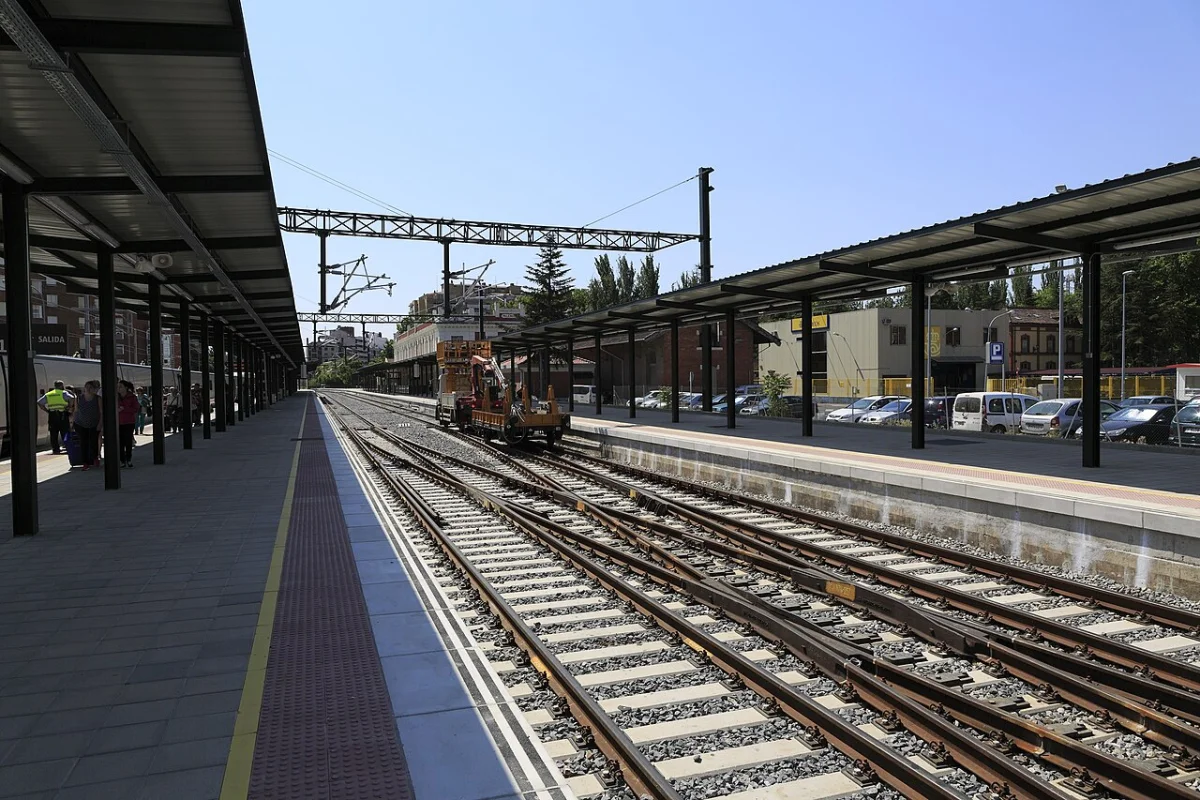
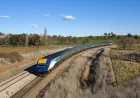
Photo: Falk2, CC BY-SA 4.0, via Wikimedia Commons
Whats your reaction
 Like
0
 Dislike
0
 Love
0
 Funny
0
 Wow
0
 Sad
0
 Angry
0

TrainsNews est un média indépendant et bilingue d'actualité ferroviaire mondiale, publié depuis 2024. La rédaction couvre la grande vitesse, le matériel roulant, l'infrastructure, la signalisation et les télécoms ferroviaires (ERTMS/ETCS, CBTC, FRMCS, GSM-R), l'exploitation, le fret et le financement des projets. Chaque article cite ses sources et donne les chiffres avec leur total. TrainsNews is an independent, bilingual (French/English) news outlet covering the global rail industry since 2024: high-speed rail, rolling stock, infrastructure, signalling and telecoms, operations, freight and project financing. Every article cites its sources.

The rail month in one PDF: news and guides summarised, with their photos.
The rail month in one PDF: news and guides summarised, with their photos.










Comments (0)