



LNSO Project: SYSTRA Secures 9-Year Contract for Bordeaux-Toulouse High-Speed Rail
SYSTRA wins major LNSO contract for engineering supervision. 418km high-speed rail, 100 employees deployed, 2032 opening planned. Full project details.
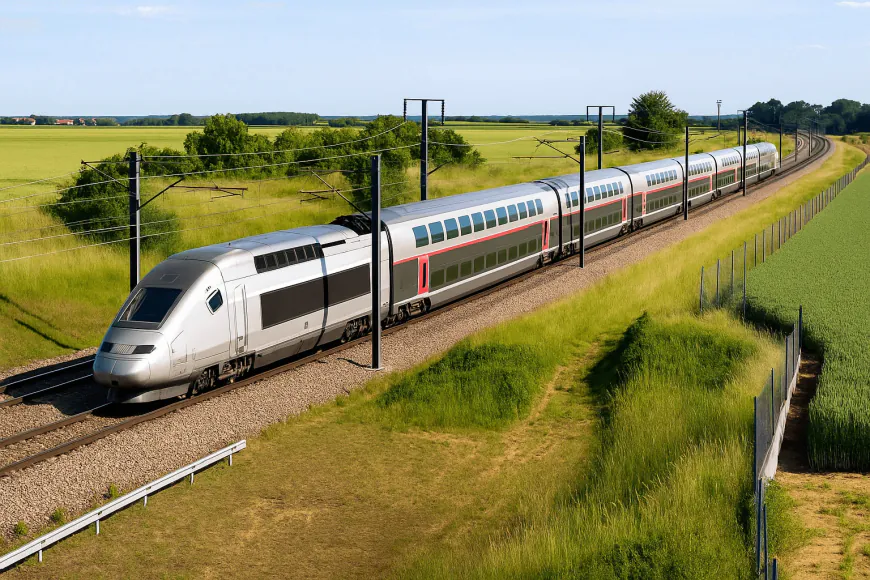
The Ligne Nouvelle Sud-Ouest (LNSO) reaches a decisive milestone with the award of a major contract to SYSTRA France. This large-scale railway infrastructure project, set to transform mobility in southwestern France, has entrusted its technical supervision to one of the world's leading transport engineering companies.
A National-Scale Railway Development
The LNSO represents an unprecedented high-speed railway development in the region. This ambitious project involves extending the existing Tours-Bordeaux line southward, creating a Y-shaped corridor spanning 418 kilometers that will directly connect Bordeaux to Toulouse and Dax.
This new infrastructure is part of France's national strategy for modernizing the railway network. It complements the existing TGV network by serving territories previously less well connected to the high-speed network. The project's scope is measured by its anticipated impact on 110 municipalities and the estimated creation of 10,000 jobs during its implementation.
SYSTRA France Mobilizes 100 Experts for 9 Years
SYSTRA France has been officially designated by SNCF Réseau to provide general and technical assistance for LNSO project management. This strategic contract, awarded by the GPSO Agency, extends over an exceptional period of nine years, until 2034.
The engineering company will deploy approximately 100 specialized employees, primarily based in Bordeaux and Toulouse. These multidisciplinary teams will intervene in all critical areas of the project:
- Technical planning and work coordination
- Environmental monitoring and ecological standards compliance
- Financial oversight and cost optimization
- Implementation of innovative and sustainable solutions
Christophe Huau, Director of the GPSO Agency within SNCF Réseau, emphasized that this collaboration relies on "SYSTRA's recognized expertise and excellence for this project focused on innovation, environmental ambition, and performance."
Ambitious Performance Objectives
The LNSO infrastructure pursues three strategic main objectives:
Drastic Travel Time Reduction
The anticipated time savings are spectacular and will transform travel habits:
- Paris-Toulouse: reduction from 4h10 to 3h10 (1-hour gain)
- Bordeaux-Toulouse: decrease from 2h01 to 1h05 (56-minute gain)
- Bordeaux-Barcelona: improvement from 4h50 to 3h50 (1-hour gain)
Enhanced Frequency and Capacity
The new line will significantly increase service frequency while freeing up capacity on existing lines. This optimization will also benefit regional services and freight transport, creating a positive multiplier effect across the entire regional railway network.
Solidly Established Multi-Partner Financing
The LNSO project financing is based on a balanced partnership between several public actors. Contributions come from the French government, concerned local authorities, and the European Union, demonstrating the strategic importance accorded to this project at all institutional levels.
This diversification of funding sources guarantees the project's budgetary sustainability and demonstrates collective territorial commitment to this major infrastructural transformation.
Infrastructure and Equipment: Three New Stations
Beyond the line itself, the project includes the creation of three new stations and two stops, optimizing territorial service coverage. These new facilities will be designed according to the most modern standards for accessibility, energy efficiency, and urban integration.
Each new station will constitute a multimodal exchange hub, facilitating connections with existing regional and urban transport services.
Service Launch Timeline: 2032 Opening Planned
The LNSO provisional opening schedule is structured in two distinct phases:
The Bordeaux-Toulouse section will constitute the first stage, with commercial opening planned for 2032. This priority phase will directly connect the two regional metropolises via high-speed link.
Subsequently, the Sud-Gironde-Dax segment will complete the system, finalizing the Y-shaped corridor and optimizing connections to Spain and the Atlantic coast.
Environmental Impact and Sustainable Innovation
SYSTRA commits to integrating innovative and sustainable solutions throughout the implementation. The company will apply its expertise to an environmentally respectful project, aligned with national and European climate objectives.
Environmental monitoring will constitute a major axis of SYSTRA's intervention, ensuring respect for traversed ecosystems and harmonious infrastructure integration into regional landscapes.
This new TGV line represents a future investment for southwestern France, promising to revolutionize regional mobility while respecting 21st-century environmental imperatives.
Whats your reaction
 Like
0
Like
0
 Dislike
0
Dislike
0
 Love
0
Love
0
 Funny
0
Funny
0
 Wow
0
Wow
0
 Sad
0
Sad
0
 Angry
0
Angry
0

TrainsNews




Comments (0)