



Cairo-Alexandria Modernization: Hitachi Rail's €100M Project
Hitachi Rail completes Cairo traffic control center after €100M investment. 160 km/h speed, doubled capacity: Egyptian railway revolution underway.
Updated on August 22, 2025
Hitachi Rail has completed the Cairo Traffic Control Centre (TCC), crowning over a decade of €100 million investment to modernize the Cairo-Alexandria railway line. This revolutionary transformation of Egypt's railway network, one of the world's oldest inaugurated in 1854, promises faster journeys, doubled capacity and significant decarbonization of national transport.
Breaking Down the €100 Million Investment
The Network's Brain: Cairo Traffic Control Centre
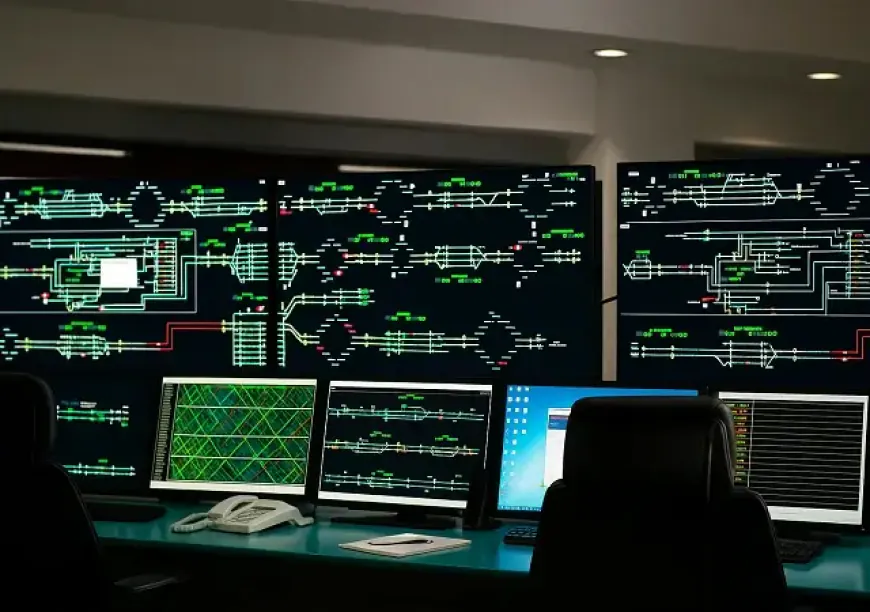
The Cairo Traffic Control Centre (TCC) delivered to Egyptian National Railways constitutes the nerve center of this modernization. This state-of-the-art Centralized Traffic Control (CTC) system now manages the 19 stations along the Cairo-Alexandria line, replacing old decentralized control devices.
CTC technology enables real-time supervision of the entire route, optimizing traffic flows and reducing incident risks through centralized coordination of train movements.
Complete Modernization: From Signalling to Safety
Hitachi Rail has completely replaced the old mechanical and electrical signalling with a modern electronic system. This transformation includes installing digital interlockings, new light signals and motorized drives for increased precision.
Safety improvements also extend to modernized level crossings, benefiting both road and rail users. Construction of new technical buildings, including main and secondary towers, completes this infrastructure overhaul.
The project integrates fixed and mobile telecommunications systems allowing drivers to communicate directly with operations managers in emergencies, reinforcing operational safety.
A Decade of Contractual Progress
The initial contract signed in 2013 and its successive extensions illustrate the complexity and scale of this modernization. The total investment exceeding €100 million demonstrates Hitachi Rail's long-term commitment to Egyptian railway transformation.
Revolutionizing Passenger Transport
Increased Speeds and Reduced Times
The modernization increases train speeds by 40 km/h, bringing maximum speed to 160 km/h on certain sections. This technical improvement directly reduces Cairo-Alexandria journey time to just two and a half hours, transforming the passenger experience on this strategic route.
Doubled Capacity for Optimal Connectivity
The new systems have safely increased the line's operational capacity by up to 40%. This improvement allows doubling the number of daily trains, with projected maximum capacity of 286 trains compared to 140 currently.
This increase responds to growing transport demand between Egypt's two main metropolises, significantly improving urban and interurban mobility.
Key Takeaways
- €100 million Hitachi Rail investment confirmed
- Cairo Traffic Control Centre (TCC) completed
- Maximum speed increased to 160 km/h on certain sections
- Doubled capacity: 286 trains/day vs 140 currently
- Cairo-Alexandria time reduced to 2h30
Professional Expertise Recognition
Bruno Teixeira, Hitachi Rail Egypt project general manager, highlights this modernization's success in making daily travel "safe, smooth and more efficient for citizens in Egypt." This professional validation confirms achievement of the project's technical and operational objectives.
Driving Green Freight and Decarbonizing Egypt
Strategic Freight Railway Expansion
Egypt plans progressive increase in daily freight convoys, targeting 15 trains by 2030 and 50 by 2060. The set objective involves transporting 18,400 containers annually by rail, repositioning rail as the preferred freight transport mode.
This strategy fits within a logistics competitiveness approach, particularly crucial for Egypt as a commercial crossroads between Africa, Asia and Europe.
Environmental Impact and Carbon Reduction
Railway modernization generates considerable ecological benefits by reducing dependence on road transport. The project will avoid emissions of up to 965,000 tons of CO2 over 30 years, positioning this initiative as a crucial step toward decarbonizing Egypt's national transport system.
Context & Challenges
Historic Network with Modern Ambitions
Egypt's railway network, among the world's oldest, extends over 10,000 kilometers of track and transports approximately 500 million passengers annually. This century-old infrastructure required major modernization to address contemporary mobility and sustainability challenges.
2017 Government Modernization Mandate
The Egyptian government launched an ambitious modernization plan in 2017, recognizing that the railway system lagged behind road transport. The objective involves creating a robust, safe, efficient and multimodal system meeting international standards.
What Changes for Users
Travelers will benefit from significantly faster and more reliable journeys thanks to advanced signalling technologies. Increased capacity translates to expanded transport offerings, reducing saturation problems during peak hours.
Modernization of communication and safety systems ensures better emergency situation management, strengthening user confidence in railway transport.
2050 Vision: Continental Leadership
Egyptian National Railways aims to offer the continent's best railway service by 2050. This ambition builds on ongoing modernization and network extension projects, positioning Egypt as a regional railway reference.
Whats your reaction
 Like
0
Like
0
 Dislike
0
Dislike
0
 Love
0
Love
0
 Funny
0
Funny
0
 Wow
0
Wow
0
 Sad
0
Sad
0
 Angry
0
Angry
0

TrainsNews

Comments (0)