



CRRC Unveils 600km/h Superconducting Maglev Train Prototype
CRRC Changchun reveals 600km/h superconducting maglev train with EDS electrodynamic suspension, 25 years of research and revolutionary technologies.
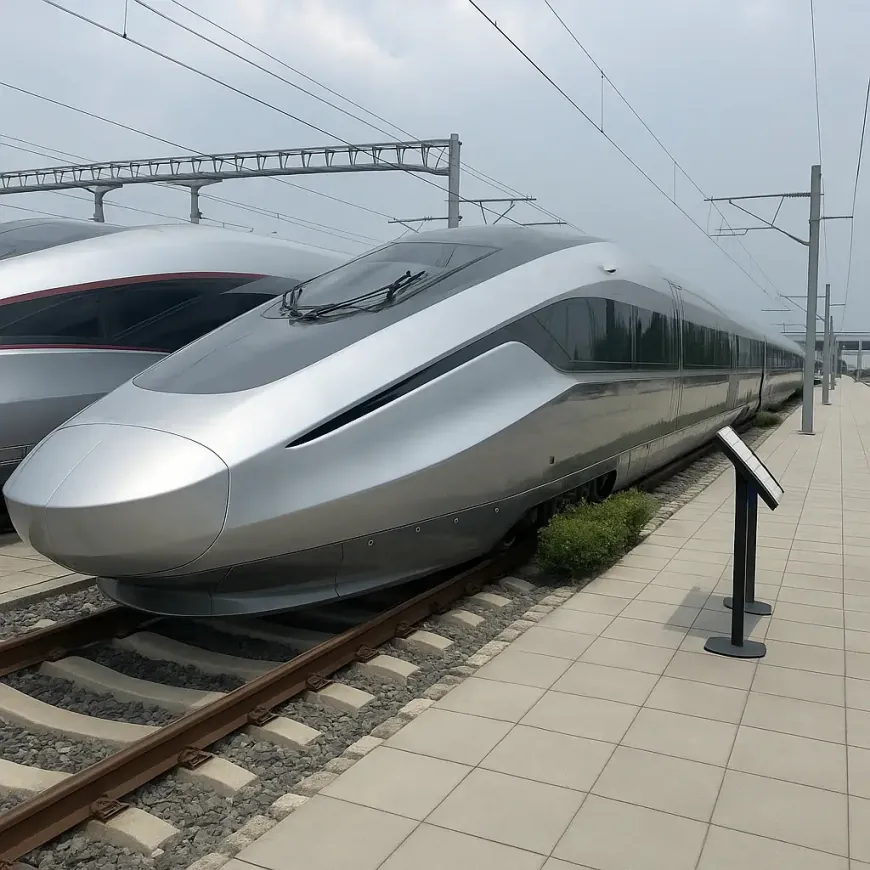
A Revolutionary Railway Technology
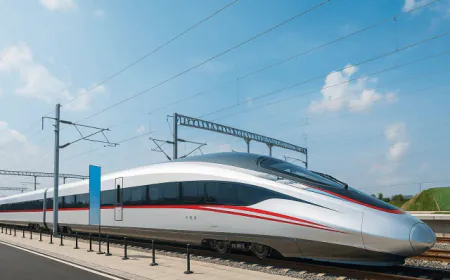
CRRC Changchun has unveiled its superconducting maglev train prototype capable of reaching 600km/h, marking a historic milestone in high-speed rail transport evolution. This revolutionary vehicle utilizes superconducting electrodynamic suspension (EDS) technology, positioning China at the forefront of global railway innovation.
The prototype was displayed at an exhibition of Chinese rolling stock at the National Railway Test Centre in Beijing during the UIC World Congress on High-Speed Rail 2025. This presentation marks the culmination of over 25 years of dedicated maglev technology research by CRRC Changchun.
25 Years of Research and Development
Technological Heritage
The development of this prototype builds upon more than a decade of advanced research specifically dedicated to electrodynamic suspension (EDS). Work on this prototype began in January 2020, culminating with its official unveiling in July 2024.
This innovation complements CRRC's existing portfolio of normal-conducting maglev vehicles, demonstrating the company's ability to master different magnetic levitation technologies.
Exceptional Technical Specifications
The eight-car train displays remarkable performance with operational speeds reaching 600km/h. Technical characteristics include average acceleration of 0.7m/s² and average deceleration of -1m/s², performances that redefine railway transport standards.
Aerodynamic Design and Innovative Construction
Advanced Aerodynamic Optimization
The vehicle's design incorporates sophisticated aerodynamic optimization, notably a 14.35-meter-long streamlined nose. This ingenious design effectively reduces drag and lift forces during operation, enabling the exceptional targeted speeds.
Revolutionary Construction Materials
The vehicle's carbody intelligently combines high-strength aluminum and carbon fiber. According to CRRC, this material combination provides optimal balance between strength, stiffness, modal stability, and overall structural weight.
Dimensions and Weight:
- Lead car: 29.35m length, less than 37 tonnes
- Intermediate car: 23.4m length, less than 25 tonnes
- Overall dimensions: 3m width, 3.46m height
Passenger Capacity:
- Lead car: 32 passengers
- Intermediate car: 52 passengers
Superconducting Electrodynamic Suspension Technology
Magnetic Levitation Principle
Stable levitation is achieved through electromagnetic forces generated by relative motion between onboard superconducting magnets and ground-based suspension coils. This EDS technology represents a major advancement over conventional magnetic levitation systems.
Innovative Propulsion System
Propulsion operates via interaction between the induction field created by onboard magnets and the traveling wave magnetic field generated by ground-based traction coils. This system ensures smooth and efficient propulsion at very high speeds.
Levitation Activation
At 150km/h, onboard magnets induce currents in ground-based suspension coils through electromagnetic induction, generating coupling force. The vertical component of this induced force lifts the train, while the horizontal component provides propulsion through differential repulsion.
Superior Levitation Gap
Superconducting EDS technology offers considerably expanded levitation range. The CRRC Changchun vehicle achieves substantial 100mm levitation gap and 70mm guidance gap, contributing to its high-speed capability.
Revolutionary Safety and Reliability
Secure Guideway Design
The maglev vehicle operates on a U-shaped semi-enclosed guideway. CRRC asserts this design effectively eliminates vehicle derailment risk.
Self-Stabilizing System
It incorporates a self-stabilizing levitation system that eliminates the need for active control, crucial for ensuring reliability at high speeds. This innovation significantly reduces operational complexity.
Power Failure Safety
Superconducting magnets remain operational for more than one hour during power failure, enhancing safety and operational continuity.
Advanced Technical Innovations
Specialized Levitation Bogie
A specially developed levitation bogie constitutes a key innovation, enabling rubber wheel contact at low speeds for ground operations and levitation guidance during high-speed operation.
Magnetic and Cooling System
The vehicle integrates a high-temperature superconducting (HTS) magnet and low-energy cryogenic cooling system, both developed by CRRC.
Advanced Braking System
A sophisticated braking system integrates primary electric and supplementary hydraulic systems to achieve required average deceleration performance of -1m/s².
Testing and Future Plans
Current Test Track
A 200-meter test track is currently under construction at the CRRC Changchun plant, with completion expected by year-end.
This track will serve to verify the prototype's design and enable CRRC Changchun to implement necessary modifications to the propulsion system and bogies.
Future Testing
To conduct full levitation tests, a longer track will be required. No confirmed plans have been announced regarding longer track construction.
Whats your reaction
 Like
0
Like
0
 Dislike
0
Dislike
0
 Love
0
Love
0
 Funny
0
Funny
0
 Wow
0
Wow
0
 Sad
0
Sad
0
 Angry
0
Angry
0

TrainsNews


Comments (0)