



First US Hydrogen Train Launches August 2025: Revolutionary Rail
America's first hydrogen train enters service August 2025. Discover infrastructure challenges and innovations in this groundbreaking rail technology revolution.
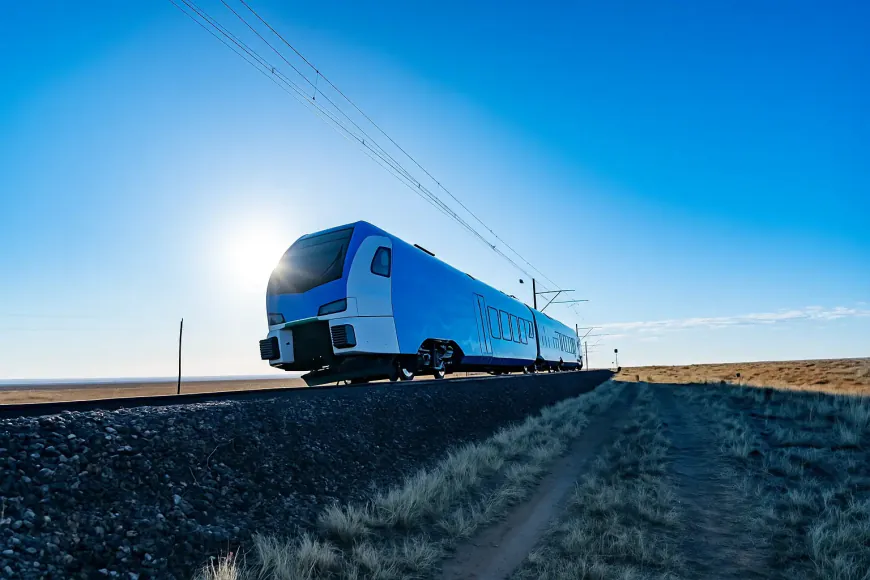
Hydrogen trains are marking a crucial milestone in decarbonizing American rail transport. At the recent APTA Rail conference, experts highlighted progress in deploying Hydrogen Fuel Cell (HFC) trains across the United States, with particular focus on the pioneering San Bernardino County Transportation Authority project.
The "Hydrogen Trains and Locomotives: Infrastructure Readiness and Planning Considerations" panel brought together representatives from Jacobs, HDR, Ricardo LLC, and SBCTA, emphasizing the importance of assessing necessary conditions for widespread adoption of this revolutionary technology.
Infrastructure challenges for hydrogen integration
One of the primary obstacles is that most current transit facilities are designed around diesel technology. Planning assumptions that work for internal combustion engines must be re-evaluated to safely implement hydrogen systems.
While hydrogen fuel cell technology is not inherently new, its integration into passenger rail systems demands new thinking, particularly concerning infrastructure and policy frameworks.
Unique properties of hydrogen fuel
Hydrogen presents unique properties that create specific challenges:
- High flammability and invisible gas characteristics
- Intense heat release potential
- Specialized handling requirements for storage
- Particular considerations for tunnels and maintenance facilities
Martin Schroeder from Jacobs emphasized that hydrogen is "not a quick and easy technology." Integration considerations include tunnels, maintenance facilities, and fueling logistics.
Adapting foreign platforms to the American market
A crucial point is that hydrogen vehicles currently being deployed in the US are largely foreign platforms requiring adaptation to the North American market.
For example, Stadler's FLIRT H2 train has a proven track record in Europe but requires adaptation to comply with different vehicle categories, routes, and regulations in the United States.
SBCTA's pioneering project: America's first compliant hydrogen train
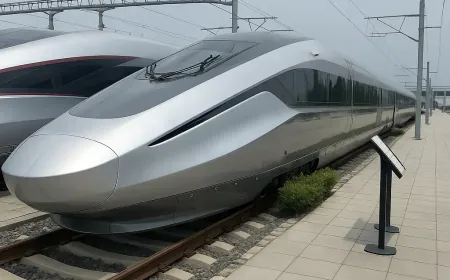
The San Bernardino County Transportation Authority (SBCTA) is leading this field, launching the first compliant hydrogen passenger train project in the United States.
Their FLIRT H2 railcar is anticipated to begin service in August 2025, marking a historic milestone in American rail transport.
Dedicated hydrogen maintenance and fueling facility
To support these operations, SBCTA is constructing a dedicated hydrogen maintenance and fueling facility. This facility is designed to consolidate fueling, storage, and heavy maintenance activities.
Joy Buenaflor, Assistant Director of Transit & Rail Programs at SBCTA, provided a detailed overview of this groundbreaking project, highlighting that it represents a holistic endeavor extending beyond simply choosing a clean train.
The SBCTA maintenance facility has been specifically modernized to meet the unique safety requirements of hydrogen fuel cell operations:
| Safety Feature | Description |
|---|---|
| Explosion Relief Panels | Installed on roof to reduce pressure during hydrogen ignition |
| Ventilation Systems | Carefully designed to manage gas dispersion |
| Detection Sensors | Calibrated to detect minimal leaks |
| Alarm Systems | Automatic triggers for emergency shutdowns |
Marcin Taraszkiewicz from HDR underscored that the approach was to "design facilities with hydrogen in mind from the outset," rather than merely retrofitting existing diesel-era infrastructure.
Critical safety considerations and protocols
Tunnel safety and ventilation systems
Tunnel safety is a major concern when using hydrogen fuel. Jacobs conducted modeling studies (CFD models) to explore potential hydrogen behavior in long tunnels with varying grades.
These models indicate that hydrogen leaks in a "V" shaped tunnel are unlikely to accumulate to dangerous levels due to train movement and natural ventilation.
While hydrogen is highly flammable, it is also very light, allowing it to escape through a vented roof if a leak occurs. However, Schroeder cautioned that each tunnel is unique, emphasizing the critical importance of case-by-case risk analysis.
Emergency response and first responder training
The discussion strongly highlighted the importance of emergency response and first responder training. Emergency services must know shut-off valve locations and understand material behavior under stress.
Joseph Tax, a rail vehicle specialist at HDR, stated that hydrogen vehicles are "not intrinsically more dangerous than diesel trains; they're just different."
Firefighter training is essential, covering:
- How to approach an HFC vehicle
- Actions to avoid
- How to safely deactivate systems
- Specific tunnel knowledge (water access, confined spaces)
Buenaflor confirmed that SBCTA has already initiated this comprehensive training process.
Future outlook and industry implications
The APTA Rail conference underscored that while hydrogen fuel cell technology holds immense promise for decarbonizing rail transport, its successful deployment in the US requires systemic change.
This systemic transformation encompasses rethinking infrastructure, retraining workforce, adapting safety protocols, and harmonizing policies to meet hydrogen's specific requirements as a fuel source.
Model for the future of rail transport
The SBCTA's pioneering efforts with the FLIRT H2 project offer a crucial model for how other transit agencies can transition from initial interest to actual implementation.
However, their experience also highlights the inherent complexity of integrating hydrogen into existing rail systems.
"The transition to hydrogen trains represents more than just a technological shift – it's a complete transformation of our approach to sustainable rail transport."
Given the increasing interest in clean propulsion technologies, these early findings from projects like SBCTA's will be essential in shaping a safer and more sustainable future for passenger rail transport.
Economic and environmental impact
The successful deployment of hydrogen trains could significantly impact both economic and environmental aspects of American transportation:
- Reduced carbon emissions from rail operations
- Enhanced energy independence through domestic hydrogen production
- Job creation in specialized maintenance and operations
- Technology leadership in clean transportation solutions
The scheduled August 2025 service launch of the FLIRT H2 will mark a historic milestone, paving the way for a new era of decarbonized American rail transport.
As other transit agencies observe SBCTA's pioneering implementation, the lessons learned will prove invaluable for scaling hydrogen rail technology across the United States, potentially transforming the nation's approach to sustainable public transportation.
Whats your reaction
 Like
0
Like
0
 Dislike
0
Dislike
0
 Love
0
Love
0
 Funny
0
Funny
0
 Wow
0
Wow
0
 Sad
0
Sad
0
 Angry
0
Angry
0

TrainsNews



Comments (0)