

TGV M: key innovations and a delivery schedule under strain
740 seats, 20% less energy and an emergency battery: the TGV M is ERA-authorised, but its commercial launch has slipped to autumn 2026.
Lire en français : TGV M : innovations majeures et calendrier sous tension
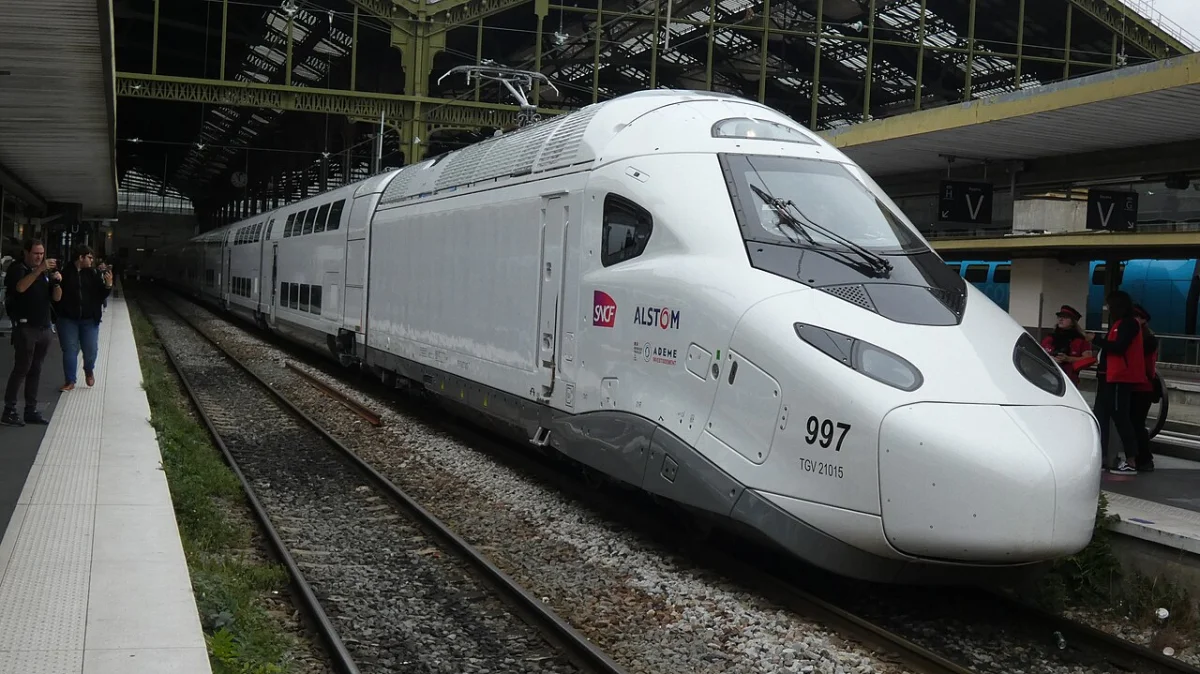
The TGV M, the fifth generation of French high-speed train built by Alstom for SNCF Voyageurs and marketed as TGV INOUI, was due to carry its first passengers on 1 July 2026, with four trainsets on the Paris – Lyon – Marseille corridor. By mid-March 2026, however, press reports pointed to reliability problems on the test trains, in a programme already more than two years behind its original Paris 2024 Olympics target. The train itself brings substantial technical change: up to 740 seats, 20% lower energy consumption and a modular architecture new to the TGV family.
A trainset designed around modularity
Alstom's Avelia Horizon platform, of which the TGV M is the launch version, uses two power cars and nine trailers for a length of about 202 metres. According to the International Railway Journal, the domestic variant is dual-voltage (1.5 kV DC and 25 kV 50 Hz), runs at 320 km/h on high-speed lines and at 220 km/h on conventional lines fitted with KVB. Continuous rating is 7.8 MW.
Modularity is the main break with the Duplex fleet. Interior layouts can be reconfigured over the train's life, and maximum capacity reaches 740 seats, roughly 20% more than the previous generation, giving SNCF more seats per path on a saturated corridor.
Energy, maintenance and the battery "greffon"
Alstom claims a 20% cut in energy consumption, achieved through aerodynamics and regenerative braking, alongside 32% lower CO₂ emissions and 30% lower maintenance costs. The train is 97% recyclable.
A lithium-ion battery module, nicknamed the "greffon", supplies emergency power and limited traction if overhead supply is lost. Trade press puts its range at around 40 to 50 km, enough to reach a station rather than leave passengers stranded on open line.
- Formation: 2 power cars + 9 trailers, about 202 m
- Capacity: up to 740 seats (+20%)
- Top speed: 320 km/h on high-speed lines
- Energy: -20%; CO₂: -32%; maintenance: -30%
- SNCF Voyageurs order: 130 sets, reported at around €4.1bn
TCMS at the heart of the problems
In mid-March 2026 the French trade title Ville, Rail & Transports reported reliability issues on two test sets, 1008 and 1009, centred on the TCMS (Train Control and Management System), which handles doors, braking, air conditioning and train-to-ground communication. Coverage of that report cited around 3,600 defects logged during testing, and an industry date of mid-August was circulating. SNCF Voyageurs denied any slippage, saying work with Alstom was continuing to meet 1 July.
From a signalling expert's perspective, TCMS faults matter. The TCMS is the train's software backbone: it governs departure conditions such as door closure, the braking states seen by the train protection systems, and integration of the on-board ETCS, TVM and KVB equipment. Every software fix requires fresh non-regression testing before a configuration can be frozen for authorisation and service.
A tight authorisation timetable
Alstom submitted the authorisation file to the European Union Agency for Railways (ERA) in December 2025. The plan was to start with four sets on Paris – Lyon – Marseille, where SNCF competes head-on with Trenitalia's Frecciarossa, then ramp up deliveries.
The programme reaches well beyond France. Eurostar has ordered 30 four-voltage sets with 20 options, a significant move as rival operators prepare to enter the Channel Tunnel market. Morocco's ONCF has ordered 18 and the open-access start-up Proxima, now renamed Velvet, 12. For wider context on the segment, see our high-speed train coverage and the state of the global rolling stock market.
Update (October 2026)
The 1 July date was missed. On 29 May 2026 Alstom announced that ERA had granted the TGV M its authorisation to place on the market, after almost one million kilometres of testing. First passengers were then expected in early September, with two sets delivered in June, six by the end of August and 13 by the end of 2026.
On 11 September 2026 SNCF and Alstom postponed commercial launch again, to "autumn 2026". The train is certified and safety is not in question: a pre-service trial with more than 2,000 staff and 1,600 mystery shoppers highlighted comfort and service adjustments, including sensors, accessibility for passengers with reduced mobility and the bar car. Six sets had been delivered. As of 6 October 2026, no firm date for the first commercial service had been made public.
Sources: Alstom, 10 December 2025; Alstom, 29 May 2026; International Railway Journal, 1 June 2026; Railway Gazette International; L'Écho touristique, 16 March 2026; Ulysse, 6 April 2026 (citing Ville, Rail & Transports); Generation-NT, 11 September 2026; Journal du Geek, 15 September 2026.
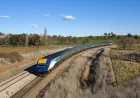
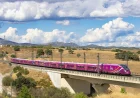
Photo: Rémi Simonnin, CC BY-SA 4.0, via Wikimedia Commons
Whats your reaction
 Like
0
 Dislike
0
 Love
0
 Funny
0
 Wow
0
 Sad
0
 Angry
0

TrainsNews est un média indépendant et bilingue d'actualité ferroviaire mondiale, publié depuis 2024. La rédaction couvre la grande vitesse, le matériel roulant, l'infrastructure, la signalisation et les télécoms ferroviaires (ERTMS/ETCS, CBTC, FRMCS, GSM-R), l'exploitation, le fret et le financement des projets. Chaque article cite ses sources et donne les chiffres avec leur total. TrainsNews is an independent, bilingual (French/English) news outlet covering the global rail industry since 2024: high-speed rail, rolling stock, infrastructure, signalling and telecoms, operations, freight and project financing. Every article cites its sources.
The rail month in one PDF: news and guides summarised, with their photos.
The rail month in one PDF: news and guides summarised, with their photos.







Comments (0)