

Paris Metro Line 13: Siemens to deliver CBTC GoA4 automation
RATP has awarded Siemens Mobility the GoA4 CBTC for Paris Metro Line 13: 66 MF19 trains fitted, driverless target end-2032, full automation by 2035.
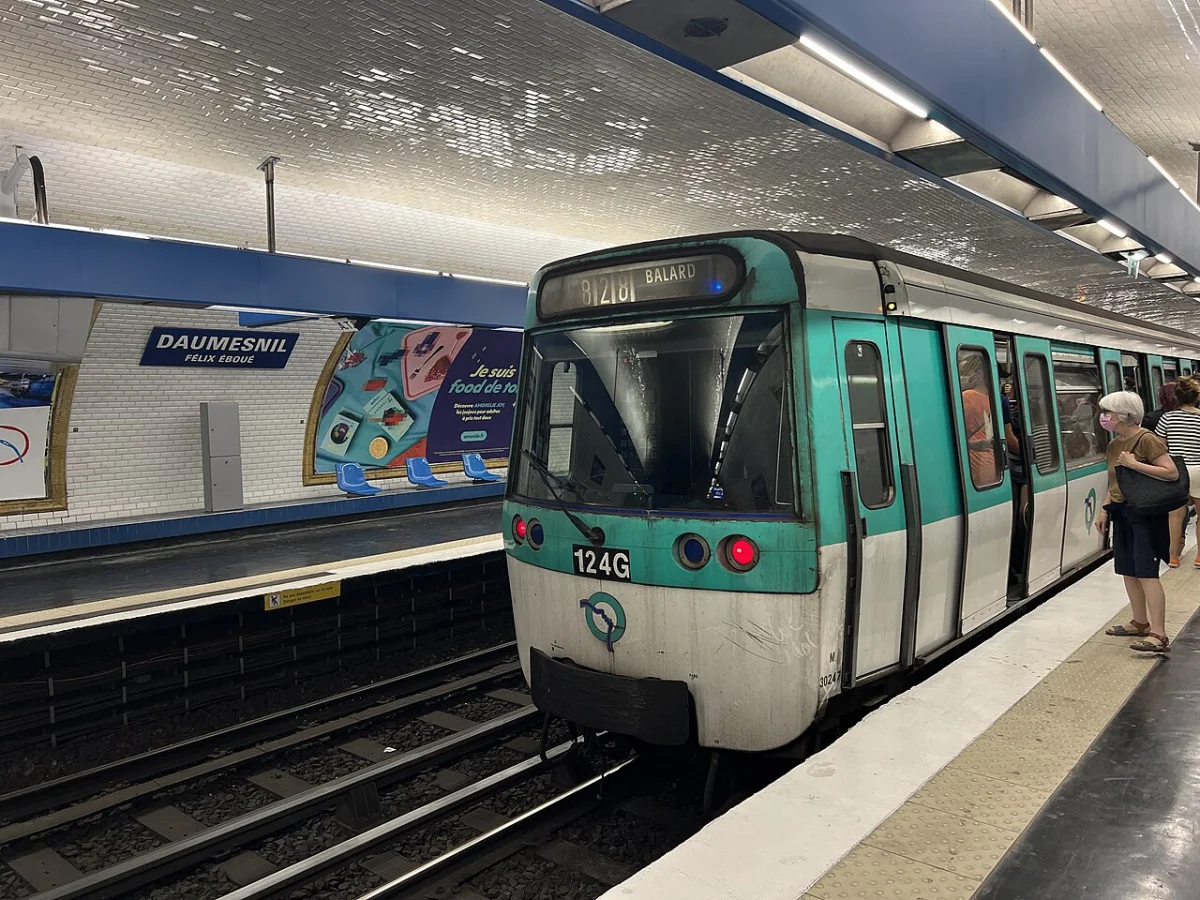
Lire en français : Ligne 13 du métro : Siemens chargé de l'automatisation intégrale GoA4
RATP has selected Siemens Mobility to fully automate Paris Metro Line 13. Announced on 26 August 2025, the contract covers a Trainguard MT communications-based train control (CBTC) system for unattended GoA4 operation, onboard equipment for 66 MF19 trains, a new operations control centre and staff training, plus an option for up to 30 years of maintenance. The contract value was not disclosed. Siemens targets driverless operation by the end of 2032, while RATP and the transport authority Île-de-France Mobilités give 2035 for completion of the full automation programme.
A crowded line converted under traffic
Line 13 is 24 km long with 32 stations. It runs from Châtillon-Montrouge in the south-west to two northern branches, Saint-Denis-Université and Asnières-Gennevilliers-Les Courtilles. Siemens puts daily ridership above 550,000, even after the 2020 Line 14 extension to Saint-Ouen relieved part of the northern corridor.
Île-de-France Mobilités approved automation in December 2022. Alongside the new signalling, the programme includes platform screen doors at every station and upgrades to infrastructure and passenger information. The authority expects an average of 40 trains per hour and more regular intervals. As on Lines 1 and 4, the conversion must proceed without major service interruptions.
From GoA2 to GoA4: what actually changes
Line 13 currently runs at GoA2 with the OURAGAN system, originally supplied by Alcatel (now Thales). Automatic train operation handles traction and braking under ATP supervision, but the driver closes the doors, gives the departure order and watches the track ahead. This is not one of the OCTYS installations found on other Paris lines.
IEC 62290 defines the grades of automation. GoA1 is manual driving under speed supervision; GoA2 (STO) is automatic driving with a driver in the cab; GoA3 (DTO) removes the driver but keeps an attendant on board; GoA4 (UTO) means no operating staff on the train. At GoA4, the tasks previously left to the driver, such as obstacle detection, supervision of the platform-train interface and handling of degraded situations, move to platform screen doors, the control centre and the wayside and onboard systems.
CBTC is built on the moving block principle. Each train determines its position by odometry, corrected by trackside balises, and reports it continuously by radio to wayside zone controllers. These issue each train a movement authority whose limit sits behind the rear of the train ahead, with a safety margin. The onboard ATP computes a braking curve to that limit and enforces it. Separation is set by actual braking distance rather than fixed block sections, which is what allows shorter headways. See our overview of signalling systems.
MF19 trains as the platform
The fleet for the automated line is Alstom's MF19, a five-car steel-wheel train that entered passenger service on Line 10 on 16 October 2025. According to RATP, MF19s will be phased in on Line 13 from summer 2027, replacing the MF77 fleet. The often-quoted "new trains delivered in 2027" therefore refers to their entry into service on the line; GoA4 operation follows later.
Railway Gazette describes the project as the first conversion of a steel-wheel metro from GoA2 to GoA4, since Lines 1 and 4 run rubber-tyred stock. In the same CBTC market, Alstom is deploying its Urbalis system in Singapore.
Siemens' track record on Lines 1, 4 and 14
Siemens already supplies the GoA4 CBTC on Lines 1, 4 and 14. Line 1 was converted at the end of 2012, and Line 4 moved to fully automatic operation on 19 January 2024 without service being suspended during the works. On Line 14, driverless since it opened in 1998, Siemens replaced the original system with a new generation. Marc Ludwig, CEO Rail Infrastructure at Siemens Mobility, called this a world first: upgrading an existing driverless system, which allows Line 14 to carry up to a million passengers a day at 85-second intervals.
For Line 13, Railway Gazette reports a target headway of 85 seconds on the trunk section between Châtillon-Montrouge and La Fourche. North of the junction, the service is split between the two branches. Siemens will run the project from its competence centre in Châtillon, which employs more than 500 engineers.
Timeline and what to watch
- December 2022: automation approved by Île-de-France Mobilités
- 26 August 2025: contract awarded to Siemens Mobility
- Summer 2027: MF19 trains begin entering service on Line 13
- End of 2032: Siemens target for driverless operation
- 2035: full automation according to RATP
Points to follow include the staging of migration under traffic, platform screen door installation at 32 stations, mixed MF77 and MF19 operation during the transition, and the labour relations side of automation, which RATP itself identifies as critical. Other network changes are covered in our piece on Île-de-France transport in 2026.
Update (October 2026)
MF19 testing is now under way on Line 13. RATP says night and daytime trials are checking compatibility with the infrastructure, and the Châtillon depot is gaining an extra maintenance hall. Passenger service remains planned for summer 2027.
Sources: Siemens Mobility, 26 August 2025; Railway Gazette, August 2025; Île-de-France Mobilités, December 2022; RATP MF19 page (accessed October 2026); Urban Transport Magazine, 26 January 2024.
Photo: Chabe01, CC BY-SA 4.0, via Wikimedia Commons
Whats your reaction
 Like
0
 Dislike
0
 Love
0
 Funny
0
 Wow
0
 Sad
0
 Angry
0

TrainsNews est un média indépendant et bilingue d'actualité ferroviaire mondiale, publié depuis 2024. La rédaction couvre la grande vitesse, le matériel roulant, l'infrastructure, la signalisation et les télécoms ferroviaires (ERTMS/ETCS, CBTC, FRMCS, GSM-R), l'exploitation, le fret et le financement des projets. Chaque article cite ses sources et donne les chiffres avec leur total. TrainsNews is an independent, bilingual (French/English) news outlet covering the global rail industry since 2024: high-speed rail, rolling stock, infrastructure, signalling and telecoms, operations, freight and project financing. Every article cites its sources.
The rail month in one PDF: news and guides summarised, with their photos.
The rail month in one PDF: news and guides summarised, with their photos.

Comments (0)