

Israel funds Shefayim–Haifa high-speed line and Line 431
Israel releases NIS 300m for its first high-speed line, Shefayim–Haifa at 250km/h, and NIS 175m for the Line 431 Rishon LeZion–Jerusalem link.
Lire en français : Israël : fonds débloqués pour la LGV Shefayim–Haïfa et la ligne 431
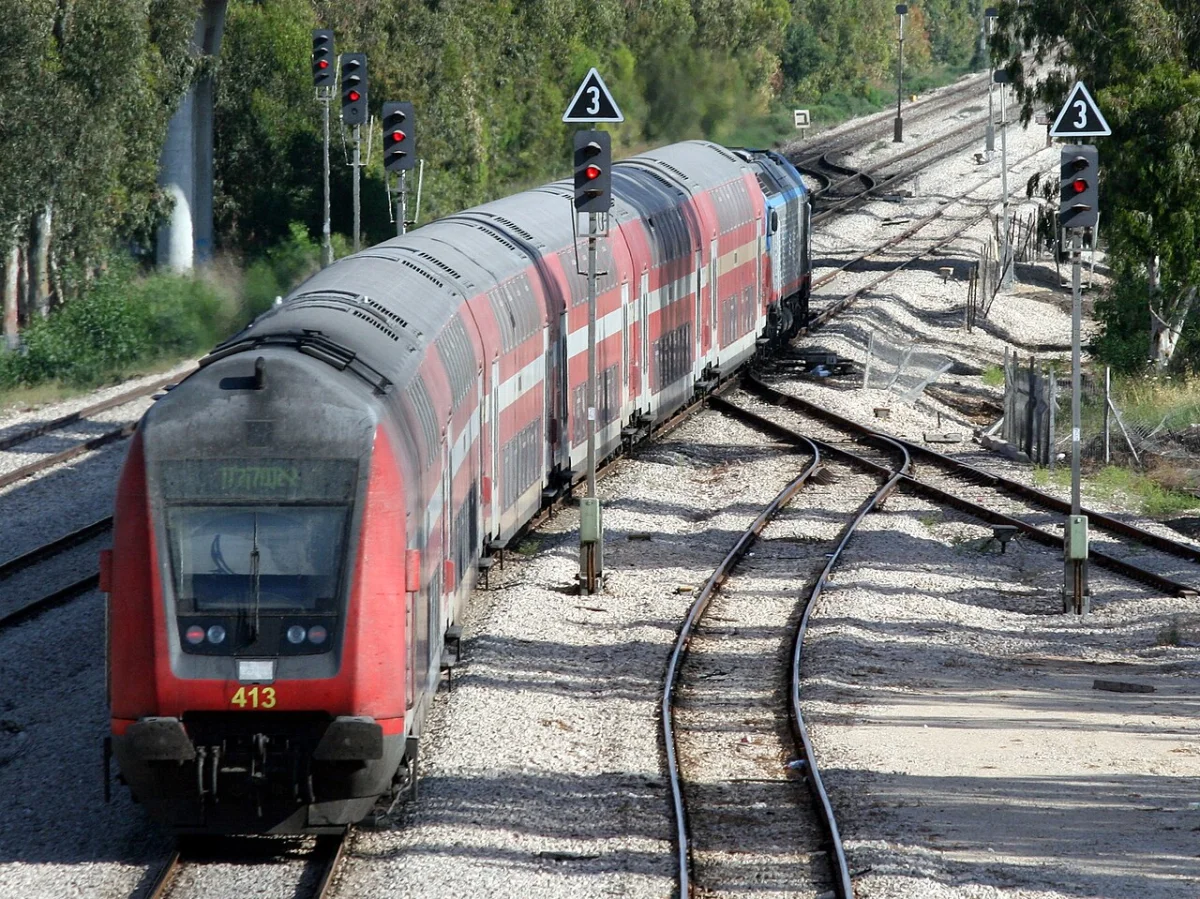
Israel’s Ministry of Finance released fresh funding in late July 2025 for two major Israel Railways projects: NIS 300m for the country’s first high-speed line, between Shefayim and Haifa, and NIS 175m for the Highway 431 line, which will link Rishon LeZion to Jerusalem without passing through Tel Aviv. The two schemes have a combined budget of around NIS 18.2bn.
Shefayim–Haifa: 70km of new track for 250km/h
The larger project targets the coastal Tel Aviv–Haifa corridor, the busiest route on the Israeli network. On 24 December 2023 the government approved quadrupling the line, with two fast tracks suitable for 250km/h between Shefayim, north of Herzliya, and Haifa Hof HaCarmel station. The section involves around 70km of new electrified infrastructure.
The overall budget is estimated at NIS 15bn. Work officially began on 24 December 2024, once Israel Railways had completed land acquisition, and construction is expected to take about five years. The stated aim is a Tel Aviv–Haifa journey of 30 minutes, with a train every five minutes at peak times. The programme includes new stations and extensive alterations to existing ones.
The line is one element of a wider plan. Israel Railways is also studying an 83km new line designed for 250km/h from Pleshet junction via Na’an to Be’er Sheva, giving a 38-minute Be’er Sheva–Tel Aviv journey, and expanding the 27km between Shefayim and Ben Gurion airport to six tracks.
Line 431: a Tel Aviv bypass towards Jerusalem
The second project is not a high-speed line as such, but a fast connecting link. The 30km electrified railway runs in the central reservation of Highway 431. It connects Rishon LeZion Moshe Dayan station, via Rishon LeZion HaRishonim, Anava and Modi’in, with the fast Tel Aviv–Jerusalem line (the A1), through to Jerusalem Navon.
At present, passengers from the southern suburbs heading to Jerusalem must change trains in Tel Aviv. The new link is expected to halve their journey time. Services will start at two trains per hour in each direction, rising later to four. Two new stations are being built, at Ramla South and Rishon LeZion Rhombus.
The cost was estimated at NIS 3.2bn in September 2019, when a consortium led by Electra Infrastructures won a NIS 400m contract for the first section. The civil engineering is substantial: a viaduct of about 3.5km, described as Israel’s longest, several rail bridges and short tunnels. Completion was given as 2025 when the first tenders were issued in 2018; opening is now scheduled for 2027.
Key figures
- Shefayim–Haifa: around 70km, 250km/h, NIS 15bn, NIS 300m released
- Groundbreaking: 24 December 2024; construction period: around five years
- Tel Aviv–Haifa journey time target: 30 minutes
- Line 431: 30km electrified, NIS 3.2bn, NIS 175m released
- Line 431 opening: 2027
Signalling and operations
From a signalling perspective, 250km/h on a mixed-traffic corridor is a step change. At that speed lineside signals are no longer adequate, and high-speed operation in Europe relies on cab signalling. Israel Railways has already started this migration: in December 2018 Alstom won a €45m contract to fit 192 vehicles with its Atlas ETCS Level 2 onboard equipment, with an option for 34 more.
Capacity is the other issue. Four tracks will separate fast services from stopping trains and freight, and that separation is what makes the planned five-minute headway possible. On Line 431 the main challenge is fitting into a dense node: the junctions at Rishon LeZion and at Anava on the A1 will need careful timetable coordination with existing Jerusalem services.
A busy regional rail market
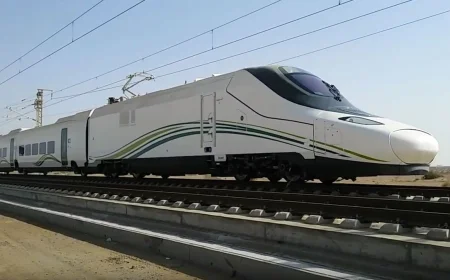
These projects add to the urban transport programme in the Tel Aviv metropolitan area, where the planned metro being procured by NTA is the flagship scheme. Regionally, Israel joins Saudi Arabia as one of the few Middle Eastern countries investing in high-speed rail. Saudi Arabia runs the Haramain line and has ordered 20 new trains for it. Other projects in the region are covered in our Middle East section.
The next steps to watch are the award of the main civil and systems packages for Shefayim–Haifa, the choice of trackside signalling for the 250km/h sections, and whether Line 431 meets its 2027 date, which has already slipped from the original programme. Funding details were reported by International Railway Journal, and the network development plan by Railway Gazette International.
Sources: International Railway Journal, 31 July 2025; Railway Gazette International, 10 January 2024; Globes, 2 December 2018; Alstom, 10 December 2018.
Photo: Oyoyoy, CC BY-SA 3.0, via Wikimedia Commons
Whats your reaction
 Like
0
 Dislike
0
 Love
0
 Funny
0
 Wow
0
 Sad
0
 Angry
0

TrainsNews est un média indépendant et bilingue d'actualité ferroviaire mondiale, publié depuis 2024. La rédaction couvre la grande vitesse, le matériel roulant, l'infrastructure, la signalisation et les télécoms ferroviaires (ERTMS/ETCS, CBTC, FRMCS, GSM-R), l'exploitation, le fret et le financement des projets. Chaque article cite ses sources et donne les chiffres avec leur total. TrainsNews is an independent, bilingual (French/English) news outlet covering the global rail industry since 2024: high-speed rail, rolling stock, infrastructure, signalling and telecoms, operations, freight and project financing. Every article cites its sources.

The rail month in one PDF: news and guides summarised, with their photos.
The rail month in one PDF: news and guides summarised, with their photos.

Comments (0)