

AVE and Iryo trains collide near Toledo: about 64 dead
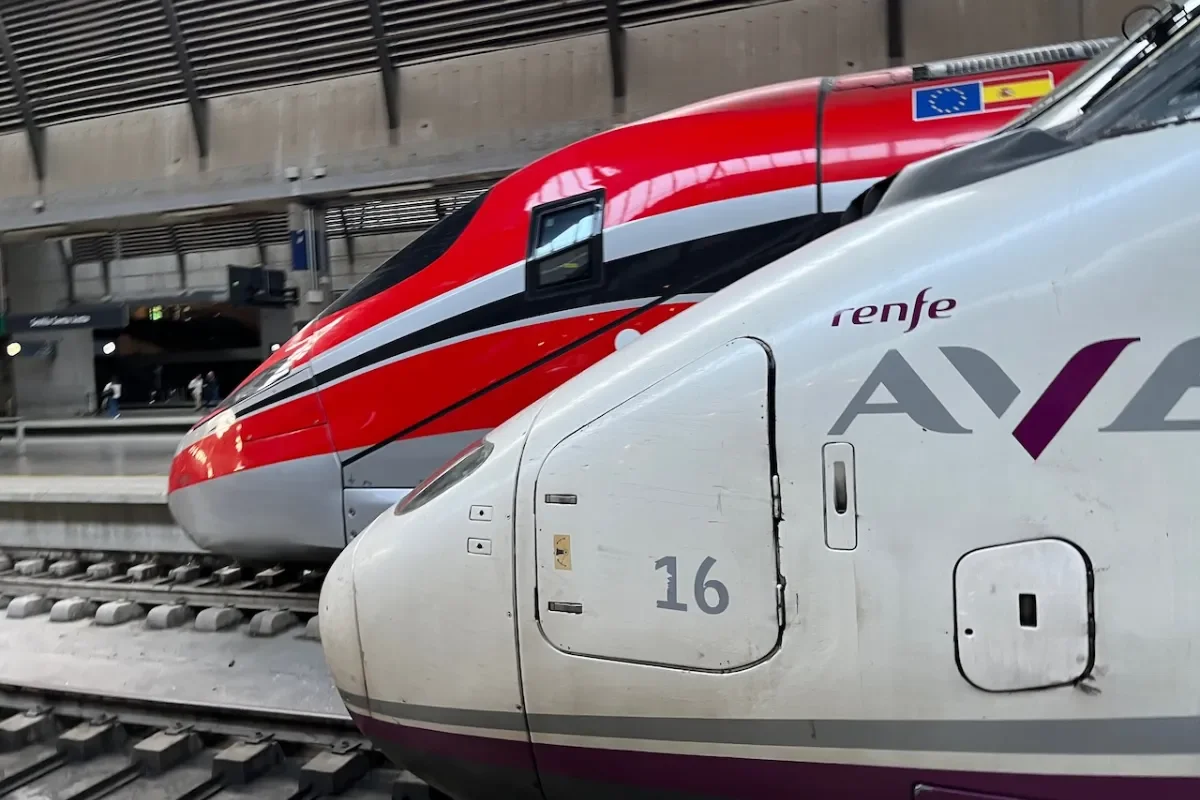
A Renfe AVE ran into the back of a stationary Iryo train near Urda, Toledo: about 64 dead according to Castilla-La Mancha president Emiliano García-Page, who expects the toll to rise. The Madrid–Andalusia high-speed line is closed.
By the TrainsNews newsroom · Updated 28 October 2026, 16:15 CET
About 64 people were killed on Wednesday morning when a Renfe AVE high-speed train ran into the back of an Iryo train near Urda, in the Spanish province of Toledo, according to Castilla-La Mancha regional president Emiliano García-Page, who expects the toll to rise. The Madrid–Andalusia high-speed line is closed until further notice.
What we know
The accident happened at about 08:54 at kilometre point 118 of the high-speed line near Urda, between a Renfe train and an Iryo train both running from Madrid to Seville, infrastructure manager Adif said. According to Transport Ministry sources quoted by the Spanish press, AVE 2080 struck Iryo 6076 from behind while the Iryo train was stationary. The last two cars of the Iryo train derailed, and part of the train fell down an embankment.
In the early afternoon, Emiliano García-Page raised the toll to "approximately 64" deaths, "probably with a tendency to rise further". He said 24 of the victims were on the AVE and 40 on the Iryo train: 34 bodies had been removed from the cars, and 6 more people, dead, had not yet been reached. At around 13:00 he had first announced 30 deaths (24 on the AVE, 6 on the Iryo), saying rescuers had not yet searched all the cars. At that point he put the number of injured at about 80: 30 classed as minor (green), about 50 at the intermediate yellow level, and several in serious condition (red), without giving a figure. Earlier in the morning, regional government spokesperson Esther Padilla had confirmed 10 deaths.
Why the Iryo train had stopped is not known. Asked about it, the regional spokesperson said that speculating would be reckless, and Emiliano García-Page also declined to comment on the cause before the experts. Rail accidents in Spain are investigated by the CIAF, the national rail accident investigation commission.
Rescue and services
The Castilla-La Mancha government activated its regional emergency plan and called in the Military Emergencies Unit (UME). The Guardia Civil, medical helicopters and firefighters from the Madrid region were sent to the scene. Transport Minister Óscar Puente followed the situation from Adif's control centre at Madrid Atocha before travelling to the site. Prime Minister Pedro Sánchez said he was "dismayed".
Trains between Madrid, Ciudad Real and Andalusia are suspended. The ministry has asked passengers holding tickets for today not to go to the stations. Renfe offers free changes and cancellations. Adif has opened assistance points at Madrid Atocha, Sevilla Santa Justa and Córdoba stations, and Renfe has set up a helpline for victims' families: 900 10 10 20.
Our analysis
A rear-end collision between two trains on a high-speed line is extremely rare. On such lines, train separation does not depend on the driver alone: cab signalling sets a speed limit for each train and can trigger emergency braking. The Madrid–Seville line, opened in 1992, was originally fitted with the German LZB system, which Spain is replacing with ERTMS Level 2. Investigators will have to establish which mode each train was running in, what movement authorities they had received, and how both trains came to be in the same block section.
It is too early to draw conclusions. None of the theories circulating since the morning has been confirmed by an official source. This is the second serious accident on this route this year, after the Adamuz crash in the province of Córdoba in January. Read our report on the Adamuz crash and the rail break detected before it.
We will update this article as official information comes in.
Sources: Adif and Renfe (statements, 28 October 2026); Adif on X; Castilla-La Mancha government via elDiario.es, Lanza, statements by Emiliano García-Page; La Cerca and Cuadernos Manchegos (toll of about 64); Lanza (Europa Press) and Libertad Digital (28 October 2026). Information as of 16:15 CET.
Whats your reaction
 Like
0
 Dislike
0
 Love
0
 Funny
0
 Wow
0
 Sad
0
 Angry
0

TrainsNews est un média indépendant et bilingue d'actualité ferroviaire mondiale, publié depuis 2024. La rédaction couvre la grande vitesse, le matériel roulant, l'infrastructure, la signalisation et les télécoms ferroviaires (ERTMS/ETCS, CBTC, FRMCS, GSM-R), l'exploitation, le fret et le financement des projets. Chaque article cite ses sources et donne les chiffres avec leur total. TrainsNews is an independent, bilingual (French/English) news outlet covering the global rail industry since 2024: high-speed rail, rolling stock, infrastructure, signalling and telecoms, operations, freight and project financing. Every article cites its sources.
The rail month in one PDF: news and guides summarised, with their photos.
The rail month in one PDF: news and guides summarised, with their photos.




Comments (0)