

German court strikes down regulator's rule forcing DB to reserve long-distance paths for rivals
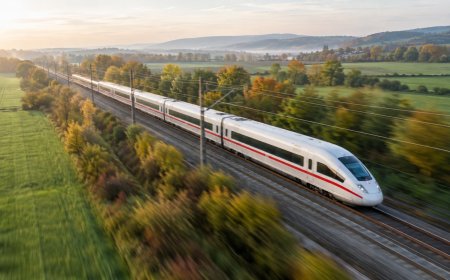
Cologne's administrative court ruled on 7 October 2026 that the Bundesnetzagentur had no legal basis to make DB InfraGO reserve 25-40% of long-distance capacity on congested routes for competitors. The decision is a setback for Italo, which plans to enter Germany in 2028.
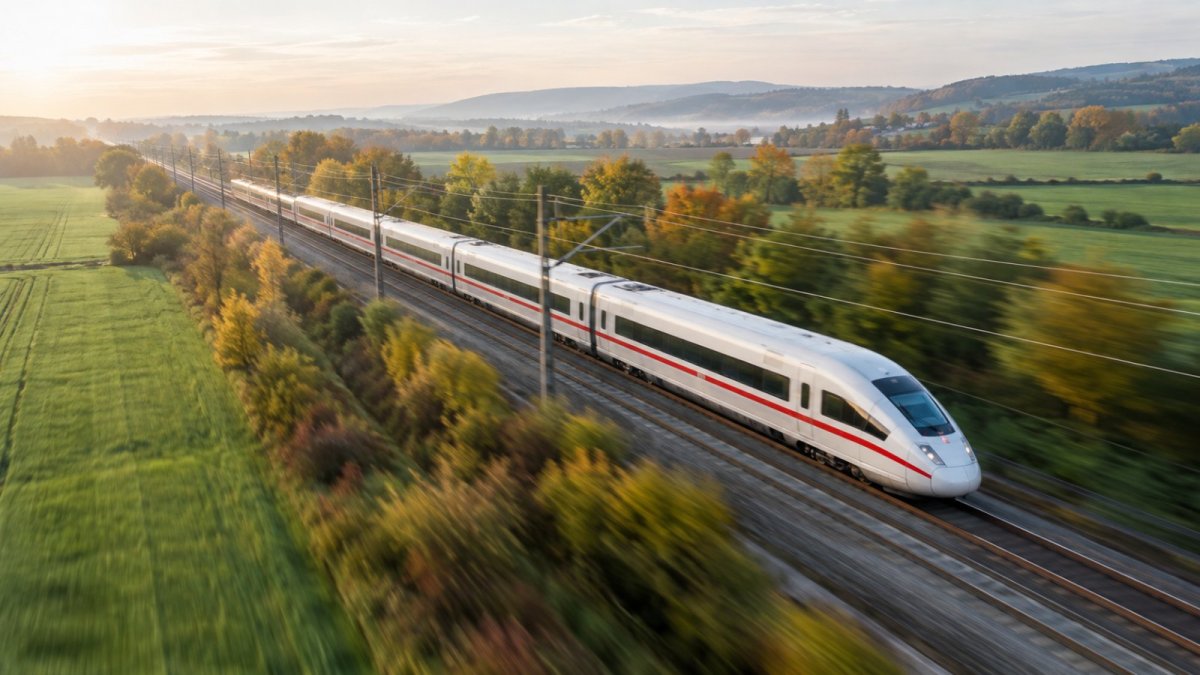
Germany's push to open long-distance rail to competition has hit a legal wall. In an expedited ruling dated 7 October 2026 (case 18 L 2186/26), the Administrative Court of Cologne found that the federal regulator, the Bundesnetzagentur (BNetzA), had no legal basis to force infrastructure manager DB InfraGO to write a "competitor clause" into its network access conditions. The decision cannot be appealed (beck-aktuell, 8 October 2026).
What the regulator wanted
| Decision | BNetzA ruling of 17 July 2026, following a complaint by Italian open-access operator Italo |
| Rule | On congested long-distance corridors (e.g. the Munich and Frankfurt nodes), DB Fernverkehr would receive at most 60-75% of long-distance capacity |
| Effect | 25-40% of long-distance paths on those sections kept for competitors |
| First application | 2028 timetable, with capacity allocation work in 2027 |
| Second measure | DB station lounges to be treated as service facilities open to competitors |
| Court outcome | Both measures declared unlawful in expedited proceedings; not appealable |
Why the court said no
The court held that neither EU nor German rail regulation requires an infrastructure manager to include such a clause in its terms of use, so the regulator acted without a legal basis. It also found the clause unfit for its stated purpose: because it was limited in time, location and scope, no operator would base a long-term investment decision on it, least of all a multi-year clock-face service like the one Italo is planning. On lounges, the court ruled that catering, rest and work areas are not railway-specific enough to count as railway service facilities, noting that comparable services are available from third parties at every large station.
The judges stressed that the ruling does not ban competition or block Italo's market entry. It only concerns the lawfulness of this specific instrument.
What it means for Italo and for DB
Italo plans to launch German services from 2028 with 30 high-speed trains ordered from Siemens Mobility, on routes such as Munich–Cologne–Dortmund and Munich–Berlin–Hamburg, and says it will invest about €3.6bn in the German market. DB currently carries around 95% of long-distance rail traffic in Germany; Flixtrain is the only other competitor of significant size. DB had argued that the clause would multiply conflicts over individual train paths and create legal and practical problems for capacity management.
Without a reserved share, new entrants will have to win paths through the normal allocation process and framework agreements, on a network where capacity is also being squeezed by the corridor renewal programme (our report on Germany's revised corridor renewal plan).
An engineer's view
On a saturated node, capacity is not a percentage but a timetable: a path is defined by headways, platform occupation and conflicts at junctions. A rule that splits capacity by operator share is hard to apply without reshaping the whole timetable structure, which is precisely DB's objection. The lasting fix is more physical and signalling capacity: ETCS Level 2 with shorter block sections and digital nodes such as Stuttgart and Hamburg, which can add paths for everyone, incumbent and entrants alike.
Related reading
- Germany cuts corridor renewals to 13 and makes ETCS the standard
- Saudi Arabia Railways doubles its Stadler inter-city fleet
FAQ
Which court issued the ruling?
The 18th chamber of the Administrative Court of Cologne (Verwaltungsgericht Köln), which handles rail regulation cases, in expedited proceedings on 7 October 2026.
Can the Bundesnetzagentur appeal?
No. The decision is reported as final (unanfechtbar).
Does this stop Italo from entering Germany?
No. The court said the ruling does not prevent market entry; it only removes the guaranteed share of paths the regulator had ordered.
Whats your reaction
 Like
0
Like
0
 Dislike
0
Dislike
0
 Love
0
Love
0
 Funny
0
Funny
0
 Wow
0
Wow
0
 Sad
0
Sad
0
 Angry
0
Angry
0

TrainsNews est un média indépendant et bilingue d'actualité ferroviaire mondiale, publié depuis 2024. La rédaction couvre la grande vitesse, le matériel roulant, l'infrastructure, la signalisation et les télécoms ferroviaires (ERTMS/ETCS, CBTC, FRMCS, GSM-R), l'exploitation, le fret et le financement des projets. Chaque article cite ses sources et donne les chiffres avec leur total. TrainsNews is an independent, bilingual (French/English) news outlet covering the global rail industry since 2024: high-speed rail, rolling stock, infrastructure, signalling and telecoms, operations, freight and project financing. Every article cites its sources.






Comments (0)