

Tokyo to Osaka by Shinkansen: Nozomi times, fares and JR Pass (2026)
Tokyo to Osaka in 2 h 21 by Nozomi, up to 13 trains an hour, from 14,720 yen reserved. Fares, Hayatoku 21, JR Pass maths, luggage rules and the maglev outlook.
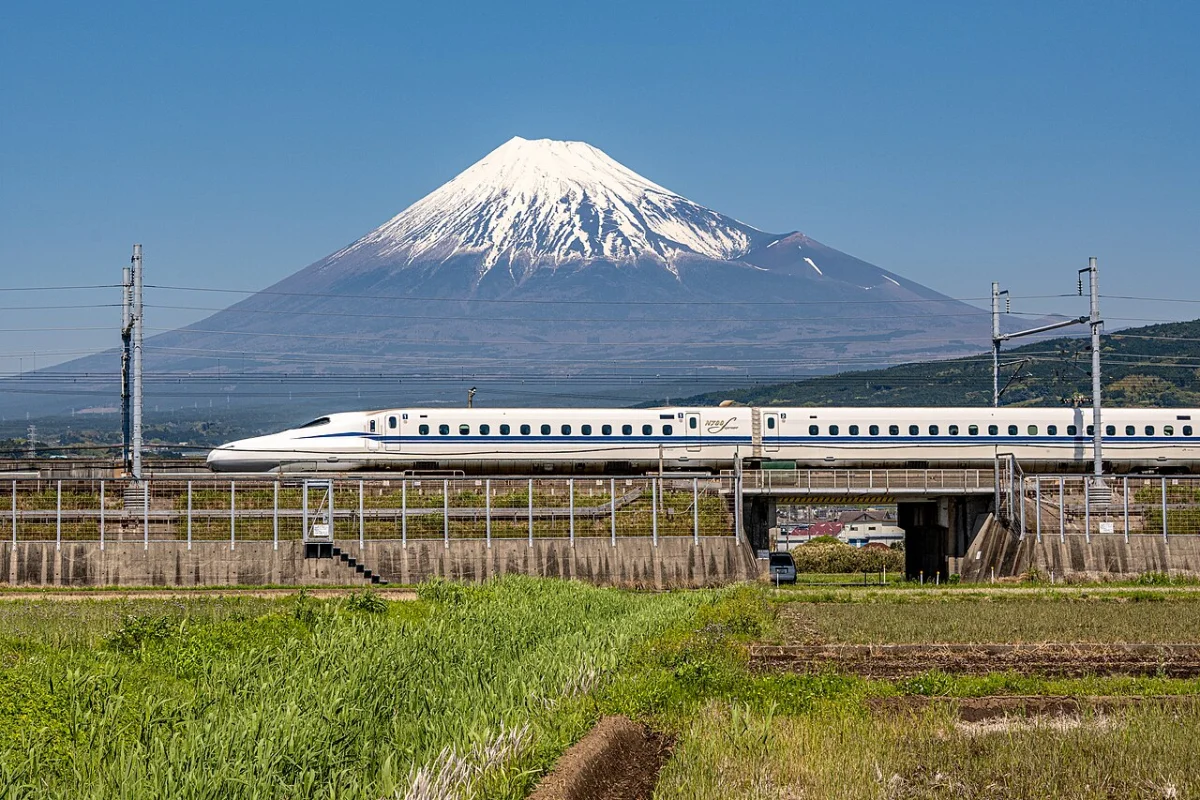
By the TrainsNews rail expert · updated 16 October 2026
Tokyo to Osaka is one of the busiest high-speed rail corridors in the world. The Tokaido Shinkansen runs 383 trains a day and carries about 460,000 passengers a day (FY2024), according to JR Central. The fastest Nozomi links Tokyo and Shin-Osaka in 2 h 21, with up to 13 Nozomi an hour at peak times since March 2026. A reserved seat costs 14,720 yen one way, and the Japan Rail Pass rarely pays off on this route alone. Here is everything you need to know.
Tokyo to Osaka at a glance
| Item | Details |
|---|---|
| Operator | JR Central (Tokaido Shinkansen) |
| Fastest train | Nozomi, 2 h 21 (most take 2 h 27 to 2 h 30) |
| Other trains | Hikari about 3 h; Kodama (all stops) about 4 h |
| Frequency | Up to 13 Nozomi per hour at peak; first Nozomi 06:00 from Tokyo, last regular one 21:24 |
| Stations | Tokyo, Shinagawa, Shin-Yokohama, Nagoya, Kyoto, Shin-Osaka |
| Trains | N700S and N700A, top speed 285 km/h |
| Fares (adult, one way) | Reserved Nozomi 14,720 yen; non-reserved 13,870 yen; Green Car 19,590 yen |
Nozomi, Hikari or Kodama?
Nozomi is the fastest service and stops only at Shinagawa, Shin-Yokohama, Nagoya and Kyoto. It is the obvious choice if you pay for your ticket. Hikari adds a few stops and takes about 3 hours; it is the train to take with a Japan Rail Pass, because it is included with no supplement. Kodama stops everywhere and takes about 4 hours, and stops at Shin-Fuji, near Mount Fuji.
Tip: you can board at Shinagawa instead of Tokyo for the same fare and save about 7 minutes. For Mount Fuji, sit on the right-hand side towards Osaka (seat E in standard cars, seat D in the Green Car), about 40 to 45 minutes after leaving Tokyo.
Stations and connections
- Tokyo Station: central Tokyo, with connections to many JR lines.
- Shinagawa: southern Tokyo, same fare as Tokyo Station and about 7 minutes closer to Osaka.
- Shin-Osaka: the Shinkansen station. Osaka Station (Umeda) is 3 to 4 minutes away on any JR local train; Namba is on the Midosuji subway line (not covered by the JR Pass).
- Kansai Airport: the Haruka limited express runs from Shin-Osaka in about 50 minutes, roughly every 30 minutes, and is covered by the JR Pass.
Fares and how to pay less
| Ticket (adult, Tokyo–Shin-Osaka) | Price |
|---|---|
| Nozomi, reserved seat | 14,720 yen |
| Hikari or Kodama, reserved seat | 14,400 yen |
| Non-reserved seat (any train) | 13,870 yen |
| Green Car (first class), Nozomi | 19,590 yen |
| smartEX app, Nozomi reserved | 14,520 yen (200 yen off) |
| EX Hayatoku 21 (booked 21+ days ahead, limited seats) | 12,980 yen |
| Supreme Class private room (since 1 October 2026) | 42,390 yen (single room) or 60,790 yen (room for two; the second traveller also needs a normal ticket), regular season |
Reserved and Green fares vary slightly by season. JR Central did not raise its Tokaido fares in 2026; the March 2026 increase concerned JR East. Children aged 6 to 11 pay a child fare; under-6s travel free in non-reserved seats, up to two per adult.
Is the Japan Rail Pass worth it?
From 1 October 2026, the nationwide pass costs 53,000 yen for 7 days, 84,000 yen for 14 days and 105,000 yen for 21 days (ordinary class). It covers Hikari and Kodama, but not Nozomi: since October 2023, pass holders must buy a Nozomi ticket of 4,960 yen per trip between Tokyo and Shin-Osaka, sold in Japan only.
The maths is simple. A Tokyo–Osaka return on the Nozomi costs 29,440 yen at full fare, or 25,960 yen with Hayatoku 21, against 53,000 yen for the 7-day pass. The pass only pays off if you add about 23,600 yen of other JR journeys within the week (travelling on Hikari), or about 33,500 yen if you take the Nozomi both ways. For a simple Tokyo–Kyoto–Osaka trip, buy single tickets.
Booking
- smartEX (app or website, free membership): JR Central's online booking service, 200 yen cheaper than the ticket office and required for Hayatoku fares and Supreme Class.
- Ticket machines and offices in stations: for same-day tickets and JR Pass Nozomi tickets.
- When the train is full: Nozomi trains become all-reserved during Golden Week, Obon, the September holidays and New Year (in 2026: 24 April–6 May, 7–16 August, 18–23 September and 25 December–5 January 2027). Book ahead at those times.
Luggage and life on board
- Large suitcases: a bag with total dimensions of 161 to 250 cm needs a reserved "seat with an oversized baggage area" (free, last row of some cars). Without it, you pay 1,000 yen and the crew decides where it goes. Bags over 250 cm are not allowed.
- Food: the trolley service ended on 31 October 2023. Buy an ekiben (station lunch box) before boarding; Green Car passengers can order by smartphone.
- Wi-Fi and power: free "Shinkansen_Free_Wi-Fi" (reconnect every 30 minutes); a power outlet at every seat on the N700S, window seats only in standard cars of older trains.
- Etiquette: take phone calls in the vestibule, keep your voice down and take your rubbish with you. On 16-car Tokyo–Hakata trains, the "S Work" car (car 7) allows calls and video meetings at low volume; check the layout on trains with Supreme Class.
The future: the maglev
JR Central is building the Chuo Shinkansen, a superconducting maglev line at 500 km/h that will link Shinagawa to Nagoya in 40 minutes and to Osaka in 67 minutes. The 2027 opening was abandoned in 2024. On 7 July 2026, Shizuoka Prefecture finally approved the 8.9 km section through its territory after a nine-year dispute over the Oi River; that section needs at least ten years of work, so Tokyo–Nagoya cannot open before about 2036. JR Central gives no official date and no date at all for Osaka. The Tokyo–Nagoya section is now estimated at about 11 trillion yen.
An expert's view
Thirteen Nozomi an hour on a two-track line is one of the highest capacities of any high-speed line. It works because every train on the Tokaido Shinkansen has nearly the same performance, platform dwell times are measured in seconds, and the line runs only Shinkansen trains, with no freight or slow regional services. JR Central's ATC signalling system enforces speed continuously, which lets trains follow each other about three minutes apart.
The weak point is resilience: the line was built in the 1960s, and heavy rain, strong winds or earthquakes trigger automatic slowdowns or stops along the whole corridor. That is the real reason behind the maglev: not only speed, but a second, independent route between Japan's two largest metropolitan areas.
Frequently asked questions
How long is the Shinkansen from Tokyo to Osaka?
2 h 21 on the fastest Nozomi; most Nozomi take 2 h 27 to 2 h 30, Hikari about 3 hours and Kodama about 4 hours.
How much is the train from Tokyo to Osaka?
14,720 yen for a reserved Nozomi seat, 13,870 yen non-reserved, or 12,980 yen with EX Hayatoku 21 booked at least 21 days ahead.
Can I take the Nozomi with the Japan Rail Pass?
Yes, with a Nozomi ticket of 4,960 yen per trip bought in Japan. Hikari and Kodama are included with no supplement.
Is the JR Pass worth it for Tokyo to Osaka?
Not for a simple return trip: 29,440 yen at full fare against 53,000 yen for the 7-day pass.
Do I need to book a seat for a large suitcase?
Yes, for bags of 161 to 250 cm in total. The oversized-baggage seat is free, but you pay 1,000 yen if you board without one.
When will the maglev open?
There is no official date. Tokyo–Nagoya is not expected before about 2036, and Osaka later.
Key takeaways
- Tokyo–Osaka in 2 h 21 to 2 h 30 by Nozomi, up to 13 trains an hour.
- 14,720 yen reserved, 12,980 yen with Hayatoku 21; the JR Pass does not pay off for a simple return.
- Book an oversized-baggage seat for large suitcases.
Read also
- Tokyo to Kyoto by Shinkansen: fares and JR Pass
- Seoul to Busan by KTX
- Whoosh: Jakarta to Bandung high-speed train
- All our train travel guides
For rail enthusiasts
T-shirts, mugs and posters for train lovers: visit the TrainsNews Store.
Sources: JR Central, Integrated Report 2025; JR Central, March 2026 timetable (12 December 2025); JR Central, Supreme Class (fares as of 17 June 2026); JR Central, oversized baggage; JR Central, Nozomi with the Japan Rail Pass; smartEX, EX Hayatoku 21 fares (13 March 2026); JNTO, Japan Rail Pass prices from October 2026 (20 April 2026); Ekitan, Shinagawa–Osaka times and fares (1 June 2026); Kansai Airport, Haruka; Jiji via nippon.com, Shizuoka approves maglev works (7 July 2026); JR Central, investor meeting on the Chuo Shinkansen (30 October 2025). Information checked on 16 October 2026.
Photo: Takeshi Aida, CC BY-SA 2.0, via Wikimedia Commons
Written with AI assistance from the official sources cited, reviewed by the TrainsNews editorial team. Real photo, credited below the image. Spotted an error? contact@trainsnews.com — Our AI policy
Whats your reaction
 Like
0
Like
0
 Dislike
0
Dislike
0
 Love
0
Love
0
 Funny
0
Funny
0
 Wow
0
Wow
0
 Sad
0
Sad
0
 Angry
0
Angry
0

TrainsNews est un média indépendant et bilingue d'actualité ferroviaire mondiale, publié depuis 2024. La rédaction couvre la grande vitesse, le matériel roulant, l'infrastructure, la signalisation et les télécoms ferroviaires (ERTMS/ETCS, CBTC, FRMCS, GSM-R), l'exploitation, le fret et le financement des projets. Chaque article cite ses sources et donne les chiffres avec leur total. TrainsNews is an independent, bilingual (French/English) news outlet covering the global rail industry since 2024: high-speed rail, rolling stock, infrastructure, signalling and telecoms, operations, freight and project financing. Every article cites its sources.





Comments (0)