

Ladbroke Grove rail crash 1999: how SN109 changed British rail safety
A Thames Trains Turbo passed red signal SN109 near Paddington on 5 October 1999 and hit an HST, killing 31. The Cullen inquiry led to TPWS, the RSSB and the RAIB.
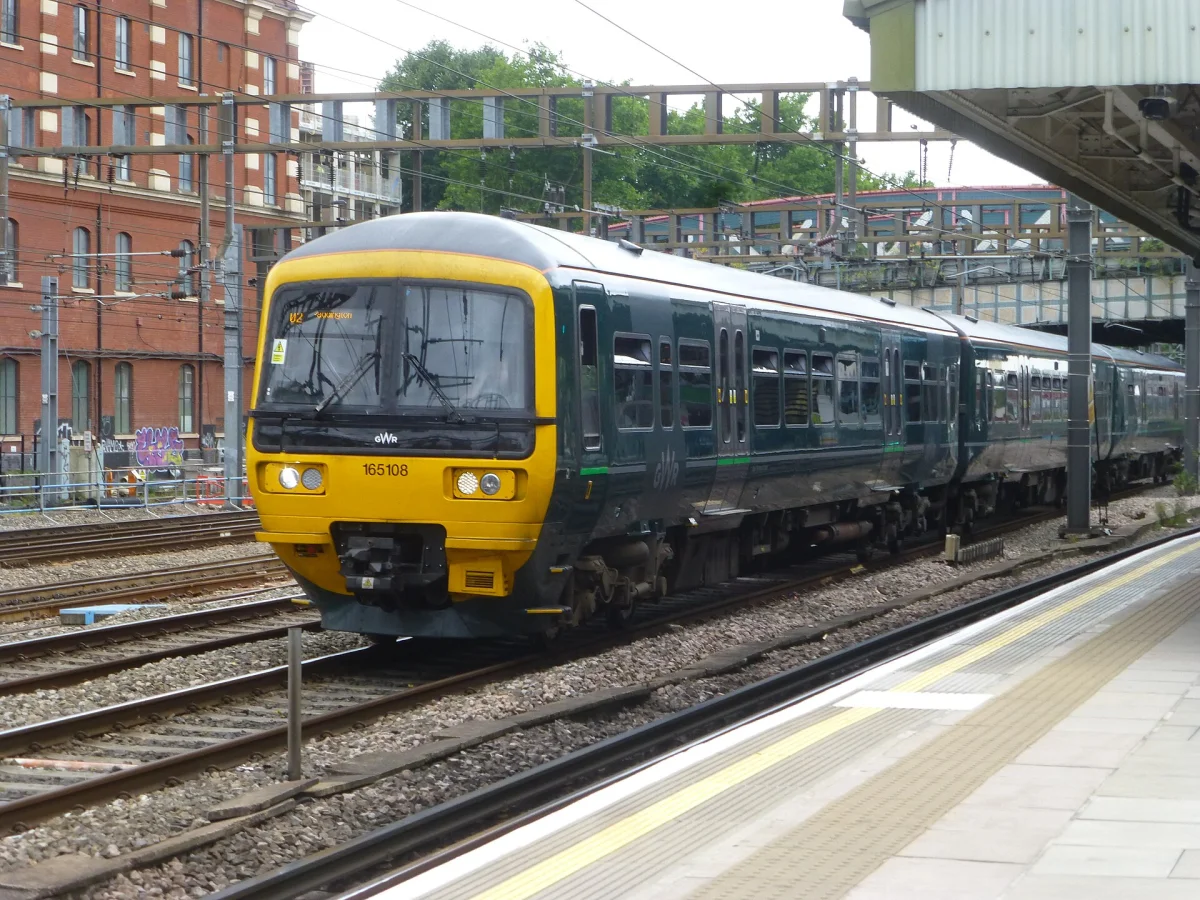
On 5 October 1999, a Thames Trains Class 165 Turbo passed signal SN109 at red near Ladbroke Grove, two miles west of London Paddington, and collided with a First Great Western HST. Thirty-one people died and more than 400 were injured.
The collision happened at about 08:09, roughly 33 seconds after the Turbo had passed the red signal. The combined speed at impact was in the region of 130 mph (about 209 km/h), and diesel fuel released by the crash fed a fire that spread along the HST. Twenty-four of those killed were on the Turbo and seven on the HST, according to the public inquiry chaired by Lord Cullen.
The inquiry found that SN109 was hard to read, that it had been passed at danger eight times since August 1993, and that the newly qualified driver had not been warned about it. Its two reports, published in 2001, made 163 recommendations between them. They led to the creation of two new bodies, an industry safety board and an independent accident investigator, which still exist today.
Thirty-three seconds past SN109: the morning of 5 October 1999
The Thames Trains service 1K20 left platform 9 at Paddington at about 08:06, bound for Bedwyn in Wiltshire. It was a three-car Class 165 diesel unit. Heading the other way was service 1A09, the 06:03 from Cheltenham to Paddington, an HST with eight coaches, according to the Cullen Part 1 report.
On-train data recorder readings, set out in the report, trace the Turbo's run out of the terminus. It passed signal SN63 at double yellow and then SN87 at single yellow, where the Automatic Warning System (AWS) horn sounded at 08:07:40 and was cancelled by the driver. Under British four-aspect signalling, a double yellow warns that the next signal shows single yellow, and a single yellow warns that the next one is red.
At 08:08:15 the Turbo crossed the AWS magnet for SN109, mounted on gantry 8. The horn sounded again and was cancelled again. Ten seconds later, at 08:08:25, the train passed SN109 at about 41 mph (66 km/h) while the signal still showed red, and no route had been set for it.
The unit kept accelerating. It passed the fouling point, 563 metres beyond SN109, the point at which it could foul the path of other trains. At about 08:08:50 a signaller at the Integrated Electronic Control Centre (IECC) put signal SN120 back to red in front of the HST, which was then running at 81 to 84 mph (130 to 135 km/h).
The warning came too late. About 33 seconds after passing SN109, the Turbo ran through points 8063B and struck the HST at about 51 mph (82 km/h). The fuel tank on the Turbo's leading car broke apart and released diesel under pressure, which ignited. The most severe fire engulfed coach H of the HST over seven or eight minutes, the report states.
How signal SN109 and train protection failed together
The inquiry found that SN109 was poorly sighted and mounted in an unusual reverse-L configuration on its gantry. For a driver leaving Paddington, its view was partly obscured by Portobello Bridge and by overhead line equipment. On the morning of the crash, bright low-angle sunlight added a further difficulty.
Lord Cullen accepted that the driver believed he had a proceed aspect at SN109. The single yellow at SN87 had already warned that SN109 would be red. The AWS gave an audible warning at each restrictive signal, but the driver could cancel it with a button, and nothing then forced the train to stop.
That gap was the heart of the train protection debate. Automatic Train Protection (ATP) supervises speed continuously and brakes a train that would otherwise pass a red signal. The Great Western main line had a pilot ATP system, and the HSTs could use it, but Thames Trains vehicles were not fitted with it, the report notes. In the report's words, it was "highly probable that the crash would not have happened" had the Turbo carried ATP.
What the Cullen inquiry established
Public hearings for Part 1 ran from 10 May to 28 September 2000. The Part 1 report found that SN109 had been passed at danger on eight occasions since August 1993. The driver had recently qualified and was judged a good trainee with slender experience.
Thames Trains acknowledged that he had not been instructed directly about signals with a history of being passed at danger. His route assessment had not specifically covered the stretch from Paddington to Ladbroke Grove. In Lord Cullen's view, not knowing that SN109 was a multi-SPAD signal increased the risk.
The report placed heavy responsibility on Railtrack, then the owner of the infrastructure. It described a lamentable failure to act on recommendations from earlier inquiries into the Royal Oak collision and into previous SPADs at SN109. Signal sighting committees had not been convened as they should have been, which Lord Cullen attributed to incompetent management and inadequate procedures.
Thames Trains also drew criticism. Its safety culture around driver training was judged slack and less than adequate, with failures of communication inside the company. At the IECC, signallers underrated the risk of SPADs, a weakness the report linked to inadequate management and training.
Two reports, 163 recommendations and two new bodies
The Health and Safety Commission published Part 1 on 19 June 2001, with 89 recommendations, according to a ministerial answer in Hansard. Part 2, which examined safety management and regulation across the industry, followed with 74 recommendations. According to the Railway Gazette, Lord Cullen presented it on 20 September 2001, and the Transport Secretary, Stephen Byers, accepted every recommendation immediately.
Part 2 proposed moving accident investigation away from the Health and Safety Executive to an independent body, modelled on the air and marine investigation branches. That became the Rail Accident Investigation Branch (RAIB), set up under the Railways and Transport Safety Act 2003. Its regulations came into force for mainland Britain on 17 October 2005.
Part 2 also recommended a new industry body, independent of Railtrack and of the regulator, to set Group Standards and promote safety. The Rail Safety and Standards Board (RSSB) describes its own creation as a direct result of that recommendation. Accounts differ slightly on the date: the RSSB places its creation in May 2003, while the Office of Rail and Road (ORR) gives only the year.
A separate joint inquiry into train protection, chaired by Lord Cullen and Professor Uff, covered both Ladbroke Grove and the 1997 Southall collision. It reported on 29 March 2001 with 39 recommendations. By September 2004, the Health and Safety Commission reported that 86 of the Part 1 recommendations, 55 of Part 2 and 34 of the joint inquiry had been completed.
From ATP to TPWS: the train protection decision
The Railway Safety Regulations 1999 banned trains from running without a train protection system. An approved fitment programme counted as compliance until 1 January 2004. The system chosen was the Train Protection and Warning System (TPWS), which triggers emergency braking at a red signal or on approach to a buffer stop or speed restriction.
In February 2000, John Prescott told the Commons that he had chosen to act immediately rather than wait for European technology. He cited estimates of between £1 billion and £2 billion for fitting ATP more widely. Network Rail reported that the Great Western became the first region to complete TPWS in July 2003.
Network Rail announced the end of the programme on 29 December 2003, within a budget of £500 million. Published figures vary between its two announcements. In July 2003 it cited more than 10,800 signals and 5,200 trains, while in December it gave more than 12,000 signals and over 6,000 trains. It also reported an 80% fall in high-severity SPADs where TPWS was fitted.
TPWS was a compromise. It intervenes at fitted signals, buffer stops and speed restrictions, whereas the Cullen report defines ATP as a fully automatic system that ensures compliance with signals and speed limits. Ladbroke Grove therefore produced a near-universal system quickly, while full protection was deferred to ETCS, the European Train Control System.
Paddington and train protection in 2026
Network Rail took over from Railtrack on 3 October 2002. According to an ORR page archived on 2 June 2026, TPWS is installed at all legally required locations on the main line. The regulator expects it to remain in use for many more years while the industry moves towards ETCS on every route.
The pilot ATP system on the Great Western, based on a Belgian design, was still installed between Paddington and Bristol in June 2019. That year, Network Rail and four operators applied to the ORR for a temporary exemption for Crossrail and Heathrow Express trains between Paddington and Heathrow, relying on enhanced TPWS until ETCS was ready. TrainsNews could not find the ORR's decision or the current status of that ATP system.
In November 2023 the ORR authorised ETCS Level 2 as an overlay on the existing signalling between Acton, Heathrow and Greenford. The listed limits begin at Acton, so they do not include Ladbroke Grove, about two miles from Paddington. Whether an earlier 2018 stage covers that section is not stated in the document.
The most lasting change came in how the industry learns from failure. Before 1999, the same Health and Safety Executive that regulated the railway also investigated its accidents. Since October 2005 the RAIB has investigated independently, a model that Part 2 framed around preventing accidents rather than assigning blame. The RSSB supports the main-line industry's work on health and safety, according to the ORR. An ORR blog marking the 25th anniversary in October 2024 described this three-way approach as one of the accident's main legacies, along with enforcement action on the 22 worst-performing signals, SN109 among them.
The figures show how slowly the industry reacted before the crash and how fast it moved afterwards. SN109 had eight recorded SPADs in six years before 5 October 1999. Four years later, more than 12,000 signals had TPWS. Yet ETCS on the western approach runs as an overlay on the existing lineside signals, and the 2023 authorisation does not list the junction where the trains met. The latest official safety statistics, published by the ORR on 24 September 2026, cover April 2025 to March 2026. Readers can find more of our coverage on rail accidents.
Frequently asked questions
What caused the Ladbroke Grove rail crash?
A Thames Trains Turbo passed signal SN109 at red on 5 October 1999. Lord Cullen found the driver believed he had a proceed aspect. The signal was hard to read, had been passed at danger eight times since 1993, and the newly qualified driver had not been warned about it.
How many people died at Ladbroke Grove?
Thirty-one people died, according to the Cullen Part 1 report: 24 on the Thames Trains Turbo and seven on the First Great Western HST. More than 400 others were injured. A fire, fed by diesel from the Turbo's ruptured fuel tank, spread along the HST after the collision.
What changed on Britain's railways after Ladbroke Grove?
The Cullen inquiry made 163 recommendations in two reports. They led to the Rail Safety and Standards Board in 2003 and the independent Rail Accident Investigation Branch in 2005. TPWS was fitted across the network by the end of 2003, with ETCS planned as the long-term replacement.
Sources: Lord Cullen, The Ladbroke Grove Rail Inquiry, Part 1 Report (HSE Books, 2001); Part 2 Report (HSE Books, 2001); Hansard, Cullen Inquiry (3 July 2001); Hansard, Rail Safety (16 October 2001); Hansard, Train Protection Systems (29 March 2001); Hansard, Rail Safety statement (22 February 2000); Railway Gazette, Safety regulation to be expanded (1 October 2001); Health and Safety Commission, third progress report on rail inquiries (14 September 2004); Railway Safety Regulations 1999, explanatory note (1999); Network Rail, Great Western first to complete railway safety programme (28 July 2003); Network Rail, Step change in safety delivered on time and under budget (29 December 2003); Network Rail, 18-month anniversary (10 March 2004); RAIB, About us (consulted 9 November 2026); RSSB, Celebrating 20 years of progress (10 May 2023); Network Rail and operators, Western Route train protection exemption application report (21 June 2019); ORR, ETCS authorisation Paddington to Heathrow (23 November 2023); ORR, Ladbroke Grove 25 years on (3 October 2024); ORR, Signalling system evolution and historical context (archived 2 June 2026); ORR, Rail safety April 2025 to March 2026 (24 September 2026).
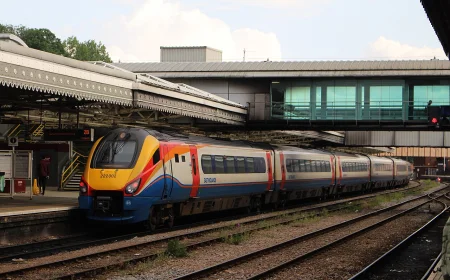
Photo: GWR Class 165 unit 165108 waiting at Royal Oak for a signal into London Paddington, 28 July 2017 — citytransportinfo, Wikimedia Commons, CC0 1.0.
Article written with the help of artificial intelligence from the sources cited, reviewed by the TrainsNews editorial team before publication.
Whats your reaction
 Like
0
 Dislike
0
 Love
0
 Funny
0
 Wow
0
 Sad
0
 Angry
0

TrainsNews est un média indépendant et bilingue d'actualité ferroviaire mondiale, publié depuis 2024. La rédaction couvre la grande vitesse, le matériel roulant, l'infrastructure, la signalisation et les télécoms ferroviaires (ERTMS/ETCS, CBTC, FRMCS, GSM-R), l'exploitation, le fret et le financement des projets. Chaque article cite ses sources et donne les chiffres avec leur total. TrainsNews is an independent, bilingual (French/English) news outlet covering the global rail industry since 2024: high-speed rail, rolling stock, infrastructure, signalling and telecoms, operations, freight and project financing. Every article cites its sources.
The rail month in one PDF: news and guides summarised, with their photos.
The rail month in one PDF: news and guides summarised, with their photos.




Comments (0)