

Hitachi Rail opens C$30m signalling centre in Toronto
Hitachi Rail has opened a C$30m headquarters and technology centre in Scarborough, Toronto, for 1,100 staff, home to its global CBTC centre and a C$105m programme for the next SelTrac.
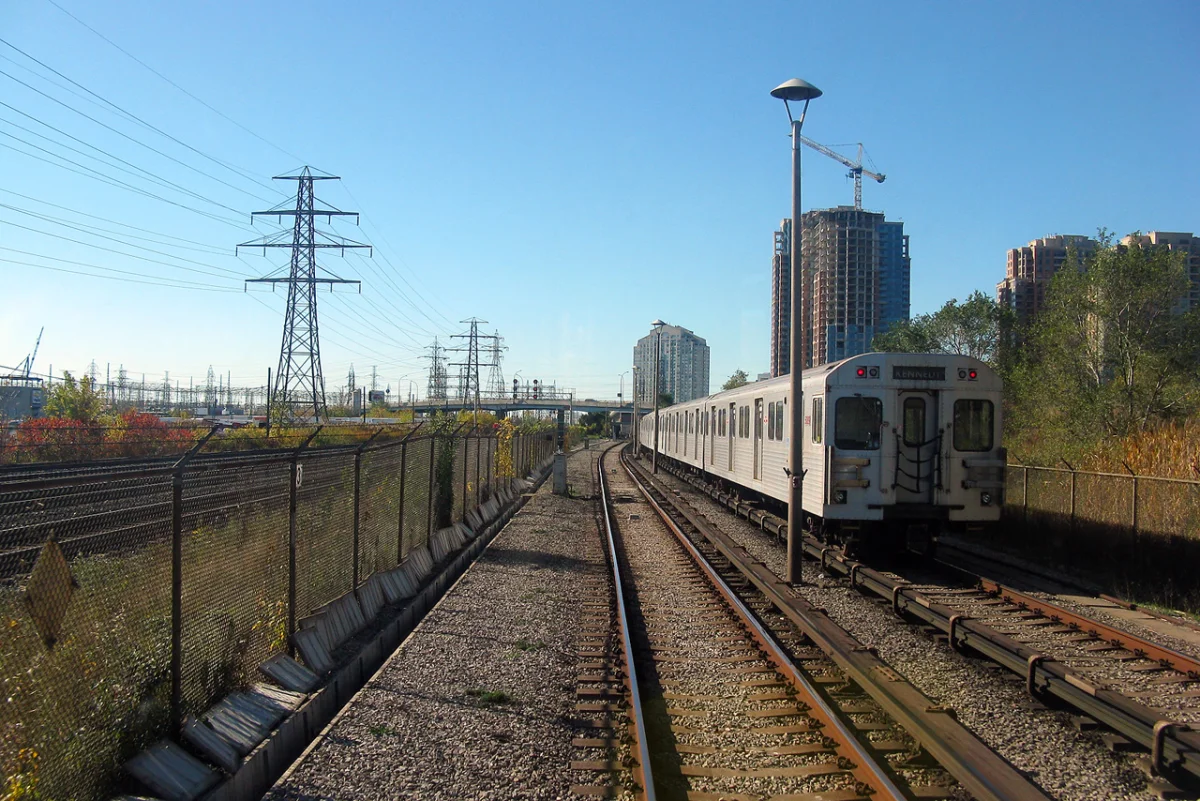
Hitachi Rail has opened a C$30 million headquarters and technology centre in Scarborough, Toronto, housing more than 1,100 staff. The site is now the base of its global CBTC competence centre and of SelTrac, the metro signalling system first developed in Toronto.
The building was inaugurated on 6 November, Hitachi Rail said, in the presence of Ontario Premier Doug Ford, Transportation Minister Prabmeet Sarkaria, Toronto Mayor Olivia Chow and the chief executives of Metrolinx and the TTC. It covers 125,000 sq ft over five and a half floors and is LEED Silver certified.
About 35,000 sq ft, a floor and a half, is given over to simulators. Teams use digital twins there to recreate a metro's signalling and test software before it is installed on site. Hitachi Rail says the simulated networks include London, New York, San Francisco, Hong Kong, Singapore and most large Canadian cities.
A C$105 million push on the next SelTrac
Alongside the building, the company is running a C$105 million programme to develop the next generation of SelTrac, which it says will use artificial intelligence, 5G and edge computing. The current product line, SelTrac Generation 9, is also developed at the centre. SelTrac is in service on more than 150 lines in 70 cities, according to Hitachi Rail.
Toronto is where the system was born. The signalling business that Hitachi took over with Thales's Ground Transportation Systems in 2024 has worked in the city for almost 50 years. Its Canadian workforce now exceeds 1,300 people across Ontario, Quebec and British Columbia, and it takes on around 100 paid interns a year. The company also lists railway programmes with Ontario Tech University and McMaster University.
The centre sits close to two of its main local contracts. Among the projects it oversees, the company cites the Ontario Line and the modernisation of signalling on TTC Line 2, the Bloor–Danforth subway. Communications-based train control replaces fixed blocks with a continuously updated safe distance between trains, which is how such schemes promise more trains per hour on the same tracks. It links the Line 2 work to a 40% capacity increase.
For a supplier, testing on a digital twin is about risk as much as speed. Commissioning a new signalling system on a working metro usually means night and weekend possessions, and every fault found on site costs track time. Moving that debugging to a simulator, with the real network's track layout and timetable, shortens the period when passengers live with closures. It does not remove it: the final tests still have to happen on the line.
Ford used the opening to describe Ontario's transit programme as "the largest public transit expansion in North America", backed by a C$236 billion infrastructure plan.
Read also: Hitachi Rail's CBTC for Taiwan's Xidong–Keelung MRT and CBTC and automation on Paris Metro Line 13.
Sources: Hitachi Rail press release, 6 November 2026; Railway Gazette, 12 November 2026.
Photo: a T1 train on Line 2 Bloor–Danforth between Kipling and Islington, 21 October 2007 — Diego Silvestre, Wikimedia Commons, CC BY 2.0.
Article written with the help of artificial intelligence from the sources cited, reviewed by the TrainsNews editorial team before publication.
Whats your reaction
 Like
0
 Dislike
0
 Love
0
 Funny
0
 Wow
0
 Sad
0
 Angry
0

TrainsNews est un média indépendant et bilingue d'actualité ferroviaire mondiale, publié depuis 2024. La rédaction couvre la grande vitesse, le matériel roulant, l'infrastructure, la signalisation et les télécoms ferroviaires (ERTMS/ETCS, CBTC, FRMCS, GSM-R), l'exploitation, le fret et le financement des projets. Chaque article cite ses sources et donne les chiffres avec leur total. TrainsNews is an independent, bilingual (French/English) news outlet covering the global rail industry since 2024: high-speed rail, rolling stock, infrastructure, signalling and telecoms, operations, freight and project financing. Every article cites its sources.
The rail month in one PDF: news and guides summarised, with their photos.
The rail month in one PDF: news and guides summarised, with their photos.









Comments (0)