

Vietnam: Siemens signs up to €1bn turnkey deal for VinSpeed's first high-speed lines
VinSpeed, the Vingroup rail arm, has signed a turnkey contract worth up to €1bn with Siemens Mobility for two privately financed high-speed lines: Hanoi–Quang Ninh (121 km) and Ben Thanh–Can Gio (54 km), both targeted for 2028.

VinSpeed, the high-speed rail company of Vietnam's Vingroup, has signed a turnkey contract worth up to €1bn with Siemens Mobility for two new lines: Hanoi–Quang Ninh in the north and Ben Thanh–Can Gio in Ho Chi Minh City. According to the Siemens Mobility press release of 22 September 2026, VinSpeed handles project development, track and civil works, while Siemens supplies the trains and the railway systems.
The deal in figures
| Contract value | Up to €1bn, executed in phases |
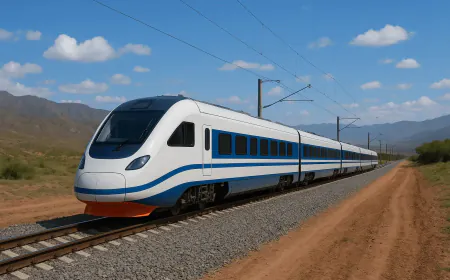
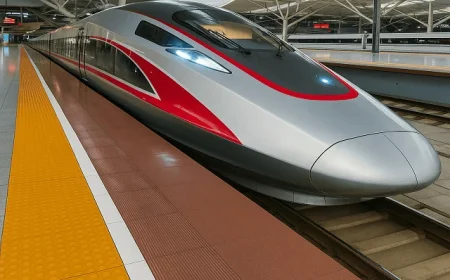
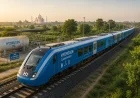
| Trains | 10 Velaro Novo, 7 cars, 200 m, 760 seats, up to 350 km/h |
| Systems | ETCS Level 2 with automatic train operation (ATO), electrification, communications |
| Hanoi–Quang Ninh | About 121 km, 4 stations (Co Loa to Ha Long), over US$5.6bn excluding land, about 23 minutes end to end, opening planned for 2028 |
| Ben Thanh–Can Gio | About 54 km, 2 stations in phase 1, VND102.43 trillion (US$3.9bn) excluding land, 70-year concession, opening planned for 2028 |
| Background | Builds on a strategic cooperation and technology transfer agreement signed in December 2025 |
Sources: Siemens Mobility (22/09/2026); Vietnamese government portal on Hanoi–Quang Ninh; Tuoi Tre on the Ho Chi Minh City approval of Ben Thanh–Can Gio.
Two private lines, built fast
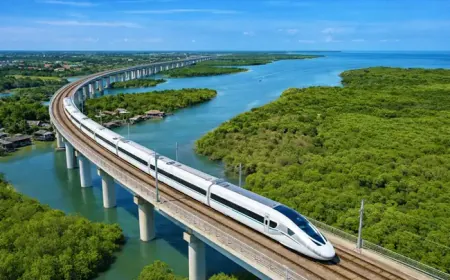
Both projects are led by a private investor, which is unusual for high-speed rail. Hanoi–Quang Ninh runs 120 km of double track at standard gauge, fully electrified, from Co Loa in Hanoi to Ha Long Bay, with intermediate stops at Gia Binh, Ninh Xa and Yen Tu. Trains are designed for 350 km/h but will slow to about 120 km/h inside Hanoi. Construction started in April 2026.
Ben Thanh–Can Gio links central Ho Chi Minh City with the coastal district of Can Gio, where Vingroup is developing a large urban project. The city approved VinSpeed as investor in December 2025, with construction and commissioning to be completed within 30 months of land handover.
A world first on paper: ATO over ETCS on high-speed lines
Siemens says the lines will be the first national high-speed network to run automatic train operation on top of ETCS Level 2. ATO over ETCS is already used on some suburban lines in Europe; on a high-speed line, it automates acceleration, cruising and braking to the exact profile allowed by the signalling, which saves energy and tightens headways. Siemens also claims the Velaro Novo uses 30% less energy than earlier models and carries at least 10% more passengers thanks to its wide, open body.
An engineer's view
Ten trains for two lines is a small fleet: enough for a launch service, not for high frequency. The figure suggests a phased roll-out, as the contract itself states. The real risk is the timetable. Opening both lines in 2028 means testing ETCS Level 2 and ATO, training staff and certifying a new operator in barely two years, in a country with no high-speed rail experience. Land handover in Ho Chi Minh City will set the pace for Can Gio.
The choice of European standards (ETCS, 1,435 mm gauge) also matters beyond these two lines. It gives Siemens a strong position before Vietnam's much larger state-led North–South high-speed project, where suppliers from Europe, Japan, Korea and China are all in the running. It follows the Alstom–Vingroup deal for 200 Metropolis metro trains in Hanoi: Vingroup is now the key buyer in Vietnamese rail.
Related reading
- China opens 1,445 km of new high-speed lines in four months
- World Rail Market Study 2026: a €266.8bn market
- Rail industry events calendar
FAQ
How much is the VinSpeed–Siemens contract worth?
Up to €1bn, according to Siemens Mobility, executed in phases.
Which lines are covered?
Hanoi–Quang Ninh (about 121 km, 4 stations) and Ben Thanh–Can Gio in Ho Chi Minh City (about 54 km, 2 stations in phase 1).
When will the lines open?
Both are planned to start commercial service in 2028.
What trains will run on them?
10 Siemens Velaro Novo trains, each with 7 cars and 760 seats, designed for up to 350 km/h.
Whats your reaction
 Like
0
Like
0
 Dislike
0
Dislike
0
 Love
0
Love
0
 Funny
0
Funny
0
 Wow
0
Wow
0
 Sad
0
Sad
0
 Angry
0
Angry
0

TrainsNews est un média indépendant et bilingue d'actualité ferroviaire mondiale, publié depuis 2024. La rédaction couvre la grande vitesse, le matériel roulant, l'infrastructure, la signalisation et les télécoms ferroviaires (ERTMS/ETCS, CBTC, FRMCS, GSM-R), l'exploitation, le fret et le financement des projets. Chaque article cite ses sources et donne les chiffres avec leur total. TrainsNews is an independent, bilingual (French/English) news outlet covering the global rail industry since 2024: high-speed rail, rolling stock, infrastructure, signalling and telecoms, operations, freight and project financing. Every article cites its sources.








Comments (0)