

Alstom and Vingroup agree 200 Metropolis trains for Hanoi metro
Alstom will build up to 83 of 200 five-car GoA4 Metropolis trains in France; Vingroup will assemble 117 in Vietnam under licence for Hanoi's five new metro lines.
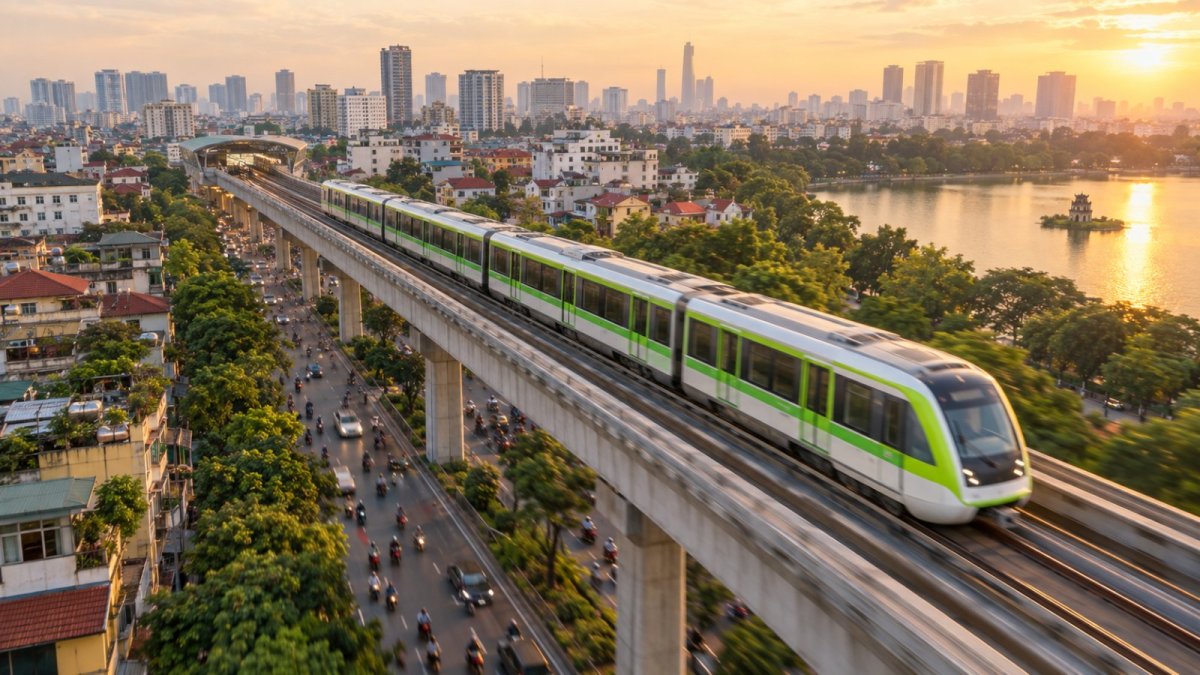
Alstom and Vinhomes, the real-estate arm of Vietnamese conglomerate Vingroup, signed an agreement in Hanoi on 6 October 2026 covering 200 five-car Metropolis metro trains for the capital's expanding urban rail network. Alstom will build up to 83 of the 200 trainsets at its Valenciennes Petite-Forêt plant in northern France, while the remaining 117 will be assembled in Vietnam by Vingroup under a technology licence. Neither party has disclosed the value of the deal.
The package combines a rolling-stock supply contract with a technology licence agreement (TLA). Under the TLA, Alstom will provide engineering support, tooling and key components so that Vingroup can manufacture and assemble the Vietnamese-built batch locally. By comparison, the whole of Hanoi's Line 3 currently runs on a fleet of ten trains.
A 200-train fleet split between France and Vietnam
The production split is the core of the agreement. The first tranche of up to 83 trains, or roughly 42% of the fleet, will be designed and manufactured at Valenciennes Petite-Forêt, which serves as Alstom's centre of excellence for metro vehicles. The second tranche of 117 trains, close to 60% of the total, will come off a Vietnamese production line set up by Vingroup with Alstom-supplied parts and know-how.
- Total fleet: 200 five-car Metropolis trainsets (1,000 cars)
- Built in France: up to 83 trains, at Valenciennes Petite-Forêt
- Built in Vietnam: 117 trains, assembled by Vingroup under licence
- Automation: GoA4, unattended driverless operation
- Contract value: not disclosed
Alstom chief executive Martin Sion described the deal as a major milestone in one of the fastest-growing mobility markets in the world. Vingroup vice-chairman and chief executive Nguyen Viet Quang said the partnership was intended to pair international technology with the group's own execution capacity and to build domestic industrial capability in rail.
Rolling stock tailored for high-capacity driverless lines
According to the manufacturer, the new-generation Metropolis trains will feature wide aluminium car bodies. The wider body increases interior space and passenger capacity, while the lighter aluminium structure reduces axle loads and, with them, track wear over the life of the asset. Braking combines regenerative and disc systems, with energy recovered during deceleration fed back into the traction supply.
The trains are specified for Grade of Automation 4 (GoA4), meaning fully unattended operation with no driver or attendant on board. From a signalling standpoint, GoA4 requires a communications-based train control (CBTC) system with automatic train protection, operation and supervision, plus platform screen doors and obstacle detection integrated into the safety case. The agreement announced this week covers rolling stock only; the CBTC supplier for the new lines has not been named. Alstom already supplied its Urbalis 400 CBTC, together with ten four-car Metropolis trains, power supply and depot equipment, for Hanoi Metro Line 3, which gives the city an existing reference for the platform.
Feeding a five-line construction programme
The order is linked to the five metro lines on which Hanoi broke ground on 22 June 2026. The Vinhomes–VinSpeed consortium is the engineering, procurement and construction (EPC) contractor for the programme, which covers close to 300 km of route; International Railway Journal puts the total at 292 km. The investment is estimated at around US$50bn, equivalent to more than VND1.3 quadrillion.
The five projects include Line 1 (81 km, linking the south of the city to Noi Bai International Airport via Hanoi railway station), Line 2 (56.5 km), Line 8 (91 km from Hoa Lac to Duong Xa), Line 10 (43 km) and Line 14. The city aims to have these lines substantially complete by 2030. VinSpeed, a sister company within the Vingroup orbit, is also positioning itself on Vietnam's high-speed rail plans, as TrainsNews reported in its coverage of the North–South high-speed project and the Siemens–VinSpeed tie-up.
The scale of the plan contrasts sharply with what is in service today. Hanoi currently operates two unconnected lines: the 13 km Line 2A and the 7.8 km elevated section of Line 3. Under its long-term master plan, the capital is targeting 18 lines and about 979 km of urban rail by 2045.
Localisation as the price of market entry
The deal follows a pattern now well established in Vietnam, where large rolling-stock orders are tied to local production. Earlier in 2026, automotive group THACO signed agreements with Hyundai Rotem for 54 three-car driverless trainsets for Ho Chi Minh City, with technology localisation and a 320-hectare manufacturing complex. For Alstom, the licence model secures a foothold in a market with a pipeline of several hundred kilometres of metro, while for Vingroup it lays the groundwork for a domestic rolling-stock industry that could eventually supply other Vietnamese cities.
Several points remain open, including the delivery schedule, the allocation of trains between the five lines and the location of Vingroup's assembly site. TrainsNews will follow the programme in its rolling stock and signalling and telecommunications sections as further contracts, notably for CBTC and systems integration, are awarded.
Sources: Alstom, 6 October 2026; International Railway Journal, 6 October 2026; Railway Gazette International, 6 October 2026; VnEconomy, 22 June 2026.
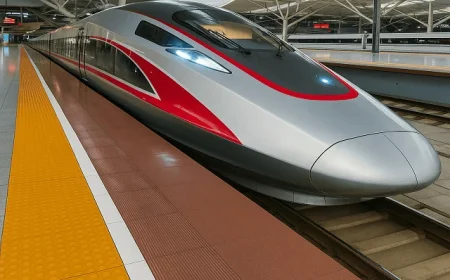
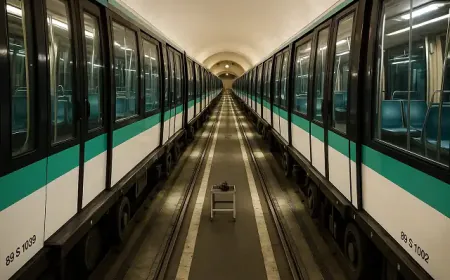
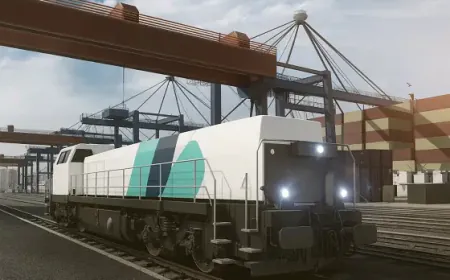
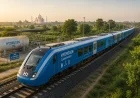
AI-generated illustration.
Whats your reaction
 Like
0
Like
0
 Dislike
0
Dislike
0
 Love
0
Love
0
 Funny
0
Funny
0
 Wow
0
Wow
0
 Sad
0
Sad
0
 Angry
0
Angry
0

TrainsNews est un média indépendant et bilingue d'actualité ferroviaire mondiale, publié depuis 2024. La rédaction couvre la grande vitesse, le matériel roulant, l'infrastructure, la signalisation et les télécoms ferroviaires (ERTMS/ETCS, CBTC, FRMCS, GSM-R), l'exploitation, le fret et le financement des projets. Chaque article cite ses sources et donne les chiffres avec leur total. TrainsNews is an independent, bilingual (French/English) news outlet covering the global rail industry since 2024: high-speed rail, rolling stock, infrastructure, signalling and telecoms, operations, freight and project financing. Every article cites its sources.






Comments (0)