



China Plans New Cross-Border HSR Line Connecting Shenzhen to Hong Kong
Shenzhen launches pilot study for second HSR line to Hong Kong via Greater Bay Area. Guangzhou-Shenzhen-Hong Kong extension planned for capacity relief.
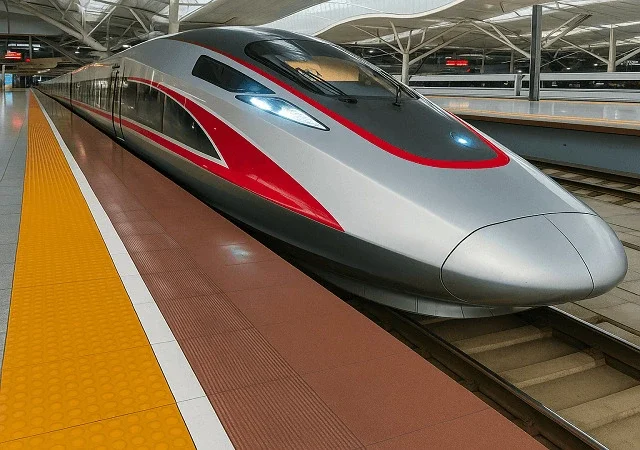
China unveils an ambitious railway project to strengthen connectivity in the Greater Bay Area. A new cross-border HSR line will connect Shenzhen to Hong Kong, complementing the saturated existing infrastructure.
Second Shenzhen-Hong Kong HSR Line Project
Pilot Study Launched by Shenzhen
The Shenzhen Development and Reform Commission has initiated a major strategic project by launching a tender for a pilot study of a new cross-border HSR line to Hong Kong. This revolutionary infrastructure aims to relieve congestion on the railway network in China's most dynamic economic region.
The project is part of the massive infrastructure development of the Greater Bay Area, a crucial economic hub encompassing Guangdong, Hong Kong, and Macao.
Strategic Project Rationale
The initiative addresses a critical capacity constraint identified on the existing 350km/h HSR line between Shenzhen and Hong Kong. According to tender documents, the current line could reach maximum capacity without complementary infrastructure construction.
This anticipated saturation requires urgent expansion to maintain economic growth and regional connectivity in this 70-million-inhabitant zone.
Guangzhou-Shenzhen Line Extension
Global Project Approved in 2020
The new Shenzhen-Hong Kong connection constitutes the southern extension of a planned second Guangzhou-Shenzhen HSR line. This comprehensive project received approval from China's National Development and Reform Commission in May 2020, demonstrating government commitment to this strategic infrastructure.
All these railway projects integrate into the Greater Bay Area infrastructure development plans, consolidating the region's status as a global economic center.
Guangzhou-Shenzhen Line Route
The first segment of this exceptional infrastructure will include:
Main itinerary:
- Departure: Guangzhou North station
- Transit: Guangzhou Baiyun International Airport
- Crossing: Central Dongguan
- Terminus: Shenzhen Airport East station
This section will create a railway backbone connecting Guangdong Province's three main metropolises.
Shenzhen-Hong Kong Extension Route
Strategic Cross-Border Connection
The cross-border extension will start from Shenzhen Airport East station and cross key Shenzhen economic districts:
Shenzhen route:
- Bao'an District (airport zone)
- Nanshan District (technology center)
- Qianhai Special Economic Zone (financial hub)
Hong Kong Service
The infrastructure will enter Hong Kong to serve two priority development zones:
Hong Kong destinations:
- Northern Metropolis: new strategic urban center
- Lantau Tomorrow Vision project: major urban development
This connectivity will transform accessibility between economic and residential centers of both territories.
Pilot Study: Objectives and Scope
Comprehensive Project Evaluation
The pilot study currently under tender will meticulously evaluate several critical aspects:
Economic analysis:
- Construction business case assessment
- Potential transport demand estimation
- Financial modeling and profitability
Territorial impact study:
- Land use along proposed route
- Urban planning and environmental impact
- Integration with existing development plans
Technical planning:
- Preliminary construction plans
- Technical specifications and engineering
- Optimized implementation schedule
Greater Bay Area Impact
Regional Integration Strengthening
This new HSR infrastructure will consolidate Greater Bay Area economic integration by:
- Drastically reducing travel times
- Facilitating daily professional commuting
- Stimulating cross-border investments
- Strengthening competitiveness against Tokyo and New York
Global Economic Hub
The Greater Bay Area, with its 70 million inhabitants and $1.7 trillion GDP, rivals the world's largest economic regions. This modern railway infrastructure will definitively position the region as a 21st-century global economic hub.
Technical Challenges and Issues
The project presents considerable technical challenges:
- Crossing ultra-dense urban zones
- China-Hong Kong border crossing
- Integration with existing networks
- Strict environmental standards compliance
This project's success will demonstrate Chinese railway engineering excellence and consolidate the country's technological leadership in HSR transport.
This revolutionary infrastructure will transform mobility in one of the world's most dynamic economic regions.
Whats your reaction
 Like
0
Like
0
 Dislike
0
Dislike
0
 Love
0
Love
0
 Funny
0
Funny
0
 Wow
0
Wow
0
 Sad
0
Sad
0
 Angry
0
Angry
0

TrainsNews



Comments (0)