

SMRT and China's PCI form rail technology joint venture for Southeast Asia
PCI–STRIDES Intelligent Mobility, based in Singapore, will offer fare collection, signalling and control systems, starting in Thailand, Malaysia and Indonesia.
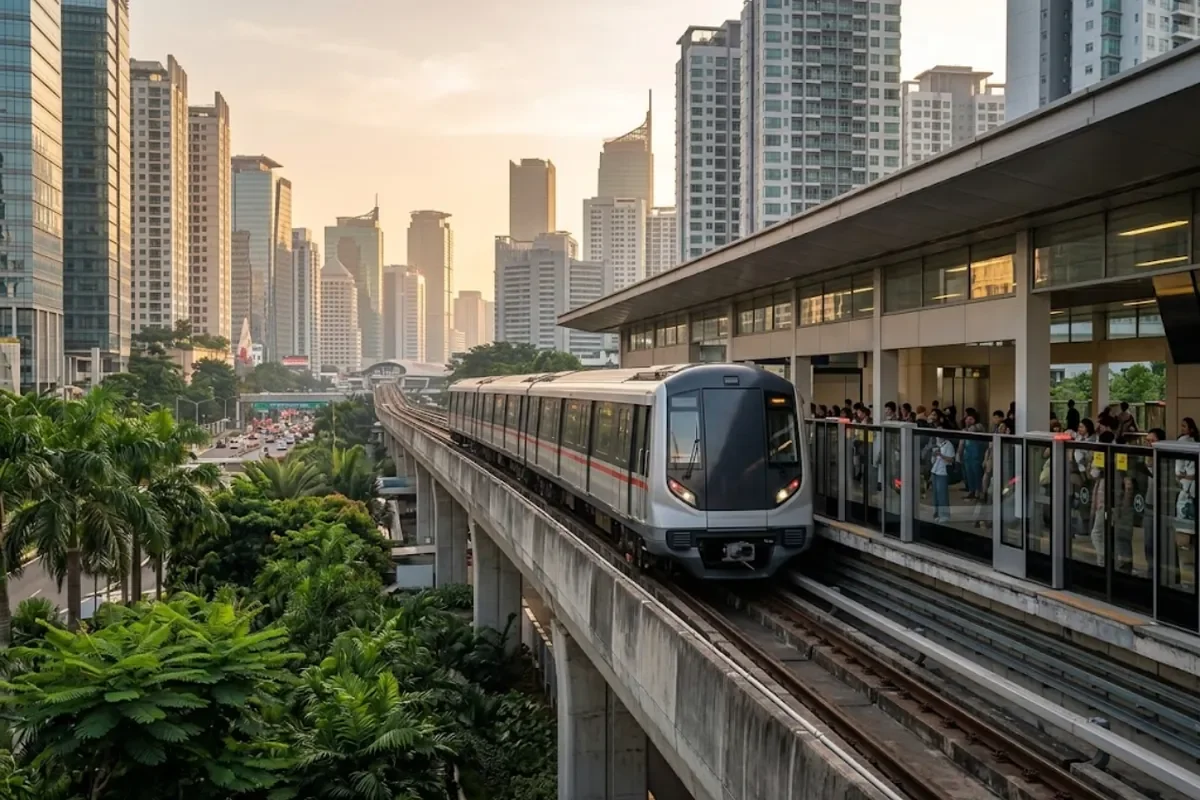
Singapore operator SMRT and China's PCI Technology Group have set up a joint venture to sell rail and smart transport technology across Southeast Asia. PCI–STRIDES Intelligent Mobility Pte. Ltd. (PSIM) is headquartered in Singapore, according to a press release issued on 2 October 2026.
Who is behind PSIM
According to the press release from PCI Asia Technology, the venture brings together two subsidiaries:
- PCI Asia Technology Pte. Ltd., wholly owned by Guangzhou-based PCI Technology Group, whose rail solutions are used in 49 cities, on 130 lines, more than 2,500 metro stations and 4,600 km of rail;
- STRIDES Far East Pte. Ltd., wholly owned by SMRT Corporation, which has run and maintained Singapore's rail network for nearly four decades.
The shareholding split has not been disclosed.
From fare gates to signalling
PSIM will offer automated fare collection, integrated supervisory control systems (ISCS), signalling, communications, power supply, rail systems integration, digital rail and mobility platforms, and life-cycle support for rail and public transport operators. The idea is to combine PCI's systems integration with SMRT's operating and maintenance experience.
Thailand, Malaysia and Indonesia first
The first target markets are Thailand, Malaysia and Indonesia, where urban rail investment is growing. In Singapore, PSIM will bid for new-build and renewal projects, including AI-based upgrades of legacy systems, with proof-of-concept testing and performance verification. In the longer term, the partners are looking at selected markets in the Middle East, Central Asia and North Africa.
TrainsNews analysis
For SMRT, the venture is a way to sell its know-how as an operator abroad, as other metro operators such as Hong Kong's MTR have done. For PCI, it is a Singapore base and a reference operator that will reassure clients in a region where Chinese, Japanese and European suppliers compete hard. The most valuable part of the offer may be the upgrade of ageing systems: many metro lines in the region were built in the 1990s and 2000s, and their control and fare systems now need renewing without stopping service. Which projects PSIM wins first, and in which country, will show whether the operator–supplier model works.
Related: Alstom's Urbalis CBTC for the Singapore airport link, our directory of Asia-Pacific rail infrastructure managers and more rail news from Asia.
Primary source: PCI Asia Technology press release (PR Newswire), Singapore, 2 October 2026.
Whats your reaction
 Like
0
Like
0
 Dislike
0
Dislike
0
 Love
0
Love
0
 Funny
0
Funny
0
 Wow
0
Wow
0
 Sad
0
Sad
0
 Angry
0
Angry
0

TrainsNews est un média indépendant et bilingue d'actualité ferroviaire mondiale, publié depuis 2024. La rédaction couvre la grande vitesse, le matériel roulant, l'infrastructure, la signalisation et les télécoms ferroviaires (ERTMS/ETCS, CBTC, FRMCS, GSM-R), l'exploitation, le fret et le financement des projets. Chaque article cite ses sources et donne les chiffres avec leur total. TrainsNews is an independent, bilingual (French/English) news outlet covering the global rail industry since 2024: high-speed rail, rolling stock, infrastructure, signalling and telecoms, operations, freight and project financing. Every article cites its sources.















Comments (0)