
Tel Aviv Metro 2026: NTA Gathers 550 Delegates for $47bn Tender
NTA's global participants' conference (Feb 23–25, 2026) formally launched procurement for Tel Aviv's 150km driverless metro — 109 stations, $47bn budget, Phase A due 2037.
 TrainsNews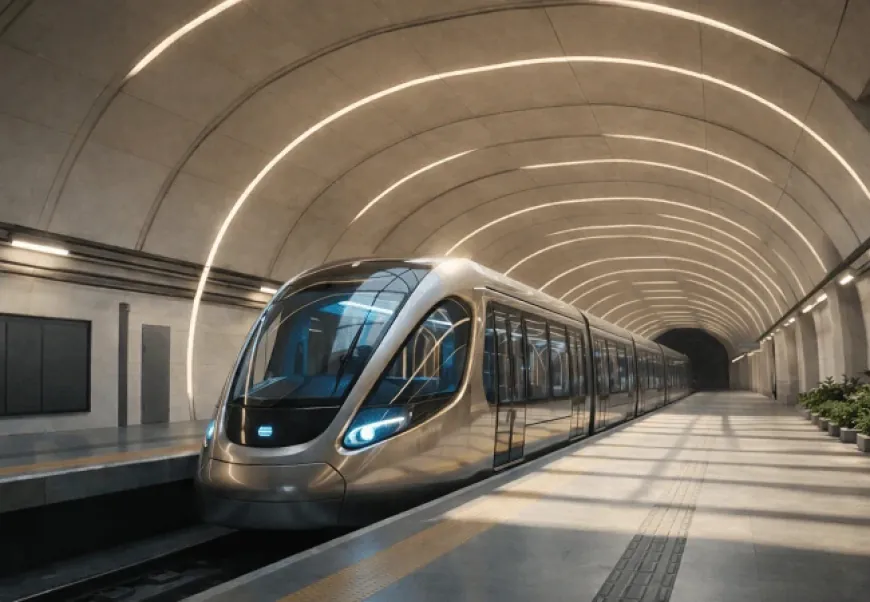
Israel's NTA Metropolitan Mass Transit System gathered the world's top infrastructure firms in Tel Aviv from February 23–25, 2026 to formally launch procurement for the country's largest-ever project.
Three days, one hotel, 550 delegates from 60 companies across 21 countries: the participants' conference organised by NTA Metropolitan Mass Transit System marked the operational launch of Tel Aviv's long-awaited underground metro. The fully automated, 150-kilometre network carries an estimated price tag of around 150 billion shekels — approximately $47 billion.
Three Lines to Reshape Mobility Across Greater Tel Aviv
The future metro will consist of three interconnected underground lines serving 109 stations and 24 municipalities across the Tel Aviv metropolitan area, known as Gush Dan. The region is home to over four million people — roughly 40% of Israel's total population.
Line M1, the network's backbone at 85 km with 82 stations, will run from Ra'anana and Kfar Saba in the north down through the city centre to Rehovot and Lod in the south. Line M2 will span 25 km across 22 stations, linking the eastern suburb of Petah Tikva to the city centre. Line M3 will form a 39 km semi-circular arc with 25 stations. When fully operational, the network is projected to carry approximately two million passengers per day.
GoA4: A Fully Driverless System
The entire network will operate under GoA4 (Grade of Automation 4) — the highest level of rail automation, meaning no onboard driver and full remote supervision. The engineering scope includes approximately 300 km of single-bore tunnels, four depots and seven major multimodal transport hubs.
NTA estimates around 20 tunnel boring machines (TBMs) will be required to excavate some 40 million cubic metres of soil. Over 16,000 workers — many recruited internationally — are expected to be involved across the construction programme.
Timeline: Pre-Qualification Underway, Tenders Due in 2027
The participants' conference (pre-qualification process PQ 589/2025) took place at the Hilton Hotel in Tel Aviv on 23, 24 and 25 February 2026, and included guided route visits, technical briefings and bilateral meetings with NTA leadership. The pre-qualification deadline is April 29, 2026.
Formal construction tenders are scheduled for publication in 2027. Construction is split into two phases, with Stage 1 (Phase A) targeted to open in 2037, according to NTA. Internal documents previously reported by Israeli media suggested the operational date could slip to 2040 depending on regional security conditions and international labour recruitment.
| Milestone | Target date |
|---|---|
| Pre-qualification deadline (PQ 589/2025) | April 29, 2026 |
| Tender publication | 2027 |
| Phase A — Stage 1 opening | 2037 (NTA target) |
State-Backed Budget: 150 Billion Shekels
The project is funded entirely through the Israeli state budget and carries national priority project status under Israeli law, providing legal and financial continuity across political cycles. The first package of works, known as Infra 1, is valued at approximately 65 billion shekels ($20.94 billion) and is structured across eleven separate construction packages.
NTA projects the network will generate annual economic savings of around 34 billion shekels once operational, primarily through reduced road congestion and improved workforce mobility.
Global Competition: Europe, Asia and a Diplomatic Footnote
The conference drew major players from Europe and Asia. NTA previously led a delegation to South Korea, where the global chief of Hyundai met the Israeli team directly. Indian and Korean firms were strongly represented among attendees.
The reported presence of Turkish delegates — despite Ankara's stated trade embargo on Israel — drew commentary in regional media, though attendance at a pre-qualification conference carries no obligation to submit a formal bid.
"We are looking for companies that understand that building a metro is not just an engineering challenge — it is a nation-building project." — Yodfat Afek-Arazi, NTA Chairwoman, February 2026