
Gibraltar Rail Tunnel: Spain Commits €1.73M for 2026 Studies
descriptionSpain approved €1.73 million for Gibraltar Strait tunnel studies on 17 March 2026. What the Herrenknecht report found, the 2035–2040 timeline, and what remains unconfirmed.
 TrainsNews
Updated on Friday, 20 March 2026
Gibraltar Rail Tunnel Takes a Concrete Step Forward: Spain Commits €1.73 Million for 2026 Studies
Spain's Council of Ministers approved €1.73 million for state company SECEGSA on 17 March 2026, marking the latest — and most sustained — push to turn the long-debated Gibraltar Strait rail tunnel into a real infrastructure project.
Key Takeaways
- Spain has allocated a further €1.73 million to SECEGSA for the 2026 financial year.
- Total Spanish public funding since 2022 now exceeds €9.61 million — up from just €50,000 per year before bilateral relations were restored in 2023.
- German tunnelling giant Herrenknecht confirmed in June 2025 that a 65 km twin-bore rail tunnel is technically feasible, though it flagged flysch geology and depths of up to 475 metres as major risks.
- The tunnel will not be ready for the 2030 FIFA World Cup; official estimates point to a 2035–2040 commissioning window.
- Ineco's updated preliminary design is due in summer 2026; a tender for an exploratory shaft is expected in 2027.
Why It Matters
For half a century, a fixed link beneath the Strait of Gibraltar has hovered between ambition and impossibility. What has shifted in the past three years is not the geology — that remains formidable — but the political and financial commitment. The 17 March 2026 announcement confirms that Madrid is treating this project as an active infrastructure programme, not a diplomatic gesture. For Europe's southern periphery, and for Morocco's own connectivity ambitions, the implications are significant.
What We Know
The 2026 funding. Spain's Council of Ministers approved a direct transfer of €1.73 million to SECEGSA (Sociedad Española de Estudios para la Comunicación Fija a través del Estrecho de Gibraltar), the state-owned company under the Ministry of Transport led by Óscar Puente. This brings total government support to SECEGSA since 2022 to over €9.61 million — a dramatic acceleration from the €50,000 annual subsidy that kept the company alive through the diplomatic freeze between 2010 and 2023.
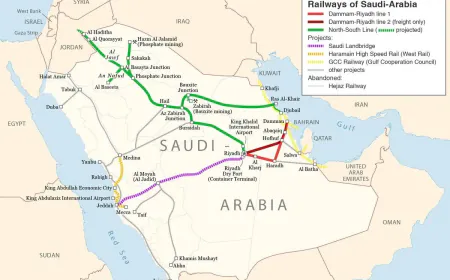
The project design. The planned alignment consists of a twin-bore railway tunnel approximately 65 kilometres long, with a submarine section of between 27.7 and 40 kilometres [to be confirmed once the final trace is adopted], linking Punta Paloma near Tarifa (Cádiz province, Spain) to Malabata near Tangier (Morocco). A central service tunnel would run between the two rail bores — an arrangement similar to, though technically more demanding than, the Channel Tunnel.
The Herrenknecht feasibility report. SECEGSA commissioned Herrenknecht Ibérica — Spanish subsidiary of the world's leading tunnel boring machine manufacturer — to assess the geotechnical conditions at the Camarinal Sill, the deepest and most complex section of the strait. The report, delivered in June 2025 for a fee of €296,400, concluded that construction is feasible with current technology, provided that mixshield TBMs specifically adapted to mixed-face conditions are used. The Camarinal Sill remains the single most challenging segment.
The Ineco preliminary design. On 3 November 2025, SECEGSA formally commissioned Ineco (Ingeniería y Economía del Transporte), a public engineering firm, to produce a fully updated preliminary design — the first comprehensive revision since 2007. Budgeted at €961,939 and part-funded by EU Next Generation EU recovery funds, the document is due in summer 2026.
The Technical Challenge: Why This Is Not Like Any Other Tunnel
The Strait of Gibraltar sits atop the boundary between the African and Eurasian tectonic plates, along the Azores–Gibraltar Transform Fault — one of the most seismically active zones in the European geological neighbourhood. Beneath the seabed, the rock is predominantly flysch: tightly interbedded sequences of shale, marl and sandstone that respond inconsistently to mechanical boring. Stiffness contrasts between adjacent geological units can vary by a factor of more than three, demanding constant adjustment of face pressure in TBM operations.
Water depth adds a further dimension of difficulty. At the Camarinal Sill, the tunnel would pass approximately 475 metres below sea level — roughly four times the maximum depth of the Channel Tunnel. Seismic monitoring of the zone, contracted to Tekpam Ingeniería and conducted with technical input from the US Geological Survey (USGS), is ongoing into 2026.
The Timeline: 2030 Is Off the Table — and That Is Not a Failure
The 2030 FIFA World Cup, jointly hosted by Spain, Portugal and Morocco, generated early speculation about a ceremonial opening of the tunnel. That scenario has been formally ruled out by Spanish authorities. The engineering reality is straightforward: the preliminary design alone will not be finalised until summer 2026.
| Milestone | Target Date |
|---|---|
| Ineco preliminary design delivered | Summer 2026 |
| Joint Spain–Morocco decision on exploratory shaft | 2027 |
| Exploratory shaft tender issued | After 2027 [to be confirmed] |
| Preliminary works begin | ~2030 (estimate) |
| Full tunnel in service | 2035–2040 |
The exploratory shaft itself — a pilot tunnel to verify real geological conditions before full boring begins — is estimated to cost around US$1 billion and could take between six and nine years to complete. It is not a study. It is a major civil engineering undertaking in its own right.
Strategic Impact: A New Continental Axis
If completed, the tunnel would physically connect the Spanish high-speed rail network to Morocco's, enabling a Madrid–Rabat rail journey for the first time. However, new rail lines are still required in Spain's Cádiz province to reach the southern terminal, and Morocco's northern rail network requires full electrification before through-running would be possible.
Official projections suggest capacity for 12.8 million passengers and over 13 million tonnes of freight per year. Total project cost is estimated at over €15 billion, with Spain's share put at €8.5 billion. Financing is expected to be shared between Spain, Morocco and the European Union — potentially via the Recovery and Resilience Facility and cohesion funding instruments, though no formal EU commitment has been made at this stage.