
CCVU Corsica Modernization: Game-Changing Project | 2025
Discover how Centralized Single-Track Command (CCVU) transforms Corsican railways. Enhanced safety, increased capacity, sustainable mobility: the future unfolds here.
 TrainsNews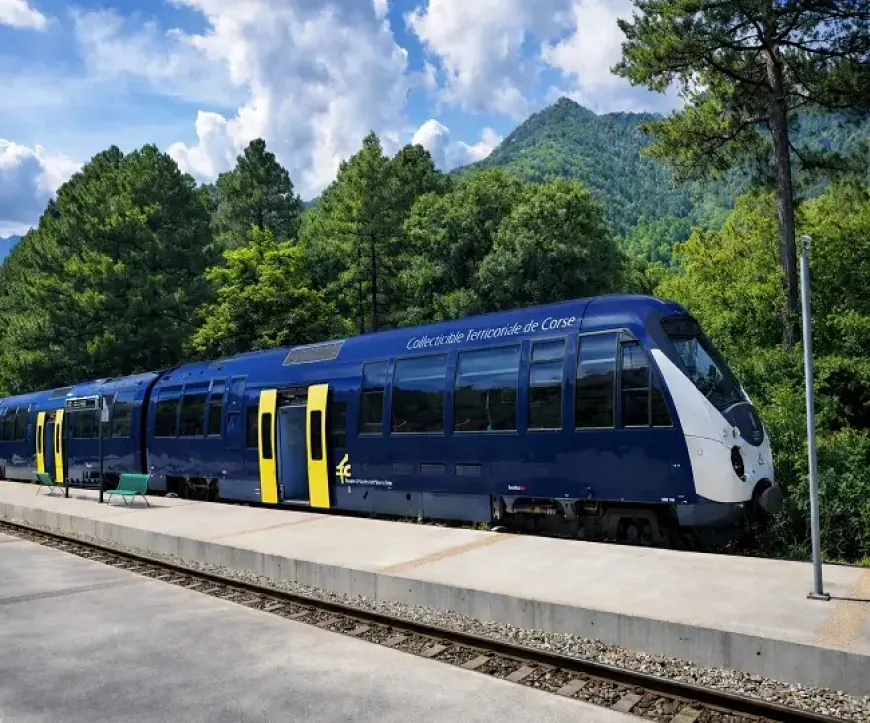
Corsica is entering a historic turning point in its transport infrastructure. After more than a century of telephone-based signaling, the island's railway network is transitioning to a Centralized Single-Track Command system (CCVU) that revolutionizes traffic management. This transformation, whose dynamic testing concluded in November 2025, promises enhanced safety, more frequent services, and a genuine modal shift from cars to trains.
Updated on December 25, 2025
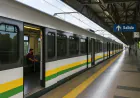
The Chemins de Fer de la Corse (Corsican Railways) network extends over 232 kilometers of meter-gauge track. Two main lines structure the service: the Central line connects Bastia to Ajaccio over 158 km, crossing emblematic mountain landscapes, while the Balagne line serves Calvi from Ponte-Leccia over 74 km, including the famous "beach tramway" between Île-Rousse and Calvi.
Until October 2025, this network operated primarily under a telephone signaling system inherited from the 19th century. Concretely, before each departure, a station agent had to call their counterpart at the next station to obtain authorization to dispatch a train. "Ponte-Leccia to Corte – may I dispatch train 9 to you?" These voice exchanges, though rigorous, drastically limited circulation frequency and constituted a major obstacle to service development.
The first modernization phase began in 2008 with the CCVU equipment deployment in the Bastia suburban sector (Bastia-Casamozza, 21 km). This successful experiment demonstrated the system's potential and paved the way for its extension across the entire network.
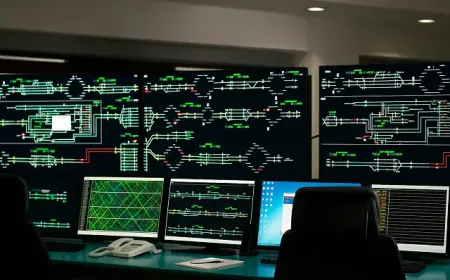
The Centralized Single-Track Command fully automates railway traffic management. From a single control center located in Bastia, an operator manages all signals, switches, and crossing zones across the network. Modern equipment transmits each train's position in real time, eliminating human error risks associated with telephone signaling.
Jacques Chibaudel, Director of Chemins de Fer de la Corse, explains the scope of change: "This fully automated switching system, connected to Bastia, marks a new era in Corsican railway traffic management. One person managing crossings is much better than ten managing them." This centralization enables flexible schedule adjustments and instant responses to disruptions.
The system also integrates predictive maintenance through connected sensors that detect anomalies before they cause incidents. This anticipation significantly improves service regularity and reduces long-term operating costs.
The 3 Strategic Pillars of Modernization
1. Enhanced Safety and Reliability
The transition from manual to automated systems radically transforms railway safety. Telephone signaling, though professionally practiced for over a century, remained dependent on human vigilance. Yves Briantais, Deputy Director of Railways at the Collectivité de Corse, emphasizes: "This human system has often been a source of accidents, which is why stations are being automated."
CCVU eliminates head-on collision risks through automatic interlockings that prevent simultaneous access by two trains traveling in opposite directions on the same section. Dynamic testing conducted in October and November 2025 validated the system's reliability, including during incident simulations.
2. Significant Capacity Increase
Automation unlocks the network's potential. In the Bastia suburban area, already equipped since 2008, CCVU enabled an increase from 22 to 52 daily services. The Collectivité de Corse now aims for 20-minute intervals on Bastia-Casamozza and 30-minute intervals on Ajaccio-Mezzana during peak hours.
In Balagne, two new crossing points at Lumio and Algajola, combined with a 7 million euro investment in signaling and infrastructure, will enable denser tourist and local services. The extended platforms at Calvi, designed to accommodate 80-meter trains (two coupled AMG 800 railcars), illustrate this capacity increase.
3. Modal Shift and Ecological Transition
Facing road saturation and climate challenges, trains emerge as a credible alternative. CCVU constitutes the missing link to make rail competitive against automobiles. By offering high frequencies and improved regularity, the system promotes daily travel, particularly for the 1,400 Università di Corsica students and 800 Bastia-area school children who already benefit from free travel.
Jacques Chibaudel recalls the overall ambition: "We're working with the region to better meet islanders' mobility needs." By reducing automobile dependence, CCVU directly contributes to CO2 emission reduction goals and Corsican environmental preservation.
Beyond technology, CCVU concretely transforms user experience. Nine strategic stations (notably Bastia, Ajaccio, Corte, Calvi, Île-Rousse) are now equipped with Passenger Information Systems (SIV). These devices broadcast real-time schedules, potential delays, and information about local cultural or sporting events.
Crossing points undergo complete modernization. At Calvi, Algajola, and Lumio, platforms have been redesigned to improve accessibility for people with reduced mobility. Rail, sleeper, and ballast replacement accompanies this upgrade, ensuring comfort and safety.
In the Ajaccio suburban area, a unified ticket system now combines train and bus in a single transaction. This intermodality, inspired by the Bastia model, aims to capture automobile traffic upstream of city centers and reduce urban congestion.
Corsican railway network modernization is part of a long-term investment program. Since 2002, the Collectivité de Corse, network owner, has committed nearly 300 million euros to track renovation, acquisition of 12 modern AMG 800 railcars (48 M€), and infrastructure upgrades.
CCVU completes this transformation by providing the network with a "brain" capable of efficiently managing circulation complexity. Dynamic testing conducted from October 18 to November 2, 2025, then from April 12 to 27, 2025, mobilized test trains across the entire network to validate each safety and performance parameter.
Simultaneously, the renovation of five historic railway bridges (Asco, Albanu, Prunelli, Muzelle, Casamozza viaducts) for 15 million euros ensures the sustainability of 19th-century engineering structures. These works, co-financed by the Exceptional Investment Plan (PEI 4), also anticipate future needs, including possible freight rail resumption.
For daily travelers, CCVU means more frequent, punctual, and better-informed trains. Students and commuters in Bastia and Ajaccio metropolitan areas will benefit from closer intervals facilitating home-to-work or home-to-school travel.
For tourists, increased fluidity and real-time information will make Corsican trains more attractive. The summer Balagne service, already popular, will gain capacity and comfort through new crossing points and extended platforms.
For railway operators, CCVU simplifies operations and reduces personnel costs related to manual circulation management. Agents, formerly scattered across each crossing station, are refocused on passenger services and station security.
Finally, for the Collectivité de Corse, this project embodies an ambition of sovereignty and modernity. As Jacques Chibaudel notes: "It's a first for a secondary network. Nowhere else in France is there such an automated and modern system."
October 17, 2025, marked a symbolic turning point: the last trains under telephone signaling operated, closing a century-long chapter in Corsican railway history. CCVU, whose complete service launch is scheduled for summer 2025, opens a new era where technology and environmental ambition converge.
This project, coupled with massive investments in tracks and rolling stock, positions Corsica as a railway modernization laboratory for French secondary networks. Beyond technical performance, CCVU embodies a vision: sustainable, accessible island mobility that respects the exceptional environment of the Island of Beauty.