
Île-de-France Transport 2026: Everything Changing
Line 18, end of paper tickets, 156 new trains: discover all Île-de-France transport innovations in 2026. Dates, lines, impacts.
 TrainsNews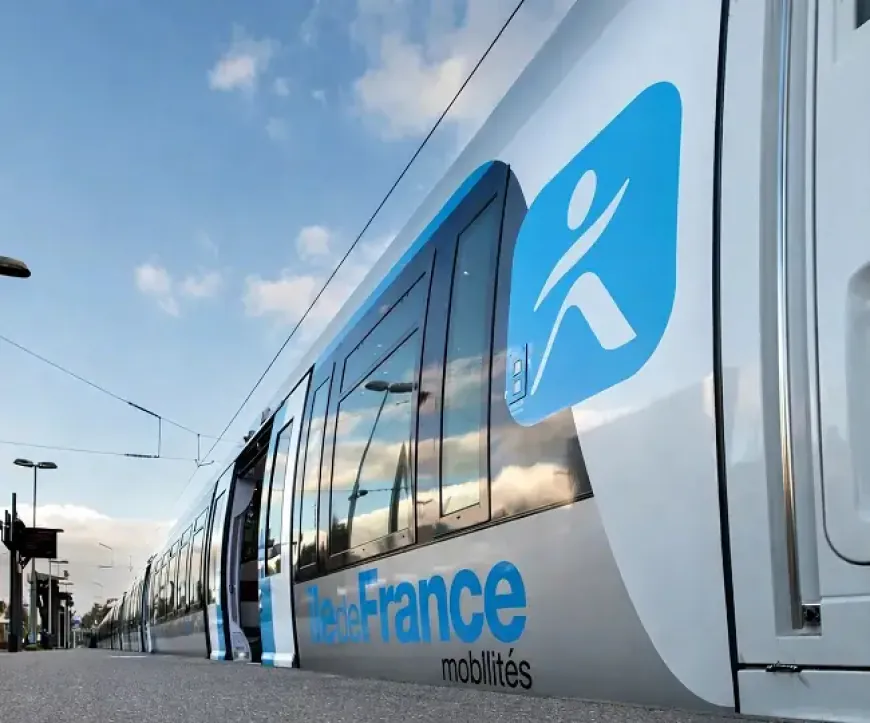
Île-de-France reaches a decisive milestone in 2026 toward its ambition: becoming the world's most modern transport network by 2030. Opening of Grand Paris Express Line 18 in October, definitive end of paper tickets in June, arrival of 156 new trains and metros, massive ticketing digitalization, reinforced security: 2026 fundamentally transforms daily mobility for 12 million Parisians.
Updated on January 1, 2026
Network expansion: Grand Paris Express becomes reality
Grand Paris Express Line 18 will be the first of four new automatic lines to enter service. From October 2026, the section between Massy-Palaiseau and Christ de Saclay will serve the Saclay plateau in 10 minutes from Massy TGV station, according to Société du Grand Paris. Four stations will be accessible during this initial phase: Christ de Saclay, Université Paris-Saclay, Polytechnique and Massy-Palaiseau.
Connections with RER B and C, Transilien line V and tramway T12 will facilitate travel to an academic and scientific hub already gathering 30,000 students and 13% of national research, indicates Île-de-France Mobilités. In 2027, the Massy-Palaiseau—Orly section will extend the line toward the airport. The complete route to Versailles-Chantiers is planned for 2030.
For buses, Tzen 4 enters service in January 2026 between Viry-Châtillon and Corbeil-Essonnes in Essonne. This high-level service line represents a world first: 24-meter bi-articulated buses, 100% electric, will recharge on the ground in under 5 minutes using Alstom's SRS system. With a capacity of 140 passengers per vehicle, Tzen 4 will replace the current line 402 over 14 kilometers and 30 stations. More than 40,000 daily passengers are expected, according to IDFM.
Four new express bus lines complete the offer:
- Line 9513 (January 2026): Cergy-Préfecture—Argenteuil in 45 minutes, one bus every 15 minutes during peak hours
- Line 9514 (January 2026): Cergy-Préfecture—Chars via Vexin, one bus every 30 minutes
- Line 9517 (March 2026): Argenteuil—Roissypôle via Saint-Denis Pleyel, with direct connection to line 14
- Évry—Fontainebleau express line (March 2026): link between Fontainebleau basin and Évry university hub
Rolling stock modernization: More comfort and reliability
Île-de-France Mobilités deploys 156 new trains, metros and trams in 2026, representing a 7-billion-euro investment financed by the Region. This modernization affects all transport modes.
On the metro, the MF19 continues its deployment after its successful launch on line 10 in October 2025. In December 2026, lines 3 bis and 7 bis will progressively welcome these new-generation trains, indicates RATP in its December 29, 2025 press release. The MF19 offers reversible air conditioning, USB ports, real-time information screens and electric braking that reduces energy consumption by 20%. All old MF 67 trains on line 10 will be replaced by April 2027.
On RER, 60 RER NG trains will enter service on line E during the year, definitively ending MI2N trains in the last quarter of 2026. On line R, 7 new Régio 2N trains will improve passenger comfort. RER B is also preparing for the progressive arrival of MI20 trains, with first commercial runs expected in 2026 to improve reliability and accessibility.
Tramway T1 will finalize complete fleet renewal with new TW20 trains, extending the modernization started in 2024.
| Line | Rolling stock | Number of trains | Service start | Passenger benefit |
|---|---|---|---|---|
| Line 10 (metro) | MF19 | Complete replacement | October 2025–April 2027 | Air conditioning, USB, -20% consumption |
| Lines 3 bis & 7 bis | MF19 | Progressive deployment | December 2026–2027 | Enhanced comfort, real-time information |
| RER E | RER NG | 60 trains | Year 2026 | End of MI2N, improved reliability |
| RER B | MI20 | First trains | 2026 (progressive) | Accessibility, interior comfort |
| T1 (tramway) | TW20 | Fleet finalization | 2026 | Complete modernization |
End of an era: Goodbye paper ticket, hello all-digital
After 125 years of existence and its first validation on July 19, 1900, the paper ticket definitively leaves the Île-de-France transport landscape in 2026. The removal calendar unfolds in two phases, according to Service-Public.fr.
From May 1, 2026, paper tickets will no longer be accepted on buses and trams in Île-de-France. One month later, on June 1, 2026, they will disappear from the entire rail network: metro, RER and Transilien trains. Only origin-destination tickets to stations outside Île-de-France will remain temporarily accepted.
Travelers have several replacement solutions. The Navigo Easy pass, a non-personalized rechargeable card at 2 euros, allows purchasing individual tickets. The Île-de-France Mobilités app offers purchase and validation directly on smartphone. Navigo Liberté+ automatically bills trips at month-end, without prior recharging.
Major innovation: by end of 2026, contactless bank card payment will be deployed across the entire bus network in Paris and inner suburbs, facilitating emergency purchases for occasional users. A study on extending this system to the rail network will deliver conclusions in April 2026.
Digitalization continues with Navigo Annuel arriving on smartphone in spring 2026. Google Wallet will also welcome Île-de-France transport tickets by year-end, joining already-available Apple Wallet. These innovations aim to streamline travel and limit station queues.
Users keeping paper tickets can exchange them at RATP or SNCF counters until September 1, 2026, up to 20 tickets per day. No refund is possible, but conversion to digital format on Navigo Easy remains free.
Services and Security: A reimagined passenger experience
Île-de-France Mobilités strengthens user support with three new regional services launched from January 2026. A single number will centralize customer relations, directing travelers to the right contact. A centralized platform will gather lost items across the entire Île-de-France network, simplifying procedures. Finally, a conversational agent based on generative artificial intelligence will be available on the IDFM website to guide users daily.
Security receives significant reinforcement. As part of new public service delegations, 500 additional private security agents will be deployed on the network. This represents 10,000 additional security patrol days in 2026, according to figures communicated by IDFM on December 10, 2025.
Eco-mobility: Cycling and clean buses at the strategy's heart
The energy transition accelerates across the entire network. Véligo 2.0, the new generation of bike rental service, starts on January 5, 2026 with a considerably expanded offer: 30,000 bikes available versus 20,000 previously, distributed across 19 different models including folding bikes, mechanical bikes, cargo bikes and a new electric-assist bicycle.
Nine new Maisons du Vélo will progressively open throughout the year to promote the Véligo offer and support Parisians in discovering cycling as a daily transport mode. The first three open in January in Ermont-Eaubonne, Juvisy and Croix de Berny, followed by Aulnay-sous-Bois, Maisons-Alfort, Évry-Courcouronnes and Houilles-Carrières in spring, then Cergy-Préfecture in autumn and Palaiseau Polytechnique at year-end.
For buses, 10 bus centers will be converted to electric or biomethane in 2026. HVO biofuel, derived from organic waste and reducing CO2 emissions by 90% compared to fossil diesel, will be generalized for remaining diesel buses. This transition aligns with the regional goal of total bus network decarbonization by 2030.
Carpooling also receives momentum with the January launch of a new on-demand carpooling service, operated by a single provider for all of Île-de-France.
This transport revolution addresses three major challenges. First, absorb traffic growth: with 12 million daily trips, the Île-de-France network is saturated during peak hours on several lines. Second, reduce carbon footprint: transport represents 30% of greenhouse gas emissions in Île-de-France. Finally, improve passenger experience amid increased competition from individual transport modes.
The 2026 budget voted by IDFM on December 10, 2025 provides 3.8 billion euros in investments to regenerate and modernize the network. This unprecedented effort requires major works, particularly summer 2026 which will concentrate structural projects with interruptions of 2 to 6 weeks on certain lines.
What changes for users
Concretely, travelers will need to anticipate several adaptations. With paper tickets disappearing definitively, switching to Navigo Easy, mobile app or Navigo Liberté+ will be necessary before May 1 for buses and June 1 for metro.
The monthly Navigo pass increases to 90.80 euros from January 1, 2026, 2 euros more than 2025. This 2.3% increase remains compliant with the regional fare shield (inflation + 1%) and finances network modernization. However, 9 out of 10 users continue benefiting from 50% employer coverage, limiting impact to 1 euro per month.
Summer works will require increased vigilance: checking routes the day before, anticipating extended travel times and favoring alternatives (replacement buses, alternative routes) communicated by IDFM.
Finally, RER E and line 10 users will benefit from new train comfort from 2026, while Saclay plateau residents will see their travel times to Paris reduced by 35% thanks to line 18.