
ERTMS Eurotunnel: Channel Tunnel Signalling Modernisation
Eurotunnel launches ERTMS installation on 57 locomotives. Discover how this modernisation transforms railway signalling between France and the UK.
 TrainsNews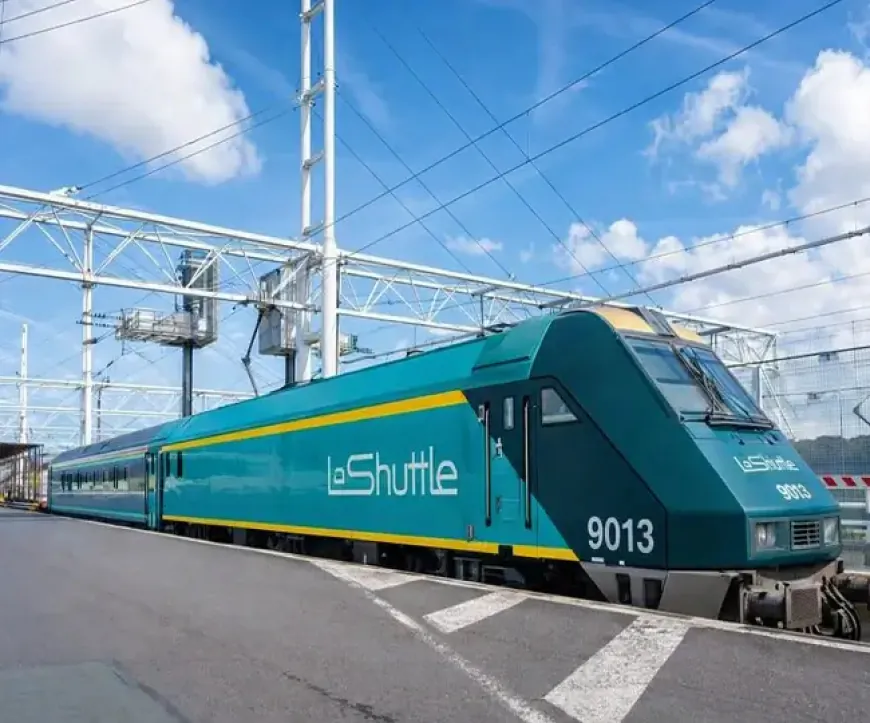
Eurotunnel launches the first phase of a strategic project to install the European ERTMS system on its 57 electric locomotives. This modernisation enhances interoperability and prepares the infrastructure for next-generation trains operating between Folkestone and Coquelles.
Updated on January 26, 2026
Eurotunnel is taking a decisive step in modernising its infrastructure. The Channel Tunnel concessionaire announced on 15 January 2026 the launch of the first phase of ERTMS system installation across its entire fleet of Brush locomotives. This project, carried out in partnership with Compagnie des Signaux, marks the beginning of a major technological transformation for this crucial rail link between France and Great Britain.
Fleet Equipment: 57 Brush Locomotives at the Project's Core
The programme's first phase concerns the 57 Brush electric locomotives used by Eurotunnel to haul LeShuttle services carrying cars, coaches, and lorries between the Folkestone terminal in Great Britain and Coquelles in France. These machines daily transport millions of passengers and tonnes of freight through the world's longest undersea railway tunnel.
Compagnie des Signaux, a French company member of the Italian Mermec group, was selected to supply the onboard equipment. This firm founded in 1902 possesses recognised expertise in high-speed signalling, with over 7,000 kilometres of railway lines equipped worldwide and more than 2,000 onboard units installed.
"We are proud to continue more than 30 years of successful collaboration with Eurotunnel," stated Gilles Pascault, President of Compagnie des Signaux, in the 15 January 2026 press release.
Dual-Standard ERTMS/TVM: Transition Without Interruption
The project's main technical challenge lies in the need to maintain operations whilst modernising the system. Since the tunnel's opening in 1994, locomotives have used the French TVM 430 system, an in-cab signalling device that has proven itself over three decades on French high-speed lines and in the tunnel.
The solution proposed by Compagnie des Signaux relies on dual-standard equipment capable of handling simultaneously the legacy TVM 430 system and the new ETCS (European Train Control System), the central component of ERTMS. This approach enables gradual migration, synchronised with the project's overall schedule, whilst minimising locomotive downtime.
The project's second phase will focus on adapting trackside equipment, enabling communication between both signalling systems before the complete switchover to ERTMS. SYSTRA, appointed project manager in December 2024, coordinates this complex migration in a binational context with distinct approval procedures between France and the United Kingdom.
Context & Stakes: Why This Modernisation Is Crucial
ERTMS installation in the Channel Tunnel forms part of a European strategy to harmonise railway signalling. Historically, each European country developed its own systems, creating 35 incompatible devices that complicate cross-border operations. A Eurostar train, for instance, must carry seven different command-control systems to operate between Paris, Brussels, and London.
"With this partnership, we are taking an essential step in modernising our infrastructure and reinforcing our commitment to ever safer, more efficient, and interoperable rail operations," emphasised Didier Cazelles, Deputy Chief Executive Officer of Eurotunnel, during the 15 January 2026 announcement.
This project also follows the quadripartite agreement signed in July 2018 between Eurotunnel, HS1 (United Kingdom), SNCF Réseau, and Infrabel (Belgium) to harmonise ERTMS deployment on the Paris-Brussels-London axis, Europe's busiest railway triangle.
ERTMS enables continuous information exchange between trains and ground infrastructure via the GSM-R network, a secure network dedicated to railway use. The system automatically supervises speed, anticipates slowdowns, and improves line capacity without heavy new investment in physical infrastructure.
What Changes for Passengers and Operators
For travellers and freight operators, this modernisation brings concrete medium-term benefits. ERTMS will increase tunnel capacity by authorising shorter intervals between trains whilst maintaining optimal safety levels. On the Paris-Lyon high-speed line, for example, ERTMS will enable 16 trains per hour versus 13 currently, representing a 25% increase.
Enhanced interoperability will also facilitate tunnel access for European railway operators equipped solely with ERTMS, without requiring costly installation of additional national systems. This technical opening could foster emergence of new cross-border rail services, aligned with European objectives for railway transport development.
Finally, standardisation simplifies maintenance and reduces long-term operating costs. ERTMS equipment benefits from a unified European market, guaranteeing parts availability and shared expertise among infrastructure managers.
Towards a Unified European Railway Network
ERTMS installation in the Channel Tunnel is not an isolated project. At European scale, over 100,000 kilometres of railway lines were equipped or being equipped with ERTMS in 2023, according to European Union Agency for Railways data. European regulations mandate ERTMS installation on the central part of nine trans-European corridors by 2030, and across the entire trans-European network by 2050.
Despite these advances, deployment remains uneven. Whilst countries like Luxembourg, Belgium, and Switzerland have equipped a significant portion of their networks, most Member States show less than 20% of their TEN-T lines equipped. Funding remains a major challenge: between 2021 and 2023, only €0.7 billion was allocated to ERTMS deployment via the Connecting Europe Facility, whereas total TEN-T network equipment cost is estimated between €24 and €50 billion by the European Commission.
The Channel Tunnel, with its 10.3 million Eurostar passengers, 10.4 million LeShuttle passengers, and 1.6 million lorries transported annually (2017 data), represents a strategic axis whose modernisation sends a strong signal to the entire European railway sector.