
Spain high-speed rail Madrid–Andalusia resumes after Adamuz crash
Renfe, Iryo and Ouigo restored services to Seville, Granada and Cádiz on Feb. 17, 2026. Madrid–Málaga stays closed until March. Full details here.
 TrainsNews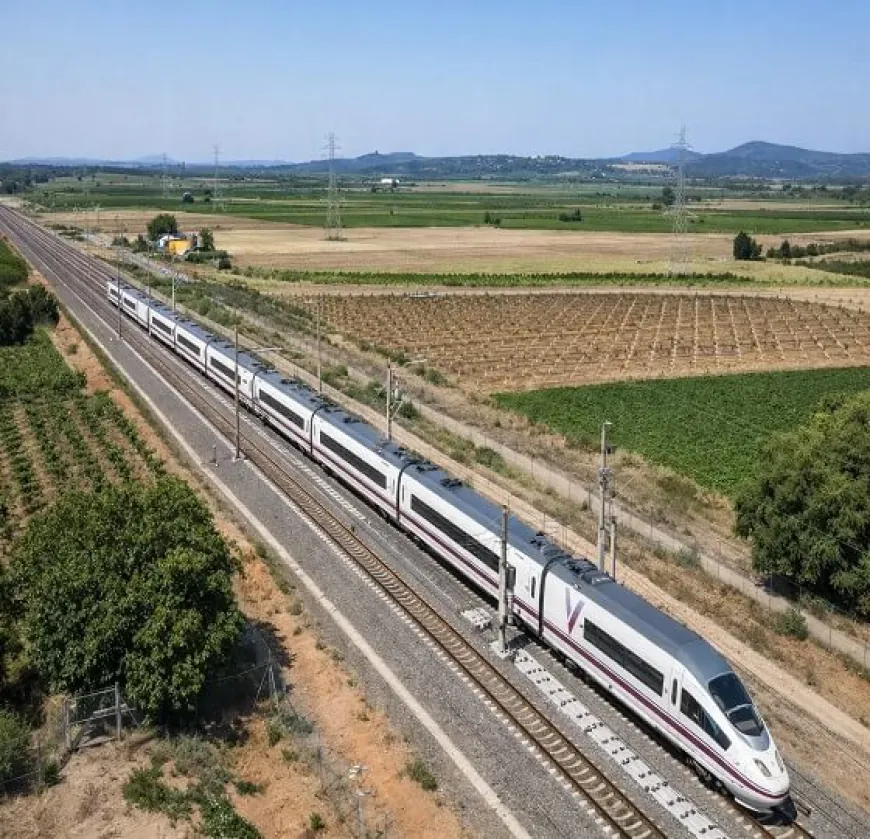
High-speed trains between Madrid and Andalusia returned to service on Tuesday, February 17, 2026, exactly one month after the deadly Adamuz rail disaster that killed 46 people.
A deadly crash that paralysed the southern corridor
On January 18, 2026, at 19:43 local time, three rear carriages of an Iryo high-speed train travelling from Málaga to Madrid derailed near Adamuz, north of Córdoba, and collided with an oncoming Renfe service. The official death toll stands at 46, with more than 150 people injured, according to the preliminary report of Spain's Rail Accident Investigation Commission (CIAF), published January 23, 2026. It was the first collision between two high-speed trains in Spanish rail history.
Investigators are still working to determine the cause. The leading technical hypothesis is a rail fracture of approximately 30 cm at kilometre 318, which may have preceded the derailment. The CIAF has stated that this assumption must be confirmed through detailed laboratory analysis. The Ministry of Transport noted the affected track had undergone a full renovation completed in 2025, at a cost of €700 million [à vérifier — figure cited by the Ministry; independent confirmation pending].
Three operators back on Spain's busiest southern route
Overnight on February 16–17, Adif (Spain's rail infrastructure manager) confirmed the completion of all repair work and formally returned the line to the three operators. Renfe conducted overnight safety tests — including a full signalling system check — before commercial services resumed.
| Operator | Status 17/02/2026 | Madrid–Seville daily services | First departure |
|---|---|---|---|
| Renfe (AVE / Alvia) | ✅ Restored | Normal schedule | Morning, Feb. 17 |
| Iryo | ✅ Restored | 7 outbound + 7 return | Morning, Feb. 17 |
| Ouigo Spain | ✅ Progressively restored | 6 return trips/day | 06:55 from Atocha |
Restored routes cover Madrid–Seville, Madrid–Cádiz, Madrid–Huelva, Madrid–Granada and Madrid–Almería. On the Madrid–Huelva route, the first February 17 service included a road transfer between Córdoba and Huelva; subsequent departures ran entirely by rail.
Successive storms battering Andalusia since late January delayed repairs and pushed back a reopening that Transport Minister Óscar Puente had originally targeted for early February.
Málaga: no trains until early March at the earliest
The Madrid–Málaga corridor — one of Spain's most popular tourist routes — will not return to normal operation before early March 2026, according to Renfe and Adif. Engineers are still repairing a retaining wall that collapsed along the Antequera–Málaga section, one of four Andalusian rail lines currently wholly or partially closed due to winter weather damage.
The economic toll is already measurable: a study by Turismo Costa del Sol and the Diputación de Málaga estimates that around 65,000 tourists were unable to reach the province during the closure, resulting in an estimated loss of €109 million to the local tourism economy.
Replacement buses: 72,000 passengers carried
Safety clearance process
From February 18, Renfe is operating a coach service between Antequera–Santa Ana and Málaga-María Zambrano for passengers holding high-speed rail tickets. The state operator states it was the only carrier to provide alternative transport throughout the closure. Between January 20 and the February 17 reopening, replacement buses on the Villanueva de Córdoba–Córdoba segment carried a total of 72,000 passengers, according to Renfe.