
TGV M: Major Innovations and Delivery Under Pressure
France's next-gen TGV M is over three years late. 20% less energy, 740 seats, emergency battery module: what's confirmed about the 2026 launch — and what isn't.
 TrainsNews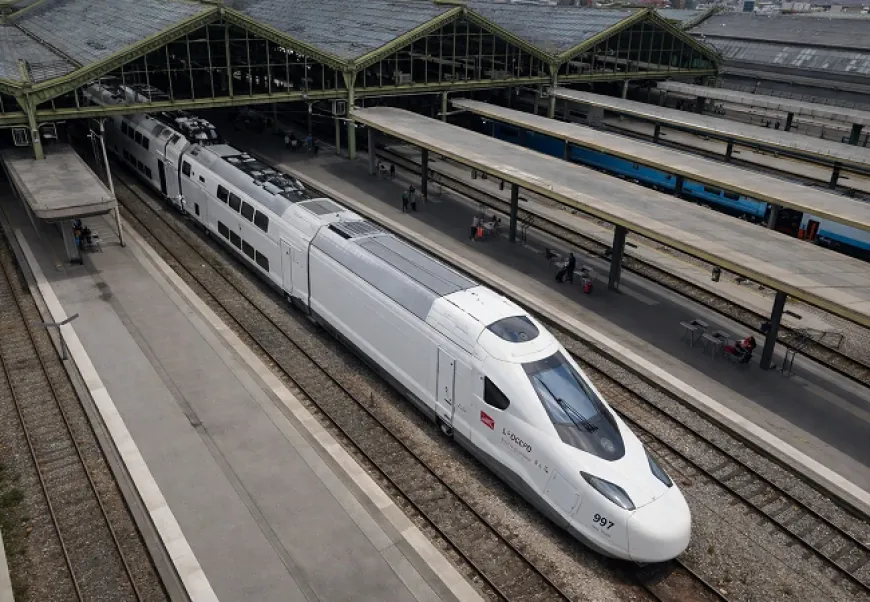
France's fifth-generation high-speed train is running more than three years behind schedule, as Alstom and SNCF publicly hold to a 1 July 2026 launch date for the first four units.
The TGV M — marketed as the Avelia Horizon by Alstom — sits at the heart of France's rail strategy. With 115 trains on order for roughly four billion euros, it must absorb sustained growth in long-distance passenger traffic and counter competition from Trenitalia and new entrants on the Paris–Lyon–Marseille corridor. Its entry into service also determines when ageing legacy TGV fleets can be retired; continued service extensions are currently required to cover the shortfall caused by repeated delays.
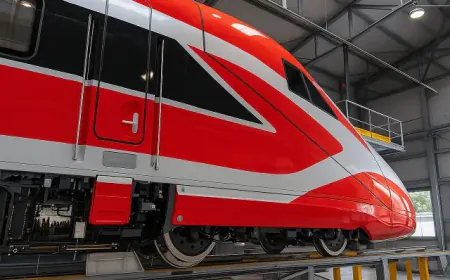
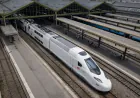
The TGV M carries substantial technical advances: a 20 % reduction in electricity consumption, an elongated nose that cuts aerodynamic drag at 320 km/h, and 740 seats across nine coaches on a 200-metre formation — 20 % more capacity than current sets. Seat frames are five centimetres thinner, freeing legroom without altering exterior dimensions. A dedicated battery module, internally called the greffon, provides 50 km of emergency autonomy in the event of a power-supply failure — enough to reach the nearest station while keeping air conditioning and toilet systems operational. The train is designed to be 97 % recyclable.
In mid-March 2026, an extraordinary works council meeting was convened at Alstom's Aytré assembly plant in western France. Trade union sources reported by specialist outlet Ville Rail & Transports pointed to reliability faults in the TCMS — the on-board system managing doors, brakes, HVAC and ground communication — on both test trains, with around 3,600 defects identified for correction. Staff were reportedly asked to work on public holidays to maintain the programme.
SNCF denies any delay and formally reaffirms the 1 July 2026 commercial launch, with four trains assigned to the Paris–Lyon–Marseille route. Eight trains are targeted for September, and thirteen by the end of 2026. The European Union Agency for Railways (ERA) received the type authorisation dossier in December 2025. An alternative date of 15 August 2026 has been cited in industry circles but has not been officially confirmed.
Sources: SNCF Voyageurs, press release, 10 December 2025 — Alstom, press release, 10 December 2025 — Ville Rail & Transports, exclusive report, 17 March 2026 — European Union Agency for Railways (ERA), TGV M authorisation file, December 2025