
Stadler EURODUAL approved in Slovenia, Croatia and Serbia for Corridor X freight
ERA issued type approval on 10 April 2026 for the Stadler EURODUAL bimode loco in Slovenia, Croatia and Serbia, unlocking cross-border freight on Pan-European Corridor X.
 TrainsNews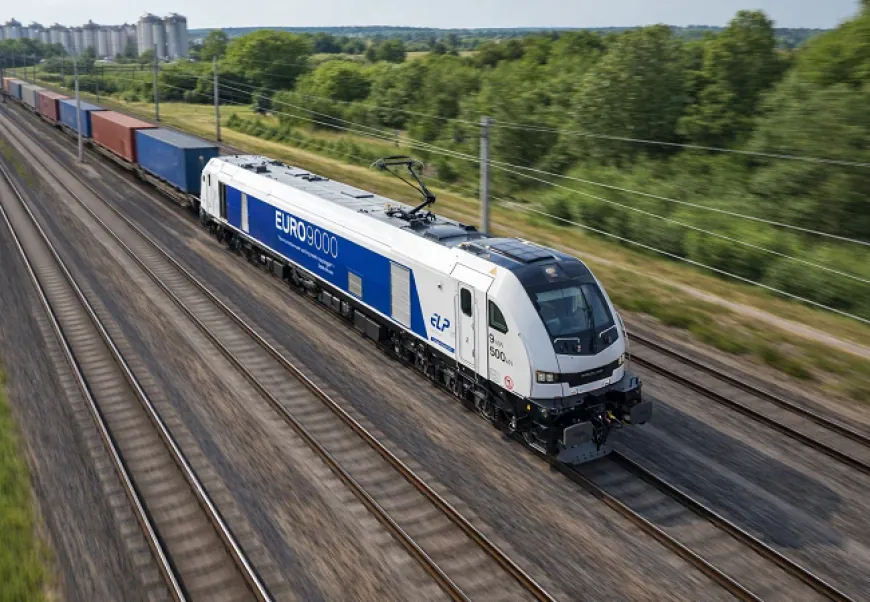
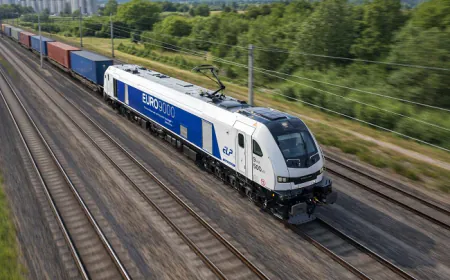
The European Union Agency for Railways (ERA) issued type approval on 10 April 2026 for the Stadler Rail Valencia EURODUAL E25/15 D28 bimode locomotive covering Austria, Slovenia and Croatia. Announced on 13 April by locomotive leasing company European Loc Pool (ELP), the multi-state authorisation enables cross-border freight operations along Pan-European Corridor X — the strategic rail axis linking Central Europe to the Balkans and onward to Istanbul — without the locomotive changes at electrification boundaries that have long constrained freight operators in Southeast Europe.
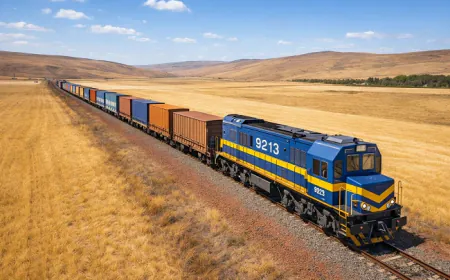
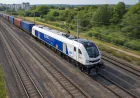
The EURODUAL, designed and built by Stadler Rail Valencia in Spain, is a six-axle locomotive capable of operating on either electric traction or diesel power within a single unit. This bimode architecture allows one locomotive to traverse electrified mainlines and then continue seamlessly onto non-electrified branch lines, industrial sidings or last-mile sections, without stopping for a traction change or diesel attachment.
The approved variant, designated EURODUAL E25/15 D28, delivers 6.2 MW in electric mode and 2.8 MW from its diesel engine, with a maximum design speed of 160 km/h and an axle load of 20.5 tonnes. It carries ETCS (European Train Control System) Baseline 3 onboard and is compatible with both 15 kV/16.7 Hz (Swiss, German, Austrian networks) and 25 kV/50 Hz (French, Spanish, East European networks) electrification systems, giving it a broad operational envelope across the continent. Its diesel engine meets the Stage V emissions standard — the most stringent currently in force for particulate matter and nitrogen oxides — and is compatible with HVO (hydrotreated vegetable oil) fuels, offering a further reduction in local CO₂ emissions compared with conventional diesel.
Railway electrification across the Balkan region covers only 40 to 50 per cent of the network, depending on the country. This infrastructure heterogeneity has historically forced freight operators to make time-consuming and costly traction changes at every electrification boundary, whether at a national border or at a transition from electrified mainline to non-electrified branch or industrial siding. These stops create delays, add operational complexity and erode the competitiveness of rail freight against road haulage.
The ERA type approval of 10 April 2026 covers Austria, Slovenia and Croatia jointly for the E25/15 D28 variant, and complements the separate national authorisation for Serbia that was already obtained in 2023. The newly approved area of use therefore encompasses the full extent of Corridor X across the Western Balkans. The EURODUAL is already approved in Germany, France, Belgium, Norway, Sweden and Türkiye, giving operators a single locomotive platform for pan-European and intercontinental freight flows.
ELP notes that the operating conditions differ between the two newly approved countries. In Slovenia, diesel-mode operation can begin immediately. In Croatia, pantograph installation is required before electric traction becomes available, reflecting differences in the Croatian network's infrastructure and the technical conditions attached to ERA's multi-state authorisation process. These distinctions are consistent with ERA's established approach to multi-state approvals, under which authorisation conditions are tailored to each national network's specific characteristics.
Pan-European Corridor X runs from Salzburg in Austria to Thessaloniki in Greece, passing through Ljubljana, Zagreb, Belgrade and Skopje, crossing five Western Balkan states. It is one of the most important freight axes for flows between Central Europe and Southeast Europe, with a key extension towards Istanbul.
For ELP, the most strategically significant routes now covered are those connecting the Adriatic ports of Koper (Slovenia's container port and the leading container hub on the northern Adriatic) and Rijeka (Croatia) to Central European industrial hubs via Ljubljana, Maribor and Zagreb. These corridors are experiencing strong growth, driven by the development of Asia–Europe freight flows and a structural shift from road to rail. ELP, founded in May 2018 in Frauenfeld, Switzerland, currently supports more than 37 operators across five countries. The company states that further approvals extending the EURODUAL's authorised operating zone towards Türkiye are already in preparation, with the long-term objective of enabling continuous operations along the full length of Corridor X to Istanbul.
This approval comes against a backdrop of uneven ERTMS (European Rail Traffic Management System) deployment across the European Union. According to UNIFE's 2025 annual report, Member States are progressing at markedly different speeds, creating "technology islands" that penalise cross-border rail operations. The EURODUAL's multi-voltage, bimode architecture represents the industrial sector's practical response to this regulatory fragmentation: developing rolling stock capable of overcoming infrastructure constraints where harmonisation has not yet been achieved. "The new approvals enable additional cross-border freight services and support more efficient rail connections in Southeast Europe," said Iñigo Parra, CEO of Stadler Valencia. The platform's credentials on the UK market — where the Class 88 locomotives operated by Direct Rail Services and the recently authorised Class 99 fleet are both derived from the EURODUAL design — further attest to its cross-border versatility.
Sources:
- ERA (European Union Agency for Railways), vehicle type approval EURODUAL E25/15 D28, 10 April 2026