
TGV Driver Killed as Train Hits Military Convoy in France
A Dunkerque–Paris TGV struck an exceptional military convoy at a level crossing in Bully-les-Mines. The driver died. Sixteen injured. Criminal inquiry opened.
 TrainsNews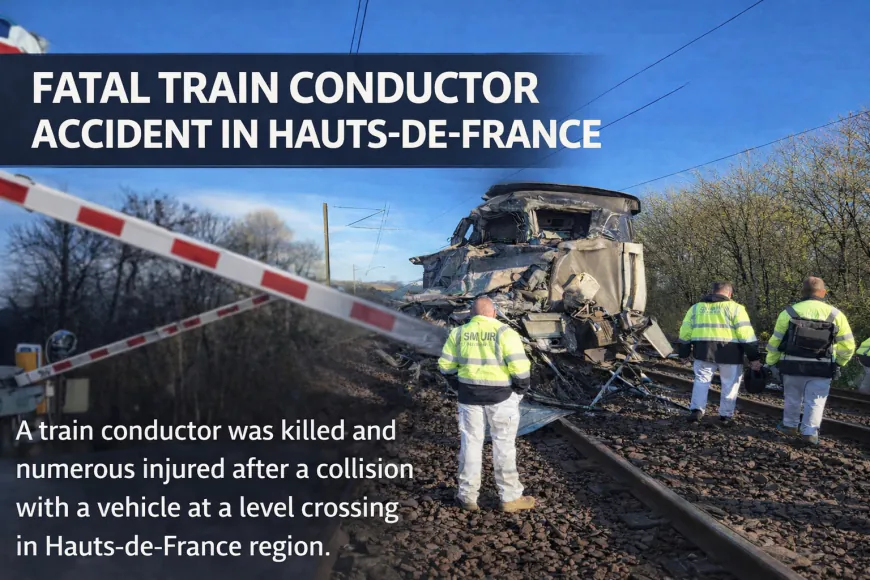
The death of an on-duty train driver is among the gravest incidents on the French rail network — and one that reignites a long-standing debate about the safety of the country's approximately 15,000 level crossings. France recorded 89 level crossing accidents in 2024, of which 20 proved fatal, according to SNCF Réseau. The involvement of a heavy exceptional convoy — a vehicle category requiring pre-approved routing — adds a layer of regulatory scrutiny that goes well beyond a routine road collision.
The collision occurred at 6:48 a.m. local time at crossing number 96 on Rue Lamartine. TGV service 7304, travelling from Dunkerque to Paris-Nord with 246 passengers on board, was running at 160 km/h at the moment of impact, according to the Pas-de-Calais prefect, François-Xavier Lauch. The heavy goods vehicle was contracted by a private haulier and was carrying a military pontoon bridge belonging to the 6th Engineer Regiment based in Angers, returning from a joint French-Belgian military exercise. Its driver — a 30-year-old Polish national — was placed in police custody on suspicion of aggravated involuntary manslaughter and deliberate breach of a safety obligation. A preliminary hypothesis under investigation, cited by a regional senator, suggests the lorry may have stalled on the crossing after allowing a prior train to pass before the TGV arrived.
The TGV driver, aged 56, a highly experienced professional, was pronounced dead at the scene. Sixteen people were injured; two were initially in critical condition but their lives are no longer in danger. Around 150 emergency responders were deployed. SNCF chief executive Jean Castex and Transport Minister Philippe Tabarot visited the site. The Béthune–Lens line will remain closed for at least one week. The crossing's barriers functioned normally, SNCF confirmed. The Bureau of Investigations into Land Transport Accidents (BEA-TT) is conducting an independent technical inquiry. The crossing was not listed among the 146 priority structures in France's national safety upgrade programme.
Sources: Prefecture of Pas-de-Calais, press release, 7 April 2026